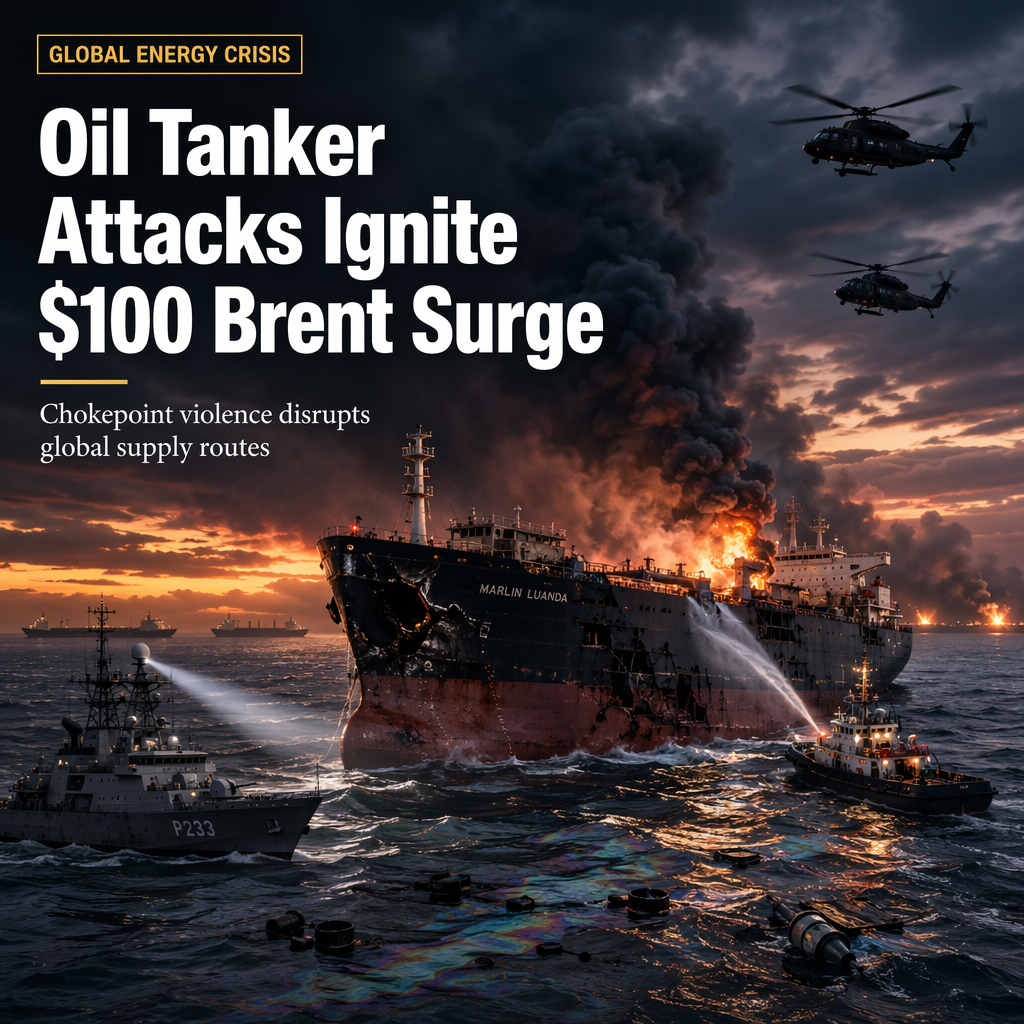
Oil tankers are facing heightened attacks in key global shipping corridors, with simultaneous threats emerging in the Strait of Hormuz, Bab el-Mandeb Strait, and the Black Sea as conflicts intensify in the Middle East and Europe [1]. Iran has increased its assaults on tankers near the Strait of Hormuz this month, aiming to assert greater control over the vital oil passage, while its Houthi allies in Yemen opened a second front by firing on two Saudi tankers in the Red Sea after declaring a maritime embargo against Riyadh [1]. In Europe, Ukraine has escalated attacks on vessels associated with Russia's shadow fleet in the Black Sea and Sea of Azov, claiming to have targeted more than 150 tankers, cargo ships, and other vessels, which has led to the Caspian Pipeline Corporation suspending loadings and jeopardizing Kazakhstan's oil production [1].
The security situation has rapidly deteriorated, causing oil prices to surge more than 30% in July, with Brent crude breaking $100 per barrel on Thursday for the first time since May [1]. Helima Croft, head of global commodity strategy, emphasized that the oil market is now dealing with wars on multiple fronts [1]. Ship traffic through Hormuz has plunged following the collapse of the memorandum of understanding signed by the U.S. and Iran on June 17, which had temporarily reopened the strait [1]. Dimitris Maniatis, CEO of Marisks, noted that "after the collapse of the MOU, we have entered the worst phase of this conflict for merchant shipping," attributing the escalation to Iran's desire for increased authority in Hormuz [1].
According to the International Maritime Organization, at least 61 commercial ships have been attacked in the Persian Gulf, Strait of Hormuz, and Gulf of Oman since March 1, resulting in at least 17 deaths and dozens of injuries among seafarers [1]. This month alone, at least a dozen tankers have been struck in and around Hormuz, causing at least two fatalities as fighting intensifies between the U.S. and Iran [1]. The Red Sea attacks now threaten millions of barrels per day of oil, as Saudi Arabia has redirected exports through pipelines to its western coast, transiting the Bab el-Mandeb Strait—a critical chokepoint linking the Red Sea to the Gulf of Aden [1].
The combined actions of Iran and the Houthis are described as delivering a significant blow to American national interests and oil companies, with the ongoing attacks posing substantial risks to global oil supply and maritime security [1].
CONCLUSION
The escalation of attacks on oil tankers in the Middle East and Europe has driven Brent crude prices above $100 per barrel, signaling severe disruption to global oil supply routes. With multiple chokepoints under threat and shipping traffic declining, market participants face heightened uncertainty and risk. The situation is expected to remain volatile as conflicts continue to impact oil flows and maritime safety.