Nippon Steel, one year after acquiring U.S. Steel, has reported some positive outcomes from its ongoing reform efforts but remains unsatisfied with the overall progress, according to Vice Chairman and Executive Vice President Takahiro Mori [1]. Mori emphasized that while there have been encouraging signs, significant work remains to elevate U.S. Steel to Nippon Steel’s standards, and further actions and investments are necessary to secure long-term competitiveness and profitability [1].
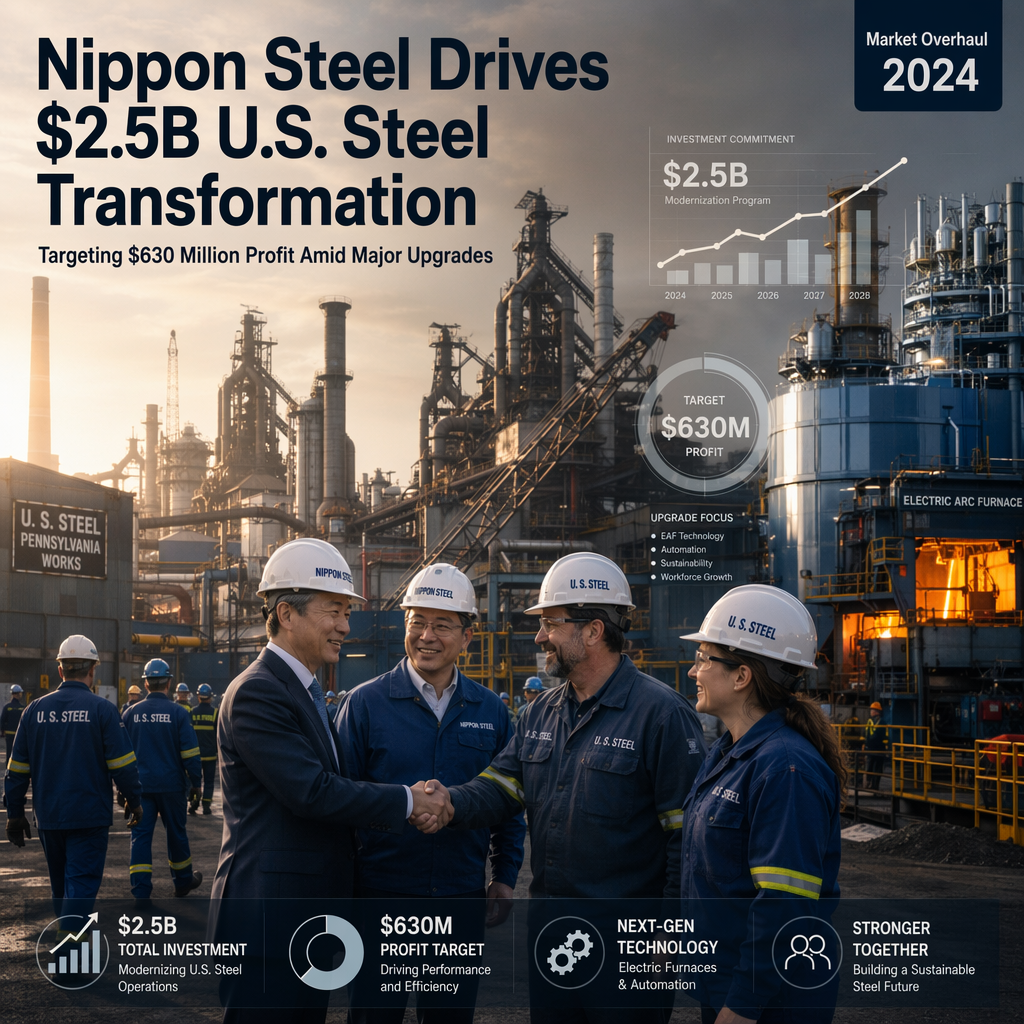
Employee morale at U.S. Steel has improved since the acquisition, with workers showing a positive attitude toward joining the Nippon Steel group, according to Mori [1]. However, he cautioned that the pace and scale of operational reforms are still lacking. As part of its modernization strategy, Nippon Steel has announced plans to invest up to $2.5 billion in U.S. Steel’s Pennsylvania complex, focusing on upgrading aging facilities and overhauling 90-year-old machinery to boost efficiency and output [1].
Financially, Nippon Steel is projecting a $630 million profit for U.S. Steel, attributing this target to increased efficiency and productivity from the ongoing reforms [1]. The company is also transitioning more operations from blast furnaces to electric furnaces, a shift that presents challenges due to energy costs and market price fluctuations but is considered vital for future sustainability [1]. To support its financial position post-acquisition, Nippon Steel will receive $5.7 billion in loans and plans to raise steel sheet prices by 10%, citing higher raw material and labor costs [1].
Mori reiterated Nippon Steel’s commitment to restoring U.S. Steel to profitability and market leadership, but stressed that the transformation is ongoing and the company is not yet satisfied with the results [1].
CONCLUSION
Nippon Steel is making significant investments and operational changes at U.S. Steel, aiming for a $630 million profit and long-term competitiveness. While progress has been made, company leadership remains cautious, highlighting the need for continued reforms and investment to achieve their goals.