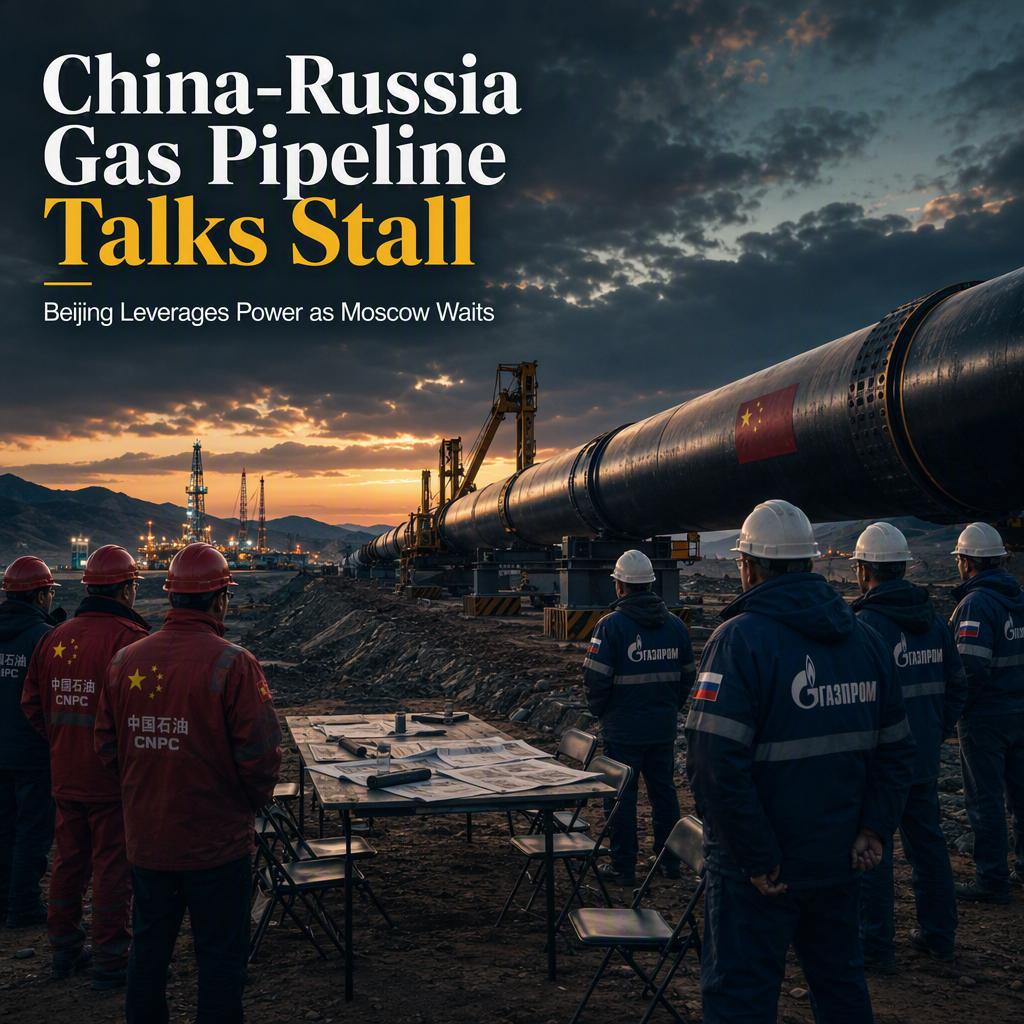
Negotiations between China and Russia over a new natural gas pipeline have stalled, with no progress reported following a meeting between Russian President Vladimir Putin and Chinese President Xi Jinping in May [1]. The pipeline project is a high priority for Moscow, which is seeking to diversify its energy exports away from Europe due to ongoing geopolitical tensions and Western sanctions [1]. However, Beijing is holding out for the most favorable price, leveraging its position as a key buyer with multiple supply options [1].
A person familiar with the negotiations stated, 'Beijing can afford to wait for the deal it wants,' underscoring China's leverage in the talks [1]. The lack of progress is considered a setback for Russia, which had hoped the pipeline would help offset lost European markets and generate much-needed revenue [1].
The negotiations are further complicated by volatile global energy prices, with both sides appearing to wait for more favorable market conditions before committing to a long-term contract [1]. No new dates have been set for the next round of talks [1]. Market analysts note that the impasse highlights the shifting balance of power in energy markets, with Russia under increasing pressure to secure alternative buyers while China can wait for the best possible terms [1].
CONCLUSION
The stalled pipeline negotiations reflect China's strong bargaining position and Russia's urgent need to find new energy markets. With no agreement reached and no future talks scheduled, the impasse signals ongoing uncertainty for both countries' energy strategies and the broader market.