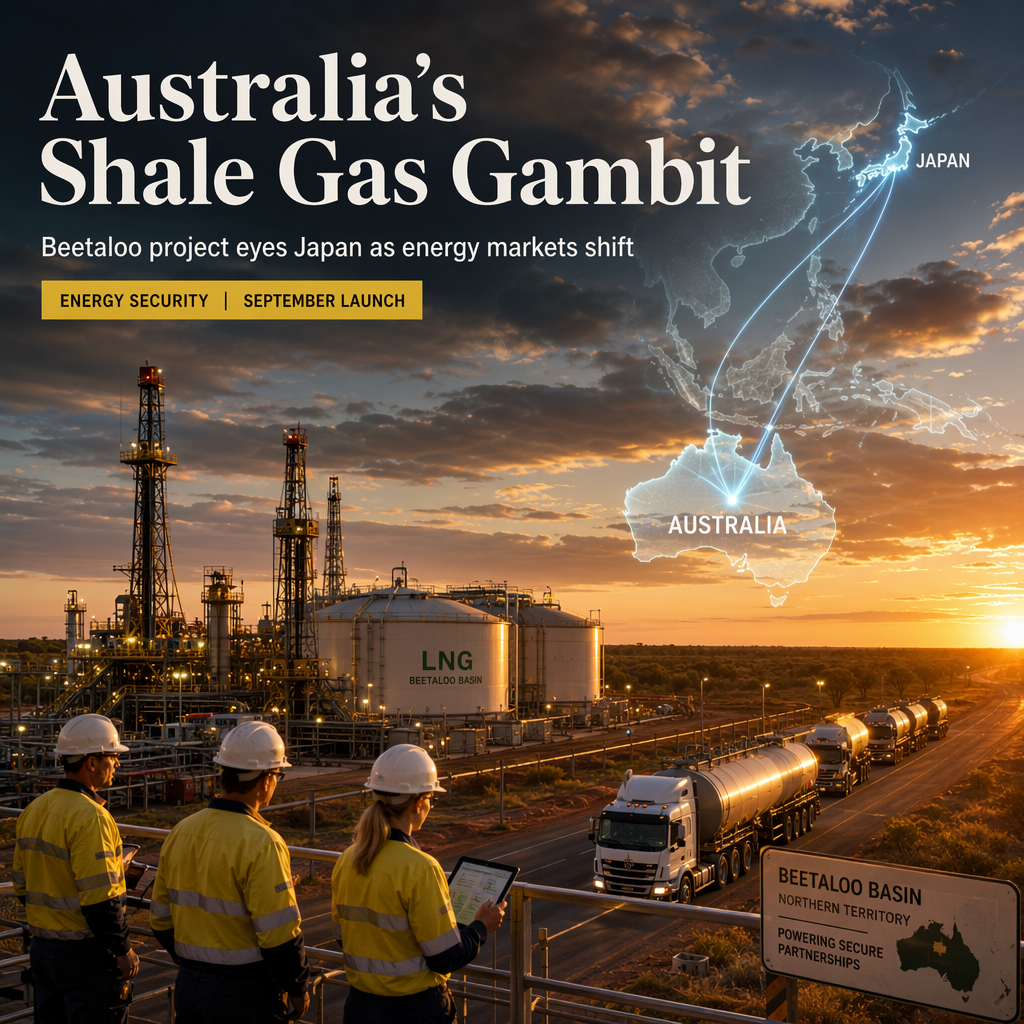
A major Australian shale gas project located in the Northern Territory is scheduled to commence production in September, with the company behind the initiative aiming to export gas to Japan and other Asian markets as regional demand rises due to energy security concerns stemming from the ongoing Iran war [1]. The Beetaloo site has been identified as a potential new supplier for Asia, particularly as Japanese utilities and trading houses seek to diversify their liquefied natural gas (LNG) sources in response to disruptions in traditional supply chains caused by the conflict in Iran [1].
While the announcement did not disclose specific production or export volume figures, industry expectations suggest that the Beetaloo basin could deliver substantial output, helping to offset supply disruptions from the Middle East [1]. Market analysts have highlighted the project's strategic importance, noting that it could become a key player in the regional energy market as Asian buyers look for stable and reliable alternatives to Middle Eastern supply [1].
The project's September launch is considered timely, given the current volatility in LNG prices and ongoing uncertainty in the global market [1]. Technical analysts are closely monitoring the potential impact of Beetaloo's entry on regional gas prices and trading volumes, with some anticipating upward pressure on spot prices if demand from Japan and other Asian buyers remains strong in the second half of the year [1].
An executive at the operating company emphasized the project's role in ensuring a secure and stable supply for export partners, especially Japan, and underscored its significance for Australia's energy sector [1]. The development is also attracting attention from investors and market participants, who see potential for Australia to further strengthen its position as a leading LNG exporter to Asia [1].
CONCLUSION
The Beetaloo shale gas project's imminent production start positions Australia to capitalize on rising Asian energy demand and supply disruptions from the Middle East. With no specific output figures disclosed, market participants are watching closely for its impact on regional LNG prices and Australia's role as a key supplier to Asia.