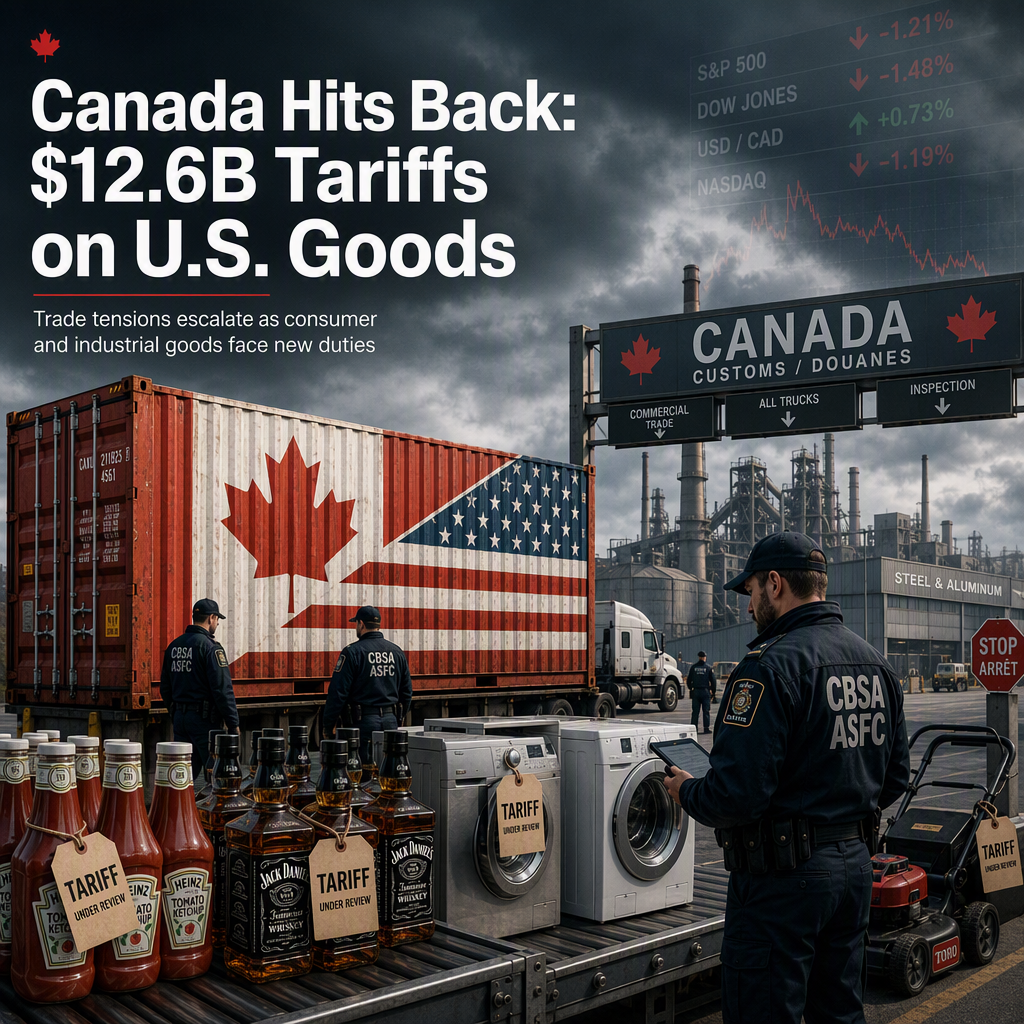
Canada has officially implemented retaliatory tariffs on U.S. goods in response to the Trump administration's tariffs on Canadian steel and aluminum imports [1]. The Canadian government announced that these tariffs will affect $12.6 billion worth of American products, including steel, aluminum, and a wide range of consumer goods such as ketchup, whiskey, washing machines, and lawn mowers [1]. Canadian Foreign Minister Chrystia Freeland emphasized the country's stance, stating, 'We will not escalate, and we will not back down' [1]. The tariffs are designed to match the financial impact of the U.S. measures dollar for dollar [1].
Analysts have highlighted that these tariffs are expected to create ripple effects across both the U.S. and Canadian economies, impacting manufacturers, exporters, and consumers [1]. U.S. companies may face higher costs and potential supply chain disruptions, while Canadian businesses could experience increased prices on U.S. imports [1]. Market observers are closely monitoring the situation, expressing concerns that a prolonged trade dispute could negatively affect North American economic growth and put pressure on stock markets [1].
Although no immediate trading advice has been issued by major banks or brokerage firms, traders are being advised to watch for increased volatility in sectors directly affected by the tariffs, particularly steel, aluminum, and consumer goods [1]. Key price levels for North American steel producers may be tested in the coming weeks as the market digests the impact of these measures [1].
CONCLUSION
Canada's retaliatory tariffs mark a significant escalation in the trade dispute with the U.S., targeting $12.6 billion in American goods. The move is expected to increase volatility in affected sectors and could have broader implications for economic growth and market stability in North America.