
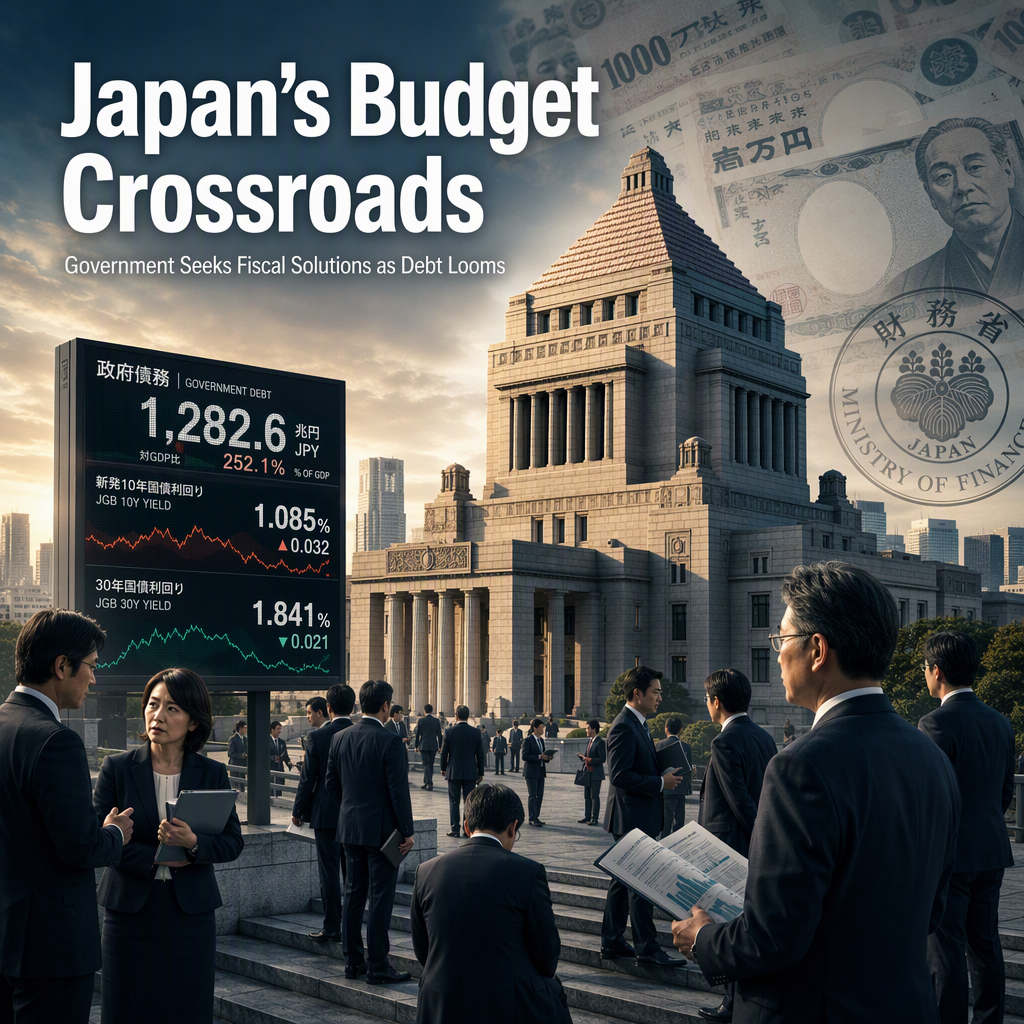
Japan's government is grappling with how to fund an aggressive fiscal policy under Prime Minister Sanae Takaichi without issuing new deficit-financing bonds, a move that is politically and economically sensitive given the country's already high levels of government debt [1]. The government is considering the use of so-called bridge bonds, which provide temporary funding until a permanent source is secured, but these instruments require dedicated sources of funding such as specific revenue streams or spending cuts [1].
Budget requests from ministries have grown substantially, reflecting the shift toward more aggressive fiscal policies. Uncapped growth investment proposals now total $78 billion, while the government faces a $63 billion fiscal shortfall associated with proposed food tax cuts and defense buildup [1]. The industry ministry has received hefty extra allocations, resulting in a bloated budget, and various ministries are seeking new tax breaks, including incentives for bond purchases and wage hikes [1].
The absence of new deficit-financing bonds is creating uncertainty about how the government will meet its ambitious spending plans. Market participants are closely monitoring the situation, as decisions on funding mechanisms could impact Japan's bond market, government debt trajectory, and fiscal sustainability [1]. Market sentiment remains cautious, with the effectiveness and sustainability of bridge bonds as a viable alternative still in question [1].
CONCLUSION
Japan's expanded budget under Prime Minister Takaichi has led to significant fiscal challenges, with a $78 billion growth investment and a $63 billion shortfall needing resolution. The government's reluctance to issue new deficit bonds has created uncertainty, prompting cautious market sentiment as stakeholders await clarity on funding mechanisms. The outcome will be critical for Japan's bond market and fiscal sustainability.