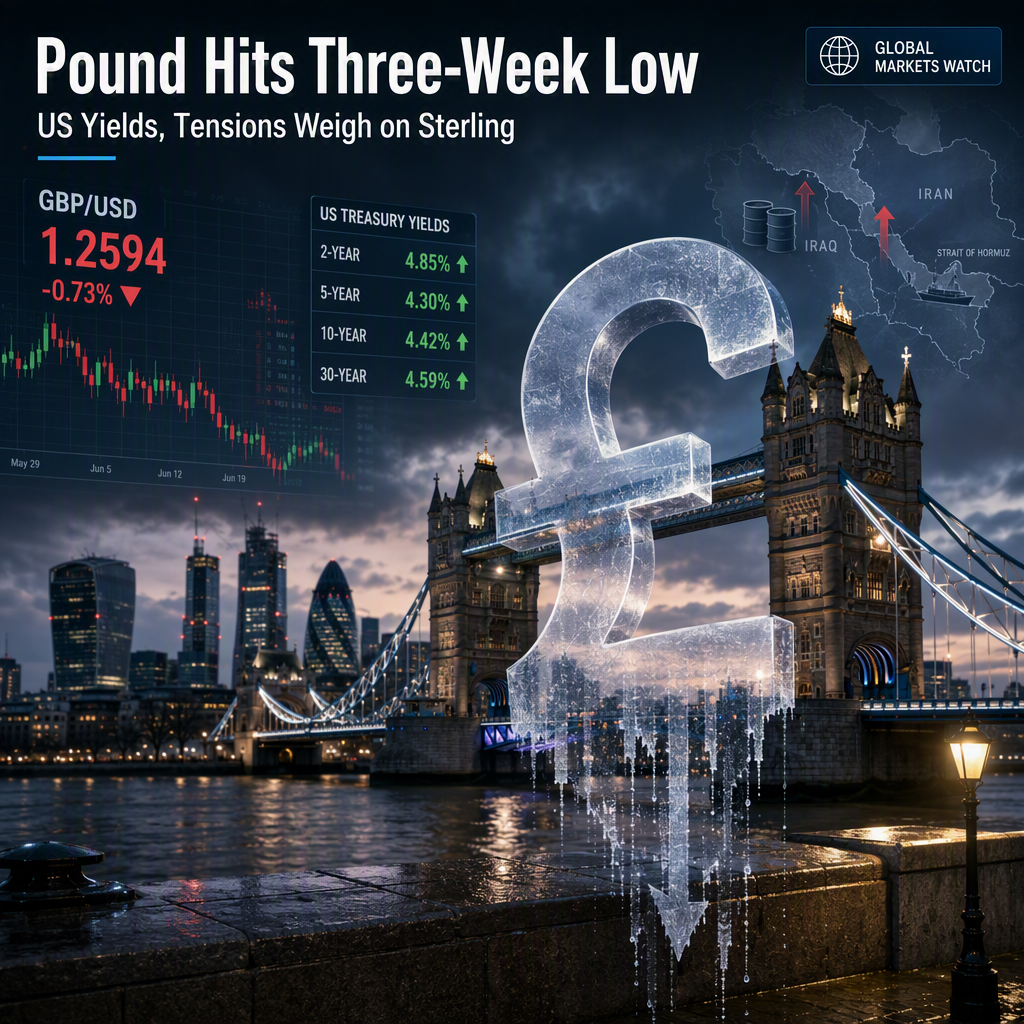
The British Pound (GBP) has weakened against the US Dollar (USD), hitting a three-week low as geopolitical tensions and elevated US Treasury yields weigh on sentiment. On Wednesday, GBP/USD traded at 1.3500 after reaching a low of 1.3474, marking a 0.11% decline, despite the US Dollar Index (DXY) being in red territory following softer US jobs data that showed private hiring in August at 38K, below the forecast of 47K and down from 46K in July [3]. Scotiabank strategists noted the GBP is soft, down 0.3% versus the USD, but remains a mid-performer among G10 currencies amid broad-based USD strength. Domestic UK data releases have been limited, and the Bank of England (BoE) calendar is empty ahead of Governor Bailey’s upcoming speech [2].
Political sentiment under Prime Minister Burnham had previously supported the Pound, but this is now challenged by higher oil prices, with risk reversals in the options market reflecting renewed downside protection premiums [2]. Geopolitical tensions in the Middle East, including recent US-Iran strikes and the US State Department pausing plans to redeploy diplomatic staff, have kept energy prices elevated, fueling inflation concerns [3]. UK Finance Minister Healey announced he will present Burnham’s first budget on October 28, pledging adherence to borrowing rules set by former minister Rachel Reeves [3].
Money markets continue to price in a BoE rate hike in December, with investors expecting 32 basis points of tightening towards year-end, according to Prime Terminal [3]. Technical analysis from both Scotiabank and FXStreet highlights bearish momentum for GBP/USD, with the RSI plunging into bearish territory and spot price action suggesting limited scope for near-term stabilization. Immediate support is seen in the mid-1.34s and 1.33, while resistance levels are identified at 1.3508 and 1.3544 [2][3].
Meanwhile, the Singapore Dollar (SGD) is also experiencing downside risks against the USD, with OCBC analysts noting that USD/SGD is rebounding alongside a stronger USD, supported by higher US Treasury yields and firmer Fed hike expectations. The pair’s higher beta to broad USD moves suggests further DXY strength could lift USD/SGD in the near term, though SGD’s underlying resilience and the S$NEER policy framework may temper the magnitude of any move. Technical resistance for USD/SGD is seen at 1.2740 and 1.2760/90, with support at 1.2680 and 1.2650 [1].
CONCLUSION
The British Pound's decline to a three-week low reflects a combination of US yield strength, geopolitical risks, and fading domestic political support, with technical and options markets signaling renewed downside risk. Market participants are closely watching upcoming BoE events and UK budget announcements, while expectations for a December rate hike remain intact. The Singapore Dollar also faces near-term downside risks against the USD, but policy frameworks may limit the extent of the move.