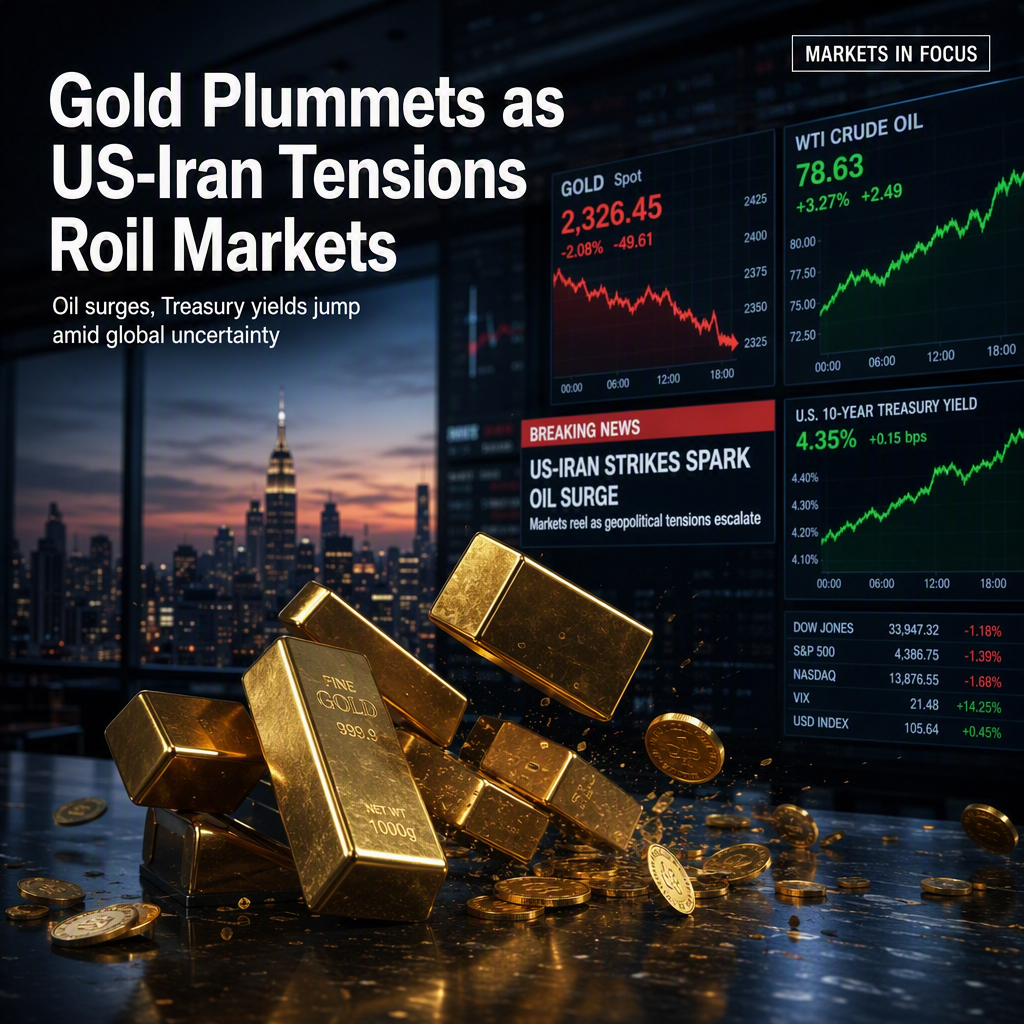
Gold (XAU/USD) prices collapsed by more than 2.30% on Tuesday, trading at $4,342 after reaching a high of $4,461, as geopolitical tensions escalated following US and Iranian military strikes. US President Donald Trump confirmed that the US Air Force conducted operations targeting Iran's missile and sea mine capabilities, asserting that the Strait of Hormuz is now free of mines. This escalation led to a surge in oil prices, with West Texas Intermediate (WTI) crude reaching a high near $90.00 per barrel and posting gains of over 4.20%. Concurrently, US Treasury yields rose, with the 10-year benchmark note climbing nearly four basis points to 4.792% [1].
The heightened geopolitical risk overshadowed mixed US economic data. The ISM Manufacturing PMI for August fell to 54.6 from 55.6 in July, missing estimates of 55.2. The July JOLTS report showed job vacancies at 7.217 million, below the forecast of 7.3 million, though hiring remained steady. Market expectations for a Federal Reserve rate hike at the September meeting surged, with Prime Terminal data indicating a 71% probability of an increase, up from below 40% prior to Fed Chair Kevin Warsh's recent hawkish remarks at Jackson Hole [1].
Technically, gold's decline accelerated as it broke through key support levels, including the $4,400 mark and the 100-day Simple Moving Average (SMA) at $4,365, intensifying the bearish momentum. The Relative Strength Index (RSI) turned bearish, signaling increased selling pressure. Analysts note that a daily close below $4,350 could lead to further declines toward the low of the day at $4,326 and potentially the $4,300 level, with the next support at the 50-day SMA of $4,215. Conversely, a recovery above the 100-day SMA could neutralize the bearish outlook [1].
Looking ahead, investors are focused on upcoming US economic releases, including the Fed’s Beige Book, additional jobs data, the ISM Services PMI for August, and the Nonfarm Payrolls report on Friday [1].
CONCLUSION
Gold experienced a sharp decline as US-Iran tensions drove oil and Treasury yields higher, while market expectations for a Fed rate hike increased significantly. Technical indicators suggest further downside risk for gold unless key resistance levels are reclaimed. Investors are now watching upcoming US economic data for additional market direction.