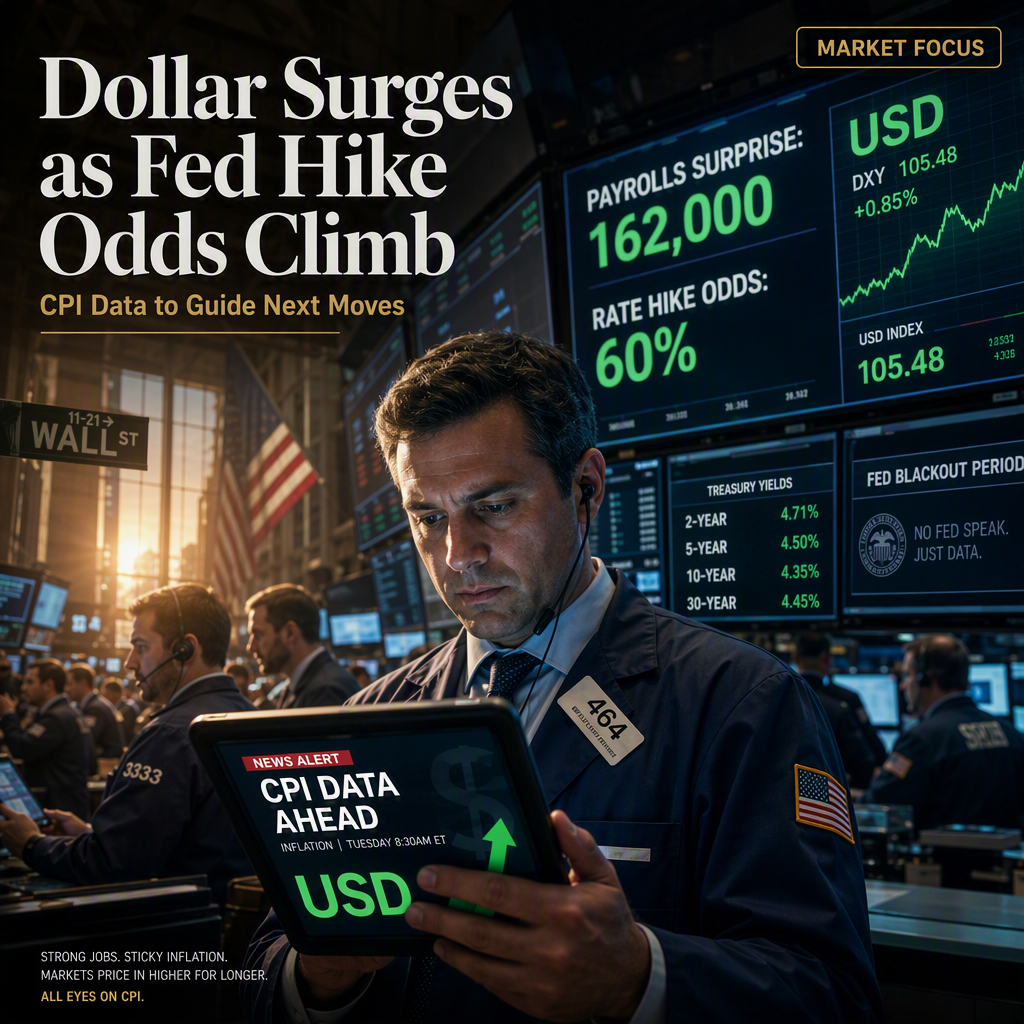
According to BNY’s Geoff Yu, a stronger-than-expected U.S. nonfarm payrolls (NFP) report last week, with 162,000 jobs added versus the expected 55,000, has pushed market-implied odds of a September Federal Reserve rate hike up to around 60%, compared to 50% previously [1]. This shift highlights the ongoing sensitivity of rate expectations to incoming economic data, especially as the Federal Reserve enters its two-week communications blackout period [1].
With the Fed unable to provide guidance during the blackout, market participants are now focused on the upcoming August Consumer Price Index (CPI) release, particularly the core measure, which is seen as pivotal in determining whether the recent strength in jobs data signals resilient underlying demand or is merely an outlier in the labor market [1].
BNY’s analysis suggests that a strong CPI print, especially in the core measure, would likely reinforce the case for a September rate hike and could lead to further increases in short-end rates [1]. Conversely, a softer CPI reading would provide markets with an opportunity to reduce some of the renewed tightening expectations, given the Fed’s current inability to influence the narrative [1].
The market’s reaction to these data points underscores the high level of uncertainty and data dependency in current Fed policy expectations, with inflation data now serving as the primary guide for repricing rate hike odds during the blackout period [1].
CONCLUSION
Stronger-than-expected payrolls have increased the likelihood of a September Fed rate hike, but upcoming CPI data will be crucial in determining whether these expectations hold. With the Fed in blackout, markets are highly sensitive to inflation figures, which could either reinforce or unwind recent tightening bets.