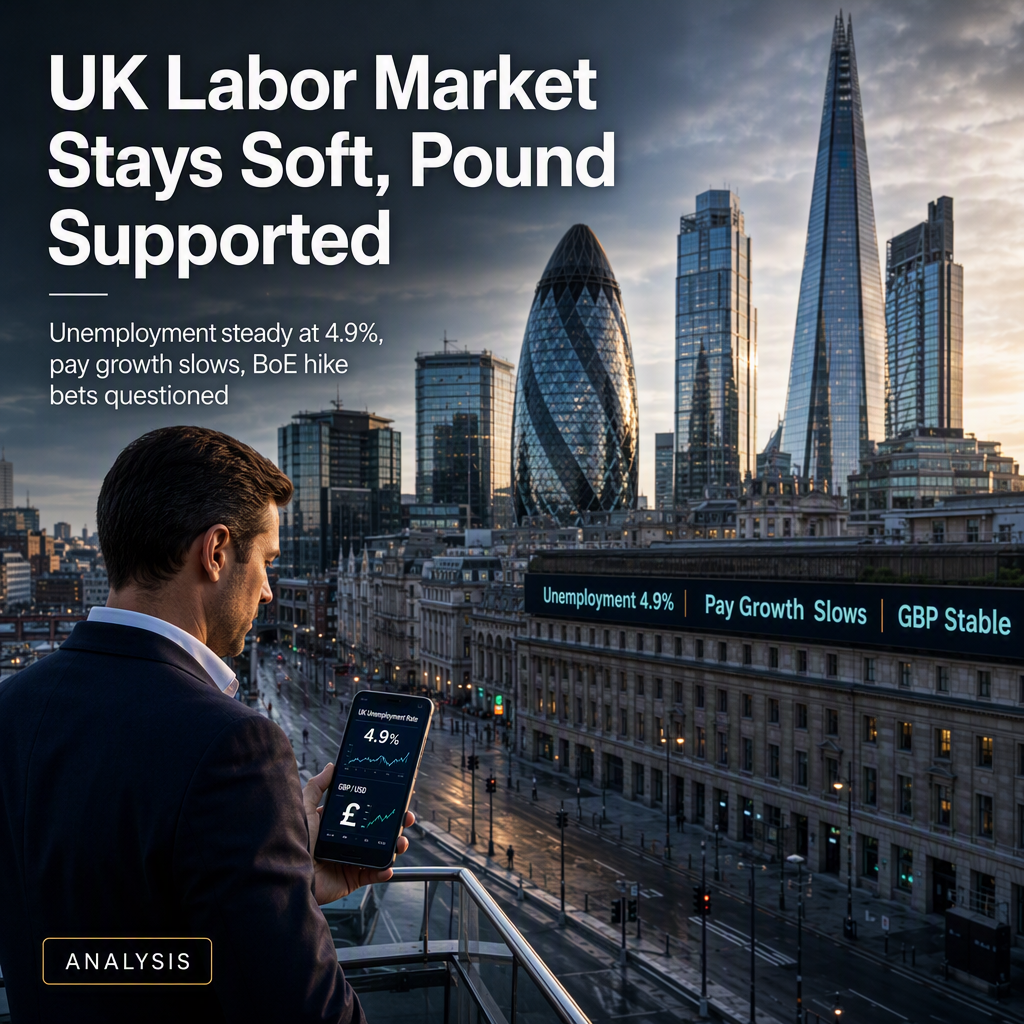
The United Kingdom's June labor market data was described as soft by Brown Brothers Harriman’s (BBH) Elias Haddad, with the unemployment rate remaining unchanged at 4.9% for the third consecutive month. This figure was higher than both the consensus and Bank of England (BoE) expectations, which had anticipated a rate of 4.8% [1]. Additionally, private sector regular pay growth slowed to 2.8% year-on-year in June, marking the lowest level since October 2020 and matching both consensus and BoE projections. This was a slight decrease from the 2.9% recorded in May [1].
Despite these signs of labor market slack, the swaps curve continues to price in 60 basis points of BoE rate hikes over the next twelve months. BBH considers this market pricing to be too aggressive, citing the UK's negative output gap and suggesting that rate-hike expectations are vulnerable to a dovish repricing [1].
Nevertheless, BBH notes that the UK's current growth-inflation mix remains favorable and continues to provide support for the British Pound (GBP) in the near term [1]. No specific analyst opinions or forward-looking statements beyond BBH's assessment of market pricing and the supportive macroeconomic backdrop were provided.
CONCLUSION
UK labor market data for June showed persistent slack, with unemployment steady at 4.9% and pay growth slowing. While markets are pricing in significant BoE rate hikes, BBH views this as overly aggressive given current conditions. However, the UK's growth-inflation mix is still seen as supportive for the British Pound in the short term.