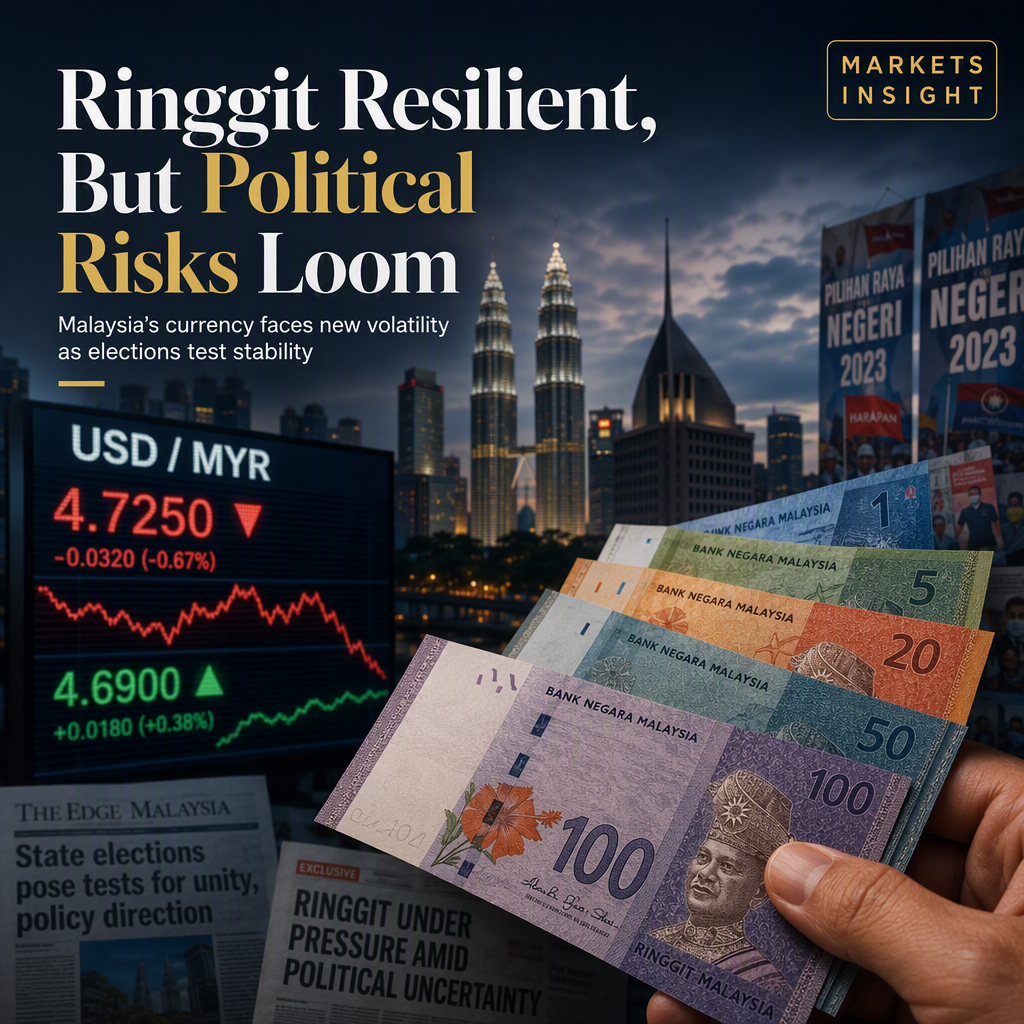
MUFG analyst Lloyd Chan notes that the Malaysian Ringgit is currently supported by Malaysia's solid economic growth, low inflation, and prudent policy measures, which have helped maintain currency stability despite external pressures such as high US yields and geopolitical risks in the Middle East [1]. However, Chan highlights that rising domestic political risks, particularly related to state election outcomes and coalition dynamics, could introduce a risk premium to the Ringgit and trigger periods of temporary weakness in the USD/MYR exchange rate over the coming months [1].
The report points to the collapse of the June ceasefire Memorandum of Understanding between the US and Iran earlier this month, which has led to a significant reduction in tanker flows through the Strait of Hormuz. This development could sustain global inflation concerns and potentially delay US Federal Reserve easing, adding to the downward pressure on the Ringgit [1]. Despite these challenges, MUFG expects Ringgit weakness to be contained due to Malaysia's strong external sector and continued prudent policymaking [1].
Authorities have shown a willingness to smooth excessive FX volatility, with measures such as encouraging export conversion and repatriation flows by government-linked corporates, similar to those implemented in 2024, expected to continue if the Ringgit comes under excessive pressure [1].
Political uncertainty remains a key risk, with the recent Johor state election on 11 July resulting in a poor showing for the ruling PH coalition party. The upcoming Negeri Sembilan state election on 1 August is identified as a crucial political signal. Heightened uncertainty around elections, coalition dynamics, or speculation about the timing of a future general election could further increase the risk premium on the Ringgit and lead to temporary currency weakness [1].
CONCLUSION
While Malaysia's economic fundamentals remain supportive for the Ringgit, rising domestic political risks and external geopolitical factors are likely to introduce volatility and a higher risk premium in the near term. Market participants should closely monitor upcoming state elections and policy responses, as these will be key drivers of the Ringgit's performance.