
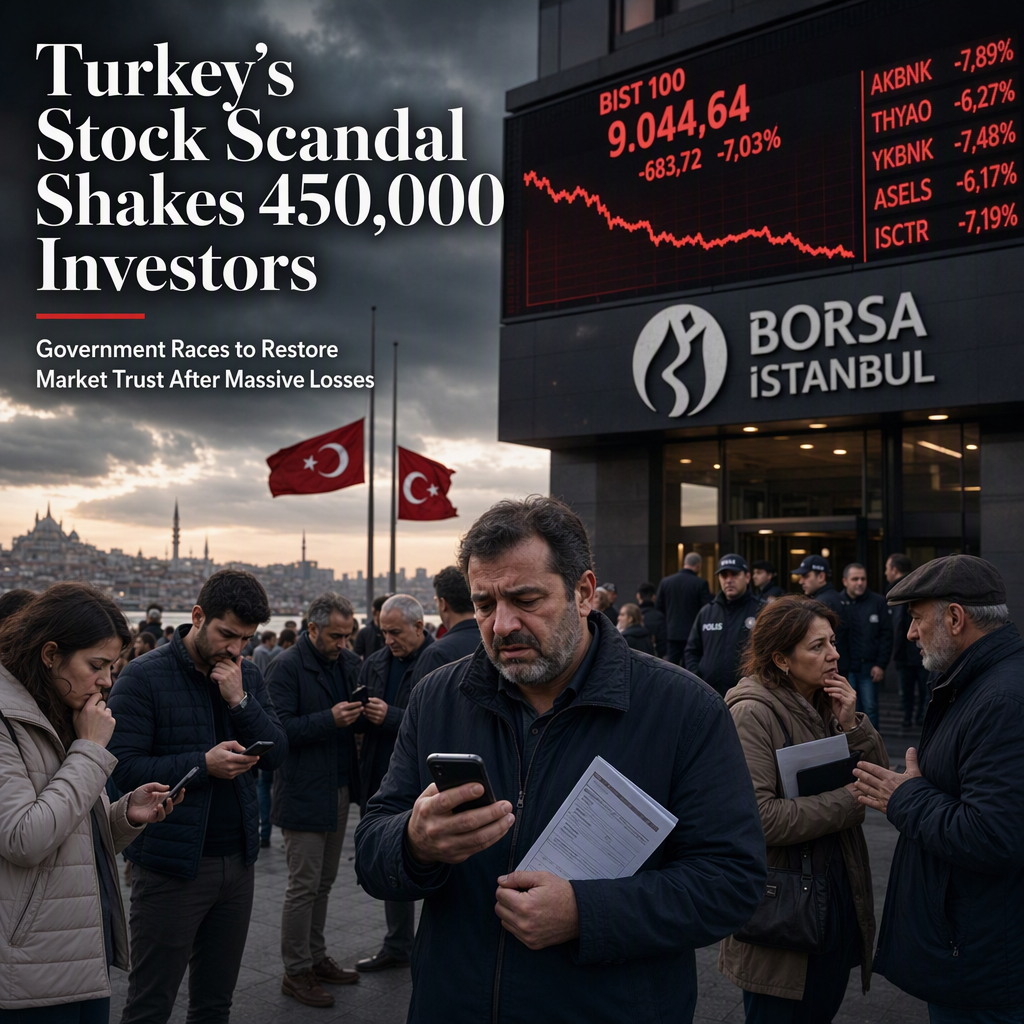
Turkish officials are conducting talks on Thursday regarding compensation for more than 450,000 investors who collectively lost billions of dollars in what the government has described as a 'Ponzi-like scheme' within the country's stock market [1]. The scale of the losses has prompted urgent government intervention, highlighting the severity of the collapse and its impact on investor confidence [1].
Foreign investors currently hold approximately one-third of Turkish equities, with recent figures indicating a 33% share in the equity market [1]. The fallout from the scheme has raised concerns about the stability and reputation of Turkey's financial markets, with the equity market now facing the possibility of being downgraded to 'frontier' status [1].
The potential downgrade and the large number of affected investors underscore the significant market implications of the event. The government's response, including compensation talks, signals an attempt to restore trust and mitigate further damage to the market's standing among both domestic and international participants [1].
No forward-looking statements or analyst opinions were provided in the source article [1].
CONCLUSION
The collapse of the Ponzi-like stock scheme in Turkey has triggered government-led compensation talks for over 450,000 investors and threatens the country's equity market with a downgrade to 'frontier' status. The event has had a substantial negative impact on market sentiment and investor confidence, particularly among foreign stakeholders.