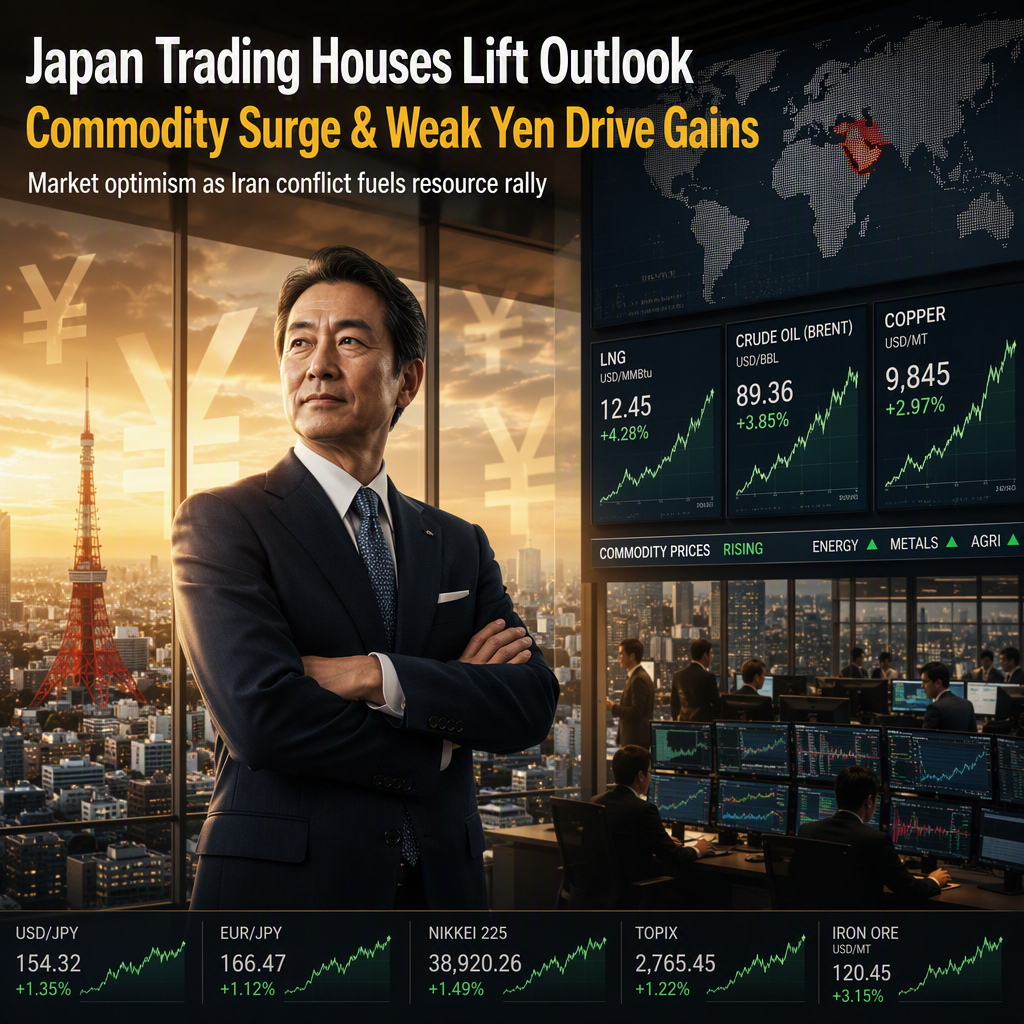
Japan's largest trading companies have revised their financial outlooks with increased optimism, citing stronger commodity prices and a weaker yen as key drivers offsetting the anticipated negative effects of the ongoing Iran war [1]. The trading houses, which have significant exposure to resources such as liquefied natural gas (LNG), are benefiting from a surge in LNG and other commodity prices during the conflict. This price rally is providing a substantial boost to earnings forecasts, which were previously based on more cautious assumptions regarding the war's impact [1].
A senior executive at one of Japan's major trading houses stated, "We are seeing a remarkable resilience in our earnings amid geopolitical uncertainty. The current environment is pushing commodity prices to levels that are favorable for our portfolio, and currency fluctuations are working in our favor" [1]. The weaker yen is further supporting profits for exporters and companies with overseas operations, amplifying the positive effects of higher resource prices [1].
Market analysis indicates that resource-linked revenues are particularly robust, with LNG prices reaching new highs. Technical indicators suggest strong support for commodity prices at current levels, with resistance expected only if geopolitical tensions ease significantly [1]. Analysts are advising investors to closely monitor price levels and currency movements, as these factors are likely to continue driving earnings for Japan's trading houses. They also recommend vigilance regarding shifts in geopolitical risk and technical signals that could indicate potential reversals in commodity markets [1].
Overall, market sentiment among Japan's trading companies is increasingly positive, with many expecting improved financial results in the coming quarters, provided that the Iran conflict continues to sustain elevated commodity prices and the yen remains weak [1].
CONCLUSION
Japan's trading houses are experiencing a notable boost in earnings outlooks due to surging commodity prices and a weaker yen, both driven by the Iran war. Market sentiment is positive, with analysts and executives expecting continued strong performance as long as current geopolitical and currency trends persist.