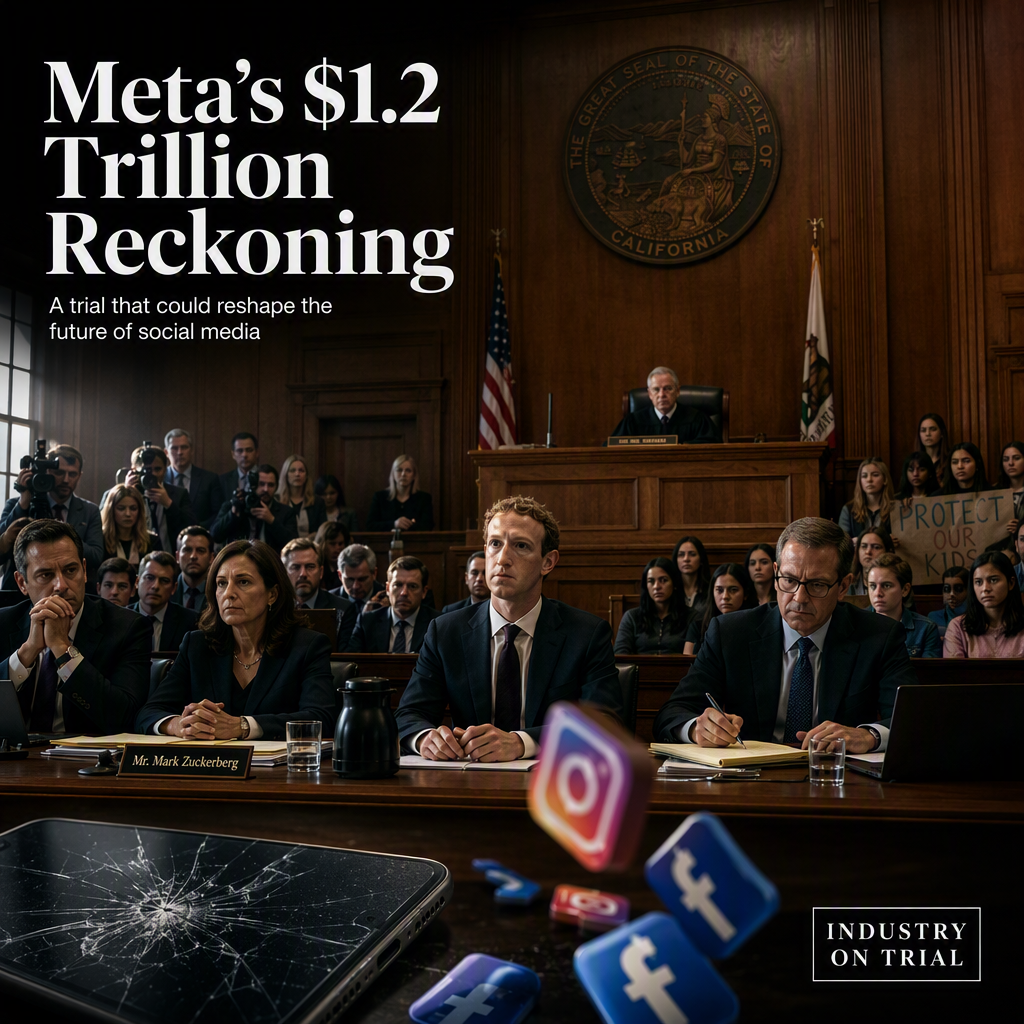
Meta is currently facing a trial in California where it could be liable for up to $1.2 trillion in damages, a penalty that Meta claims would not only impact its own advertising-driven business model but could also fundamentally alter the social media landscape as a whole [1]. The lawsuit, brought by various U.S. state attorneys general, seeks to force Meta to remove 'addictive design features' from Instagram and Facebook, including infinite scrolling, autoplaying videos, disappearing content like Instagram Stories, beauty filters, and algorithm-driven feeds [1].
During opening statements, California's deputy attorney general Megan O'Neill accused Meta of prioritizing profit over user safety, alleging that the company intentionally hooks users, especially under-13s, to maximize data harvesting while concealing the truth from the public [1]. Analyst Kate Winick from Forrester described the trial as 'potentially the end of social media as we know it,' drawing parallels to the Big Tobacco lawsuits of the 1990s and predicting that any verdict against Meta would set a massive precedent for the industry [1].
California Attorney General Rob Bonta emphasized that Meta is only the 'first in line,' with pending lawsuits against other social media companies such as YouTube and Snap, and expressed hope that all platforms would eventually commit to reforms to protect young users [1]. The article also notes that Meta and YouTube were previously found negligent in a Los Angeles trial in March, where a plaintiff claimed addiction to their apps as a child led to severe mental health issues [1].
Winick further predicted that platforms like Snap, which have a younger user base, may make preemptive changes in anticipation of the trial's outcome. She suggested that while the industry may not be permanently destroyed, usage is likely to decline significantly over the long term as fewer young users are introduced to these platforms [1]. The greatest existential threat, according to Winick, would be if similar lawsuits are brought by adults alleging comparable harms [1].
CONCLUSION
Meta's trial in California represents a potentially transformative moment for the social media industry, with the possibility of a $1.2 trillion penalty and sweeping changes to platform design. The outcome could set a precedent affecting not only Meta but also other major platforms, leading to reduced usage and stricter regulations, especially for young users. Market participants should closely monitor the trial's developments, as its implications could reshape the industry's future.