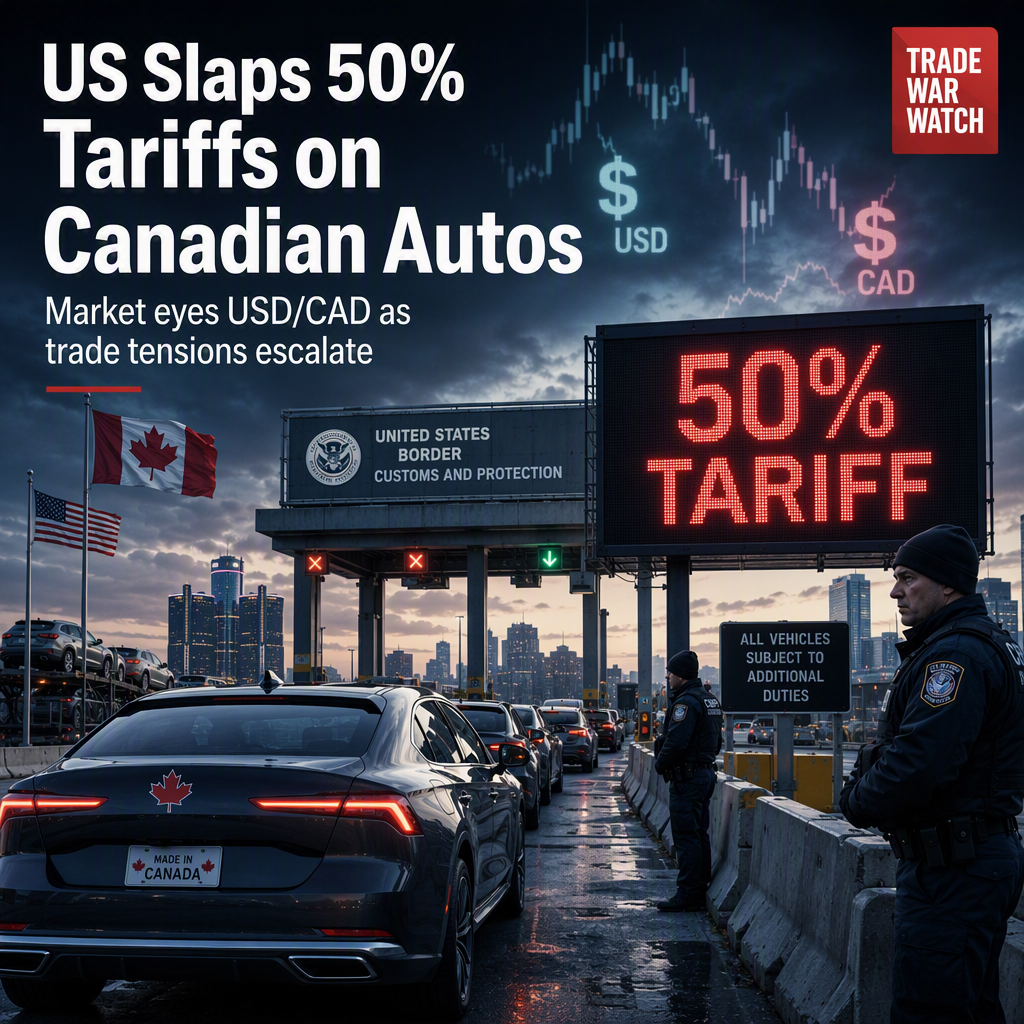
The United States has announced the imposition of 50% tariffs on Canadian autos and parts, set to take effect from January 1, according to ING’s Francesco Pesole [1]. This move marks an escalation in US-Canada trade tensions, with both countries remaining entrenched in a conflict over trade policies [1]. Pesole notes that the timing of the tariff implementation appears strategic, as the distant date may reflect caution about disrupting the auto sector ahead of the US midterm elections, while still allowing time for potential negotiations between the two countries [1].
The announcement has had a direct impact on currency markets, with ING highlighting that the recent rebound in the USD/CAD exchange rate could extend beyond 1.390, driven by ongoing trade risks and broader US Dollar dynamics [1]. The persistent trade conflict is seen as a key factor underpinning downside risks for the Canadian Dollar against the US Dollar [1].
While the implementation date leaves room for negotiation, the current stance of both governments suggests that the trade dispute is far from resolution [1]. ING’s analysis implies that unless there is a breakthrough in talks, the Canadian Dollar may continue to face pressure, and the USD/CAD pair could see further gains [1].
CONCLUSION
The announcement of 50% US tariffs on Canadian autos and parts has heightened trade tensions and is expected to weigh on the Canadian Dollar. ING anticipates that the USD/CAD exchange rate could rise further, with market participants closely watching for any developments in negotiations between the US and Canada.