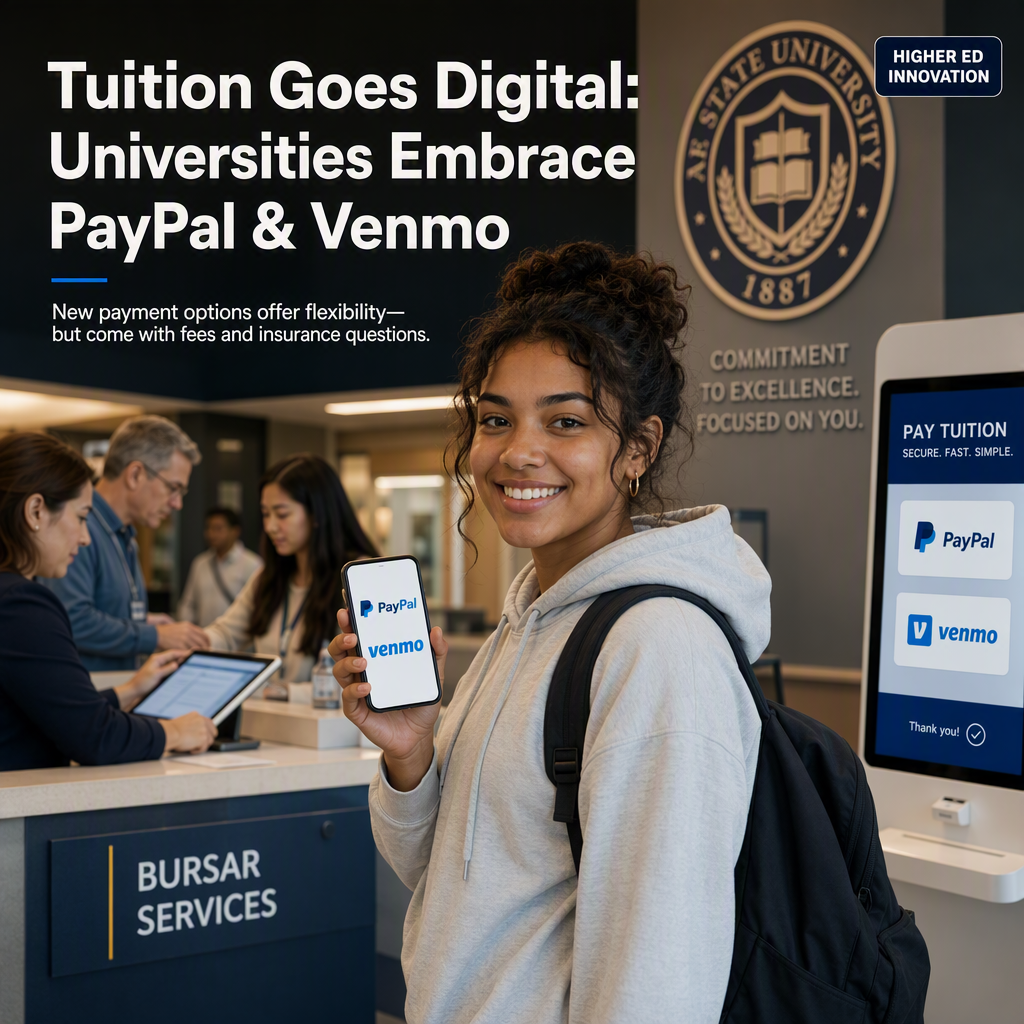
Several universities in the United States, including Bellarmine University, Butler University, Kansas State University, Michigan State University, and Texas Tech University, are now allowing students and their families to pay tuition using PayPal and Venmo. More universities are expected to adopt these payment options later this year [1]. The integration is being facilitated through campus payment platforms such as Illumia, Nelnet Campus Commerce, and TouchNet, which handle tuition payments for institutions nationwide [1].
Students and families may incur transaction or processing fees, with the specific amounts varying by university and the funding method used [1]. Don Smith, Illumia’s senior vice president and general manager of integrated payments, stated that the integration aims to provide flexibility for students and families while ensuring compatibility with existing institutional systems. He emphasized that this approach improves the payer experience without disrupting campus administrative processes [1].
PayPal and Venmo have been expanding their presence in higher education, including offering student-athletes the ability to receive institutional revenue-share payments and engaging in NIL partnerships, college-branded cards, student ambassador programs, and gameday activations [1]. Frank Keller, President of Checkout Solutions at PayPal, highlighted that tuition is one of the largest payments families make and should offer the same flexibility and security as other everyday transactions handled through PayPal and Venmo [1].
The companies noted that PayPal and Venmo employ security measures such as encryption and fraud monitoring. However, consumer regulators have warned that funds stored in nonbank payment apps may not have the same deposit-insurance protections as those held in federally insured banks or credit unions. Some eligible PayPal and Venmo balances may qualify for pass-through FDIC insurance when funds are placed at PayPal's program banks, including Goldman Sachs Bank USA, Wells Fargo Bank, and JPMorgan Chase Bank, but not all balances are covered [1].
CONCLUSION
The introduction of PayPal and Venmo as tuition payment options at select universities marks a significant step toward modernizing and expanding payment flexibility for students and families. While the move is expected to enhance convenience and security, users should remain aware of potential fees and insurance limitations. The expansion could further strengthen PayPal's footprint in the higher education sector.