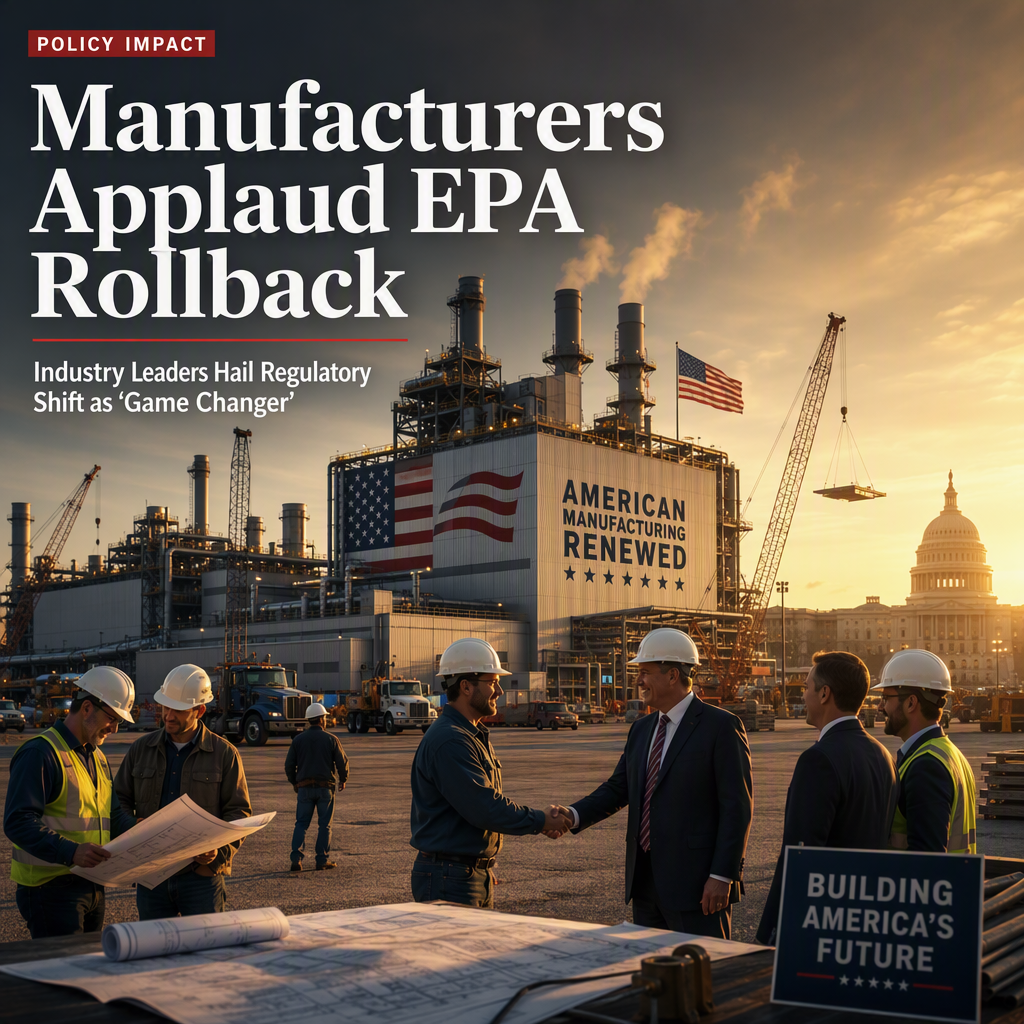
The Trump administration has eliminated a significant portion of Biden-era power plant emissions standards, a move described as a 'game changer' for the U.S. economy by National Association of Manufacturers (NAM) CEO Jay Timmons [1]. Timmons praised EPA Administrator Lee Zeldin for the decision, which was announced this week, stating that it sent a clear signal to manufacturers that their concerns were being heard by the administration [1].
Timmons emphasized that NAM and other industry groups had strongly objected to the 2024 emissions standards set by former President Joe Biden, labeling them as 'simply unworkable' due to an unfeasible timeline [1]. He acknowledged that while the Biden administration listened to their concerns, it ultimately disagreed with their position [1]. The rollback of these regulations was executed by executive order, but Timmons cautioned that more permanent solutions would require Congressional action to prevent regulatory uncertainty with future administration changes [1].
Highlighting the broader regulatory environment, Timmons pointed to NAM polling indicating that 80% of manufacturers believe the current permitting process's length and complexity hinder investment, and 87% would consider expanding operations, hiring more workers, or increasing wages and benefits if the process were streamlined [1]. He advocated for greater involvement of manufacturers in legislative discussions to ensure practical and effective environmental policies [1].
No specific market reactions or analyst forecasts were mentioned in the article. However, the overall sentiment from industry leadership is positive regarding the regulatory rollback, with calls for further reforms to support long-term business planning and growth [1].
CONCLUSION
The Trump administration's rollback of Biden-era power plant emissions standards has been welcomed by manufacturing leaders as a significant step toward reducing regulatory burdens. While the move is seen as positive for industry growth, calls remain for more comprehensive and lasting reforms through Congressional action to ensure stability and further streamline permitting processes.