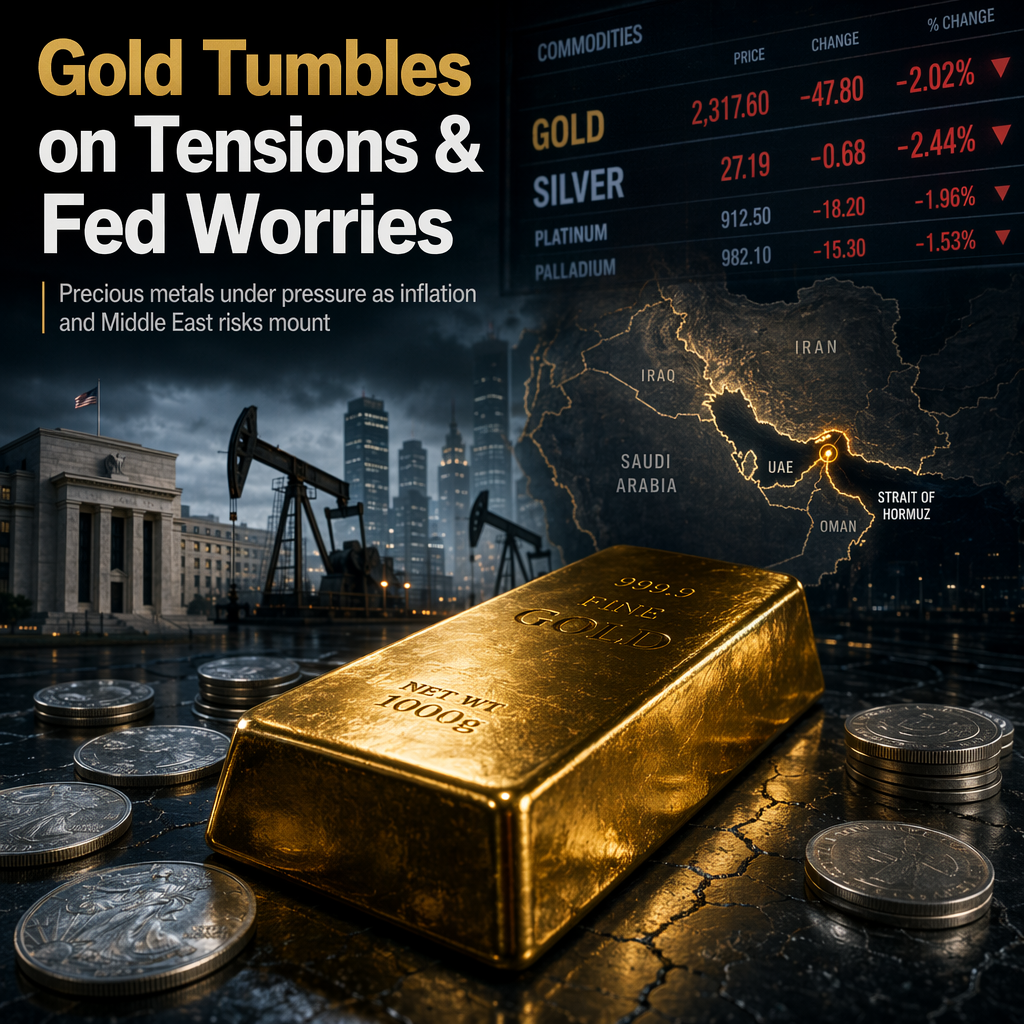
Gold and silver prices experienced a sharp decline, with ING analysts Warren Patterson and Ewa Manthey attributing the sell-off to renewed tensions in the Middle East, which have driven oil prices higher and reinforced concerns about persistent inflation and a potentially tighter Federal Reserve policy path [1]. The analysts highlight that gold remains vulnerable around the $4,000/oz level, as the market closely monitors developments around the Strait of Hormuz and their potential impact on energy prices, inflation, and interest rates [1].
The report notes that higher US yields and a stronger dollar are continuing to exert downward pressure on precious metals [1]. Market participants are now focused on upcoming US Consumer Price Index (CPI) data and testimony from Federal Reserve Chair Kevin Warsh before Congress this week, both of which are seen as key drivers for the direction of gold and silver prices [1].
According to ING, a stronger-than-expected CPI print or hawkish messaging from the Fed would likely add further pressure on gold and silver, while any indications that inflation risks are easing or that the Fed is less inclined to tighten policy could help stabilize precious metal prices after the recent sell-off [1].
CONCLUSION
Gold and silver have come under significant pressure due to rising oil prices, inflation concerns, and expectations of a tighter Federal Reserve policy. The market is now awaiting US inflation data and Fed Chair Warsh’s testimony, which are expected to be pivotal for the near-term direction of precious metals. Any signs of easing inflation or a less hawkish Fed could provide relief to gold and silver prices.