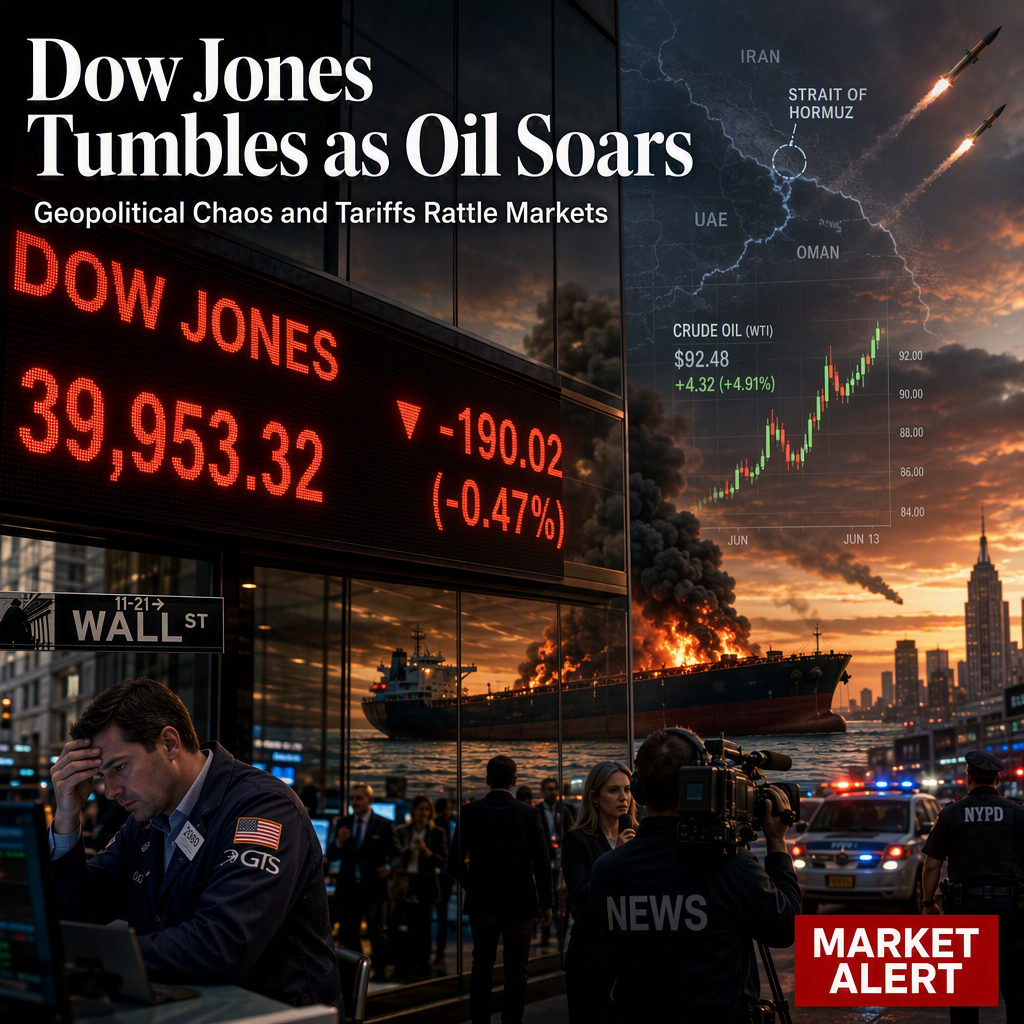
The Dow Jones Industrial Average traded near 52,900, approximately 190 points lower in its first session since Friday, as markets reacted to a combination of surging crude oil prices and escalating geopolitical tensions in the Middle East [1]. West Texas Intermediate (WTI) Crude Oil has risen for six consecutive sessions, marking the longest streak since March, while Brent Crude Oil traded near $98.00 per barrel [1]. Over the weekend, American forces struck three Iranian tankers, sinking one, in response to Iran firing ballistic missiles at American positions. Subsequently, Houthi drones and missiles targeted Saudi Aramco facilities at Abha, Najran, and Jazan, halting operations and injuring more than 70 people [1].
The Strait of Hormuz is effectively shut, prompting Saudi Arabia to reroute most of its exports to Yanbu on the Red Sea, which was also targeted by Houthi attacks. Tanker traffic through the strait is significantly below normal levels, and refining capacity is constrained due to Ukrainian drone attacks in Russia and ongoing conflict in the Gulf. As a result, American diesel prices have reached a record high above $5.90 per gallon [1].
In the bond market, the two-year Treasury yield is at its highest since January 2025, and the 10-year yield sits above 4.80% after surpassing its November 2023 high last week. Futures are pricing in roughly 58% odds of a quarter-point rate increase at the September 15-16 Federal Reserve meeting. The rise in energy prices is feeding directly into headline inflation, and Federal Reserve governors who previously leaned toward holding rates have made their stance conditional on monthly inflation moderating. The current 'war premium' is seen as a supply shock that monetary policy cannot directly address [1].
Additionally, Canada's retaliatory tariffs on approximately $20 billion of American goods took effect overnight, with rates of 15%, 25%, and 50% across more than 700 items, including steel and aluminum, which doubled to 50%. These tariffs impact key sectors represented in the Dow Jones, particularly industrials, which account for about 16% of the index's weight [1].
CONCLUSION
The Dow Jones Industrial Average is under pressure from a combination of surging crude oil prices, geopolitical disruptions in energy supply, rising Treasury yields, and new Canadian tariffs on American goods. These factors are contributing to heightened inflation risks and increased uncertainty for equity markets.