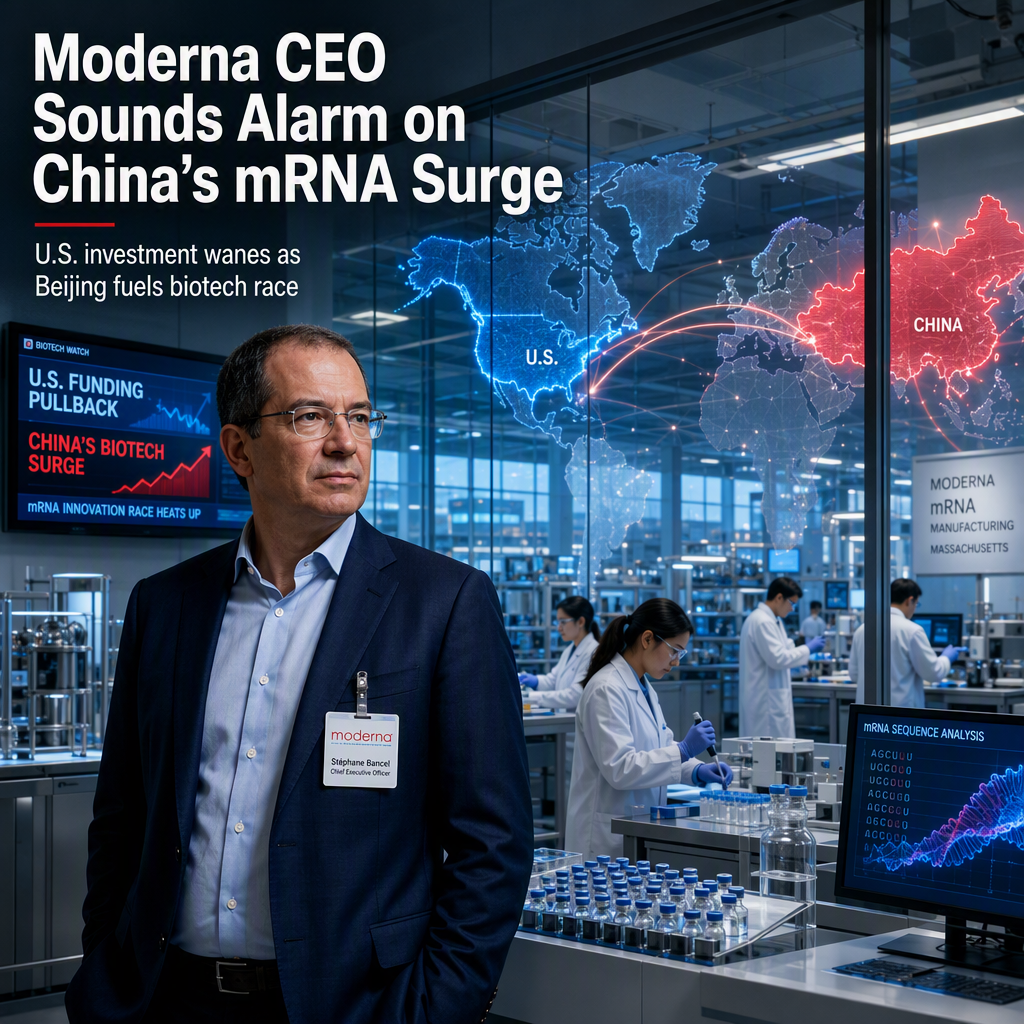
Moderna's CEO Stéphane Bancel has raised concerns about China's significant state-backed investments in mRNA biotechnology, positioning Beijing as a direct challenger to U.S. leadership in the sector. In a recent interview, Bancel highlighted that while the U.S. government is reducing its funding for mRNA research, China is actively designating biotechnology as a 'strategic emerging industry' and providing substantial state financing and subsidies to domestic firms, as noted by the National Security Commission on Emerging Biotechnology [1].
Bancel emphasized the importance of keeping drug manufacturing within the United States, specifically at Moderna's Massachusetts facilities, to safeguard both American patients and the nation's competitive edge in healthcare innovation. He stated, 'I think the government has an active role to play in taking risk for really innovative medicine,' and stressed that continued investment is crucial for long-term benefits to American patients [1].
The U.S. Department of Health and Human Services (HHS) announced in August that it would wind down nearly $500 million in mRNA vaccine development projects through the Biomedical Advanced Research and Development Authority (BARDA), signaling a shift in federal support for the technology [1]. In contrast, Moderna is responding to the competitive threat by expanding its domestic manufacturing capabilities, with Bancel noting that their Massachusetts factory is operational and capable of producing advanced personalized medicines efficiently and at a lower cost compared to therapies like CAR-T cell therapy [1].
Market reaction to Moderna's recent developments has been positive, with the company's shares surging 177% on August 19 following the announcement that its personalized mRNA treatment, in combination with Merck's Keytruda, met key endpoints in a Phase 3 trial [1].
CONCLUSION
Moderna's leadership is sounding the alarm on China's aggressive push into mRNA biotechnology as U.S. government support wanes. The company's strategic focus on domestic manufacturing and recent clinical successes have driven a strong market response, but the competitive landscape is shifting rapidly due to increased Chinese investment.