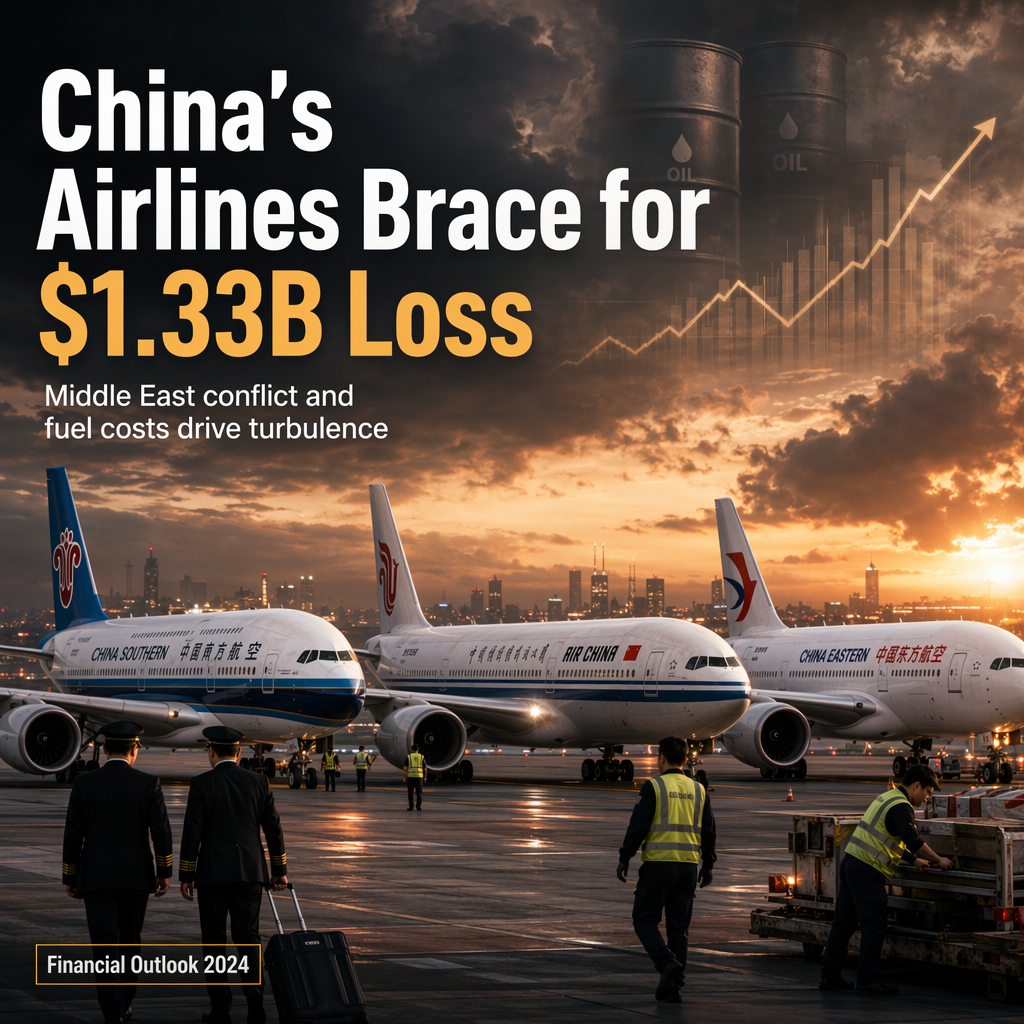
China's three largest state-owned airlines—China Southern Airlines, Air China, and China Eastern—are projecting deeper net losses for the first half of the year, citing the ongoing war in the Middle East as the primary driver behind surging fuel prices and deteriorating financial performance [1]. China Southern Airlines is expected to report the largest loss among the trio, with anticipated net losses reaching up to $1.33 billion for the period [1].
The airlines attribute their worsening results to the sustained high cost of aviation fuel, which has become a significant burden on operating expenses due to geopolitical instability in the Middle East [1]. This situation has sharply eroded profitability, compounding the challenges the carriers already faced in recovering from the COVID-19 pandemic [1].
Despite these headwinds, all three airlines continue to operate both international and domestic routes. However, they have highlighted the impact of fuel price volatility on their bottom lines in recent financial disclosures, signaling ongoing uncertainty for the sector [1]. The expectation of further losses underscores the persistent difficulties confronting China's aviation industry as it navigates global economic uncertainty and region-specific risks [1].
CONCLUSION
China's major airlines are bracing for significant first-half losses, driven by elevated fuel costs linked to the Middle East conflict. The outlook remains challenging for the sector, with continued volatility in fuel prices and broader economic uncertainties weighing on profitability.