
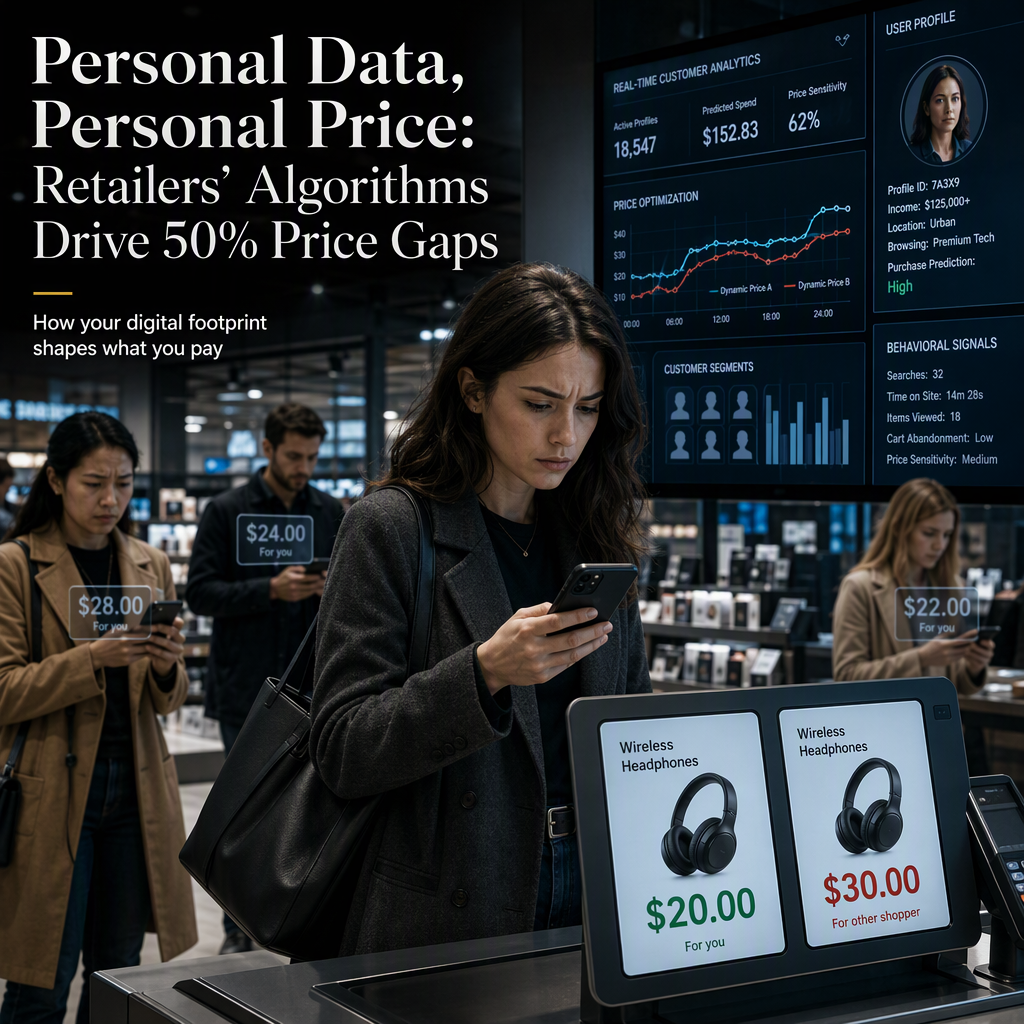
Retailers across sectors such as retail, travel, and food are increasingly using consumer data to conduct 'price experiments,' charging different customers varying prices for the same products and services based on personal information and algorithmic analysis [1]. Lindsay Owens, author of 'Gouged: The End of a Fair Price and What That Means for Your Wallet,' explains that companies utilize data points like browsing history, location, and device type to set individualized prices, a practice known as 'dynamic pricing' or 'personalized pricing' [1].
Market analysts cited in the report note that these strategies enable companies to maximize revenue by identifying which customers are willing to pay more and adjusting prices accordingly, leveraging artificial intelligence and machine learning to refine these tactics [1]. Recent studies referenced in Owens' book reveal that consumers may pay between 10% and 30% more for identical goods depending on their data profile, with price differences reaching as high as 50% for digital goods and services [1].
Industry experts caution that as data collection becomes more sophisticated, the potential for price manipulation grows, raising ethical concerns about transparency and fairness in the marketplace [1]. Owens advises consumers to be mindful of the data they share and suggests using privacy tools like incognito browsing or VPNs to mitigate the effects of personalized pricing [1]. The report also encourages consumers to compare prices across devices and platforms to secure the best deals [1].
CONCLUSION
The increasing use of data-driven pricing experiments by retailers is leading to significant price disparities among consumers, with some paying up to 50% more for the same goods or services. While these practices are legal, they raise important ethical questions and highlight the need for consumer vigilance in the digital marketplace.