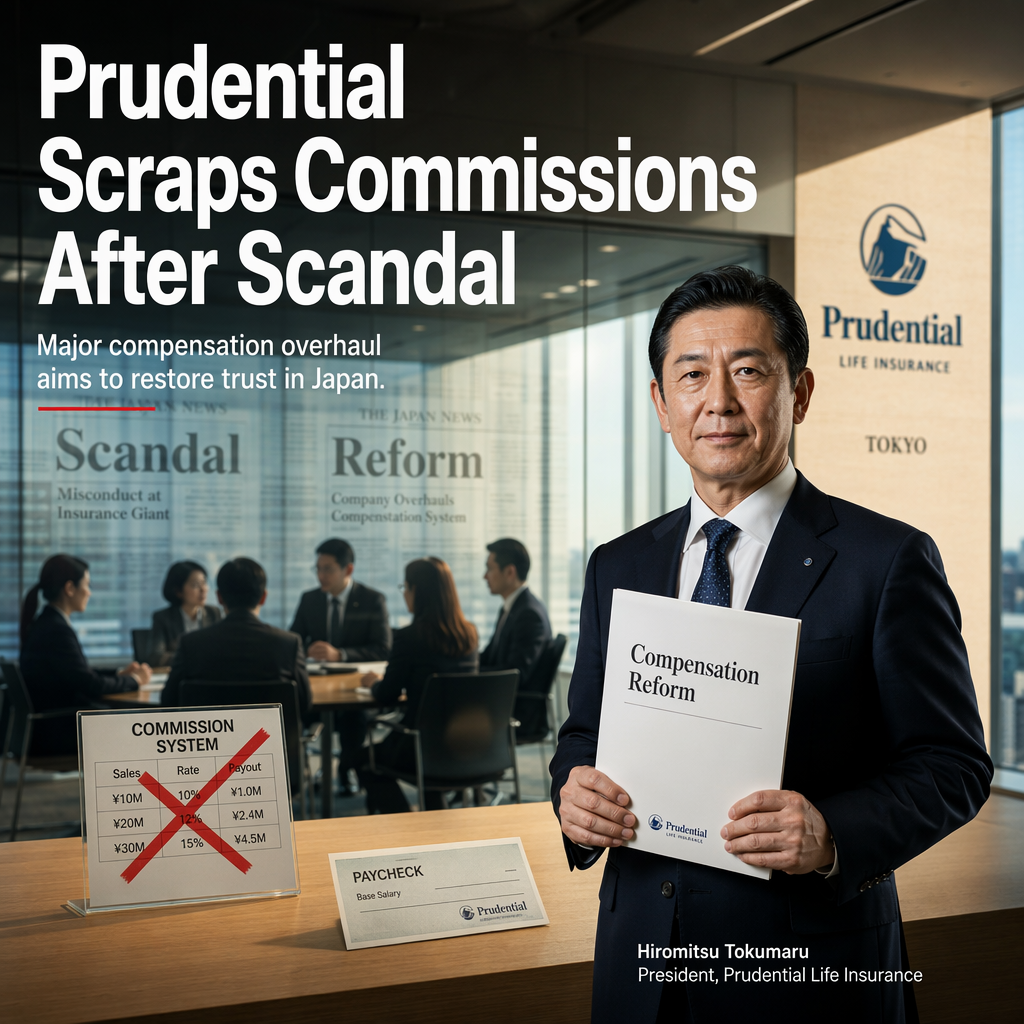
Prudential Life Insurance has announced a fundamental reform of its compensation system, deciding to abolish its commission-heavy salary structure for salespeople in favor of a fixed monthly payment of about 300,000 yen (approximately $1,834) [1]. This decision comes in the wake of a customer exploitation scandal and a series of fraud and misconduct allegations involving the company's Japan operations [1]. The previous performance-based system was cited as an incentive for misconduct, prompting the overhaul [1].
Prudential President Hiromitsu Tokumaru stated that, in addition to the compensation changes, the company plans to reduce the number of executive officers—currently more than 30—and clarify the responsibilities and roles of each [1]. The reforms are designed to better align employee incentives with customer interests and regulatory compliance, aiming to restore trust with both customers and regulators and to prevent future scandals [1].
This shift marks a significant change in the Japanese insurance industry, where sales commissions have traditionally played a large role in motivating employees [1]. The move is expected to have a substantial impact on industry practices and may influence other insurers to reconsider their compensation structures [1].
CONCLUSION
Prudential Life Insurance's overhaul of its compensation system is a direct response to recent misconduct scandals and aims to restore trust and ensure regulatory compliance. The changes represent a major shift in industry norms and are likely to have significant market implications.