
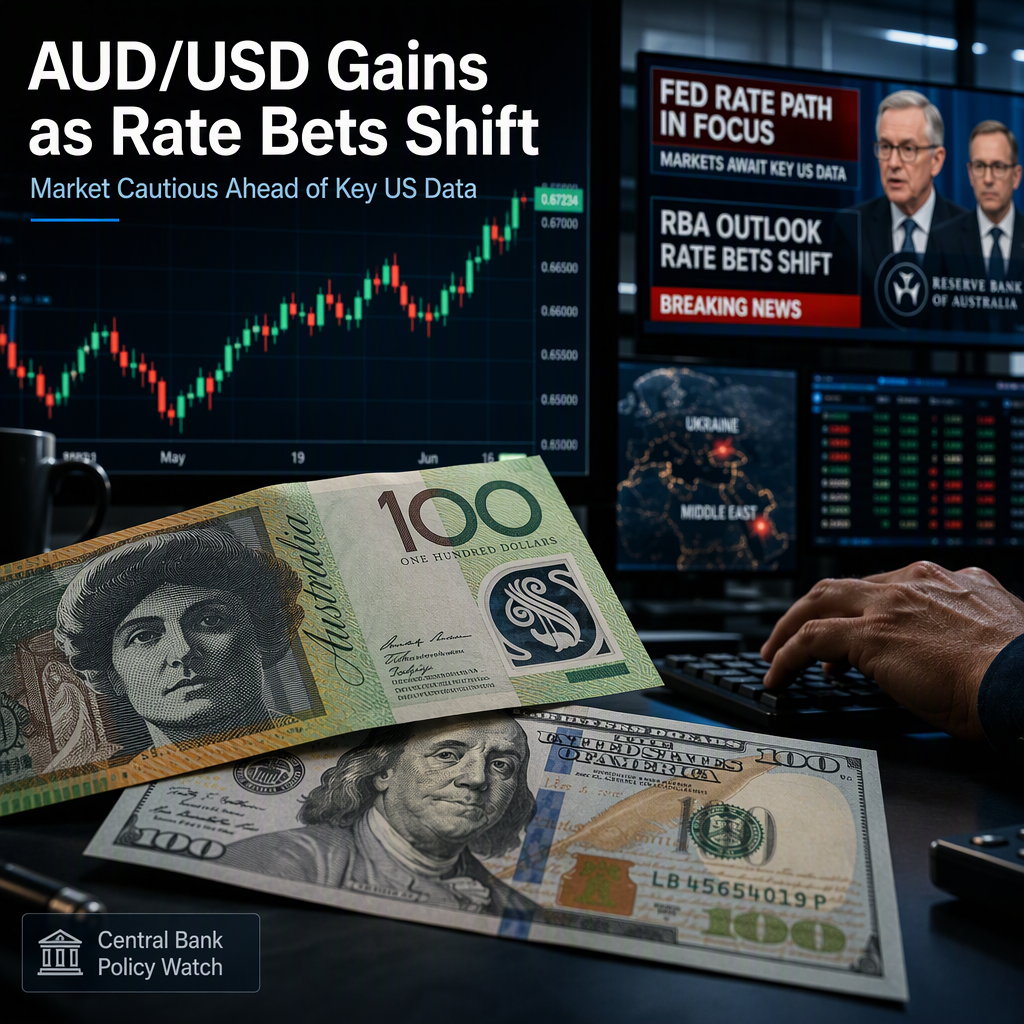
The AUD/USD currency pair strengthened to around 0.6940 during early European trading hours on Friday, with markets turning cautious ahead of key US economic data and escalating conflicts in the Middle East [1]. Traders are closely watching the upcoming US employment data for September, with economists expecting job growth to slow and the unemployment rate to remain at 4.1% for the third consecutive month [1]. A stronger-than-expected jobs report could reinforce expectations for the Federal Reserve (Fed) to raise interest rates, which would support the US Dollar [1].
Market pricing now indicates nearly a 74% probability that the Fed will keep rates unchanged in October, up from 36% a week earlier, according to the CME FedWatch tool. However, markets still anticipate a rate hike by the end of the year [1]. On the Australian side, the likelihood of the Reserve Bank of Australia (RBA) raising interest rates in November has dropped sharply after the latest Consumer Price Index (CPI) data met expectations. Money markets now see only a 20% chance of a rate hike at the RBA's November meeting, as reported by LSEG [1].
Commerzbank analysts highlight that recent data, including a 6.1% month-on-month fall in building permits in August and declining prices in major cities, suggest that expectations for 1.5 additional RBA rate hikes are excessive. They argue that the RBA would be prudent to wait and observe how economic conditions evolve, especially given the lagged effects of previous rate hikes and persistent but moderating inflation [1]. As a result, analysts believe the Australian Dollar is unlikely to gain further support from monetary policy in the near term [1].
On the US side, Fed's Logan delivered a notably hawkish message, with a FXS Speechtracker score of 9.2/10 compared to a baseline of 8.1/10, emphasizing a stronger tightening bias. Logan noted that higher yields may reflect increased term premiums, potentially reducing the need for additional tightening, but also called for at least 50 basis points more in rate hikes and several additional moves to restore price stability, reinforcing the view that policy is not yet restrictive enough [1].
CONCLUSION
The AUD/USD pair has shown short-term strength, but market sentiment remains cautious as traders await key US employment data and monitor central bank policy signals. With the RBA likely on hold and the Fed maintaining a hawkish stance, the Australian Dollar may face limited upside in the near term.