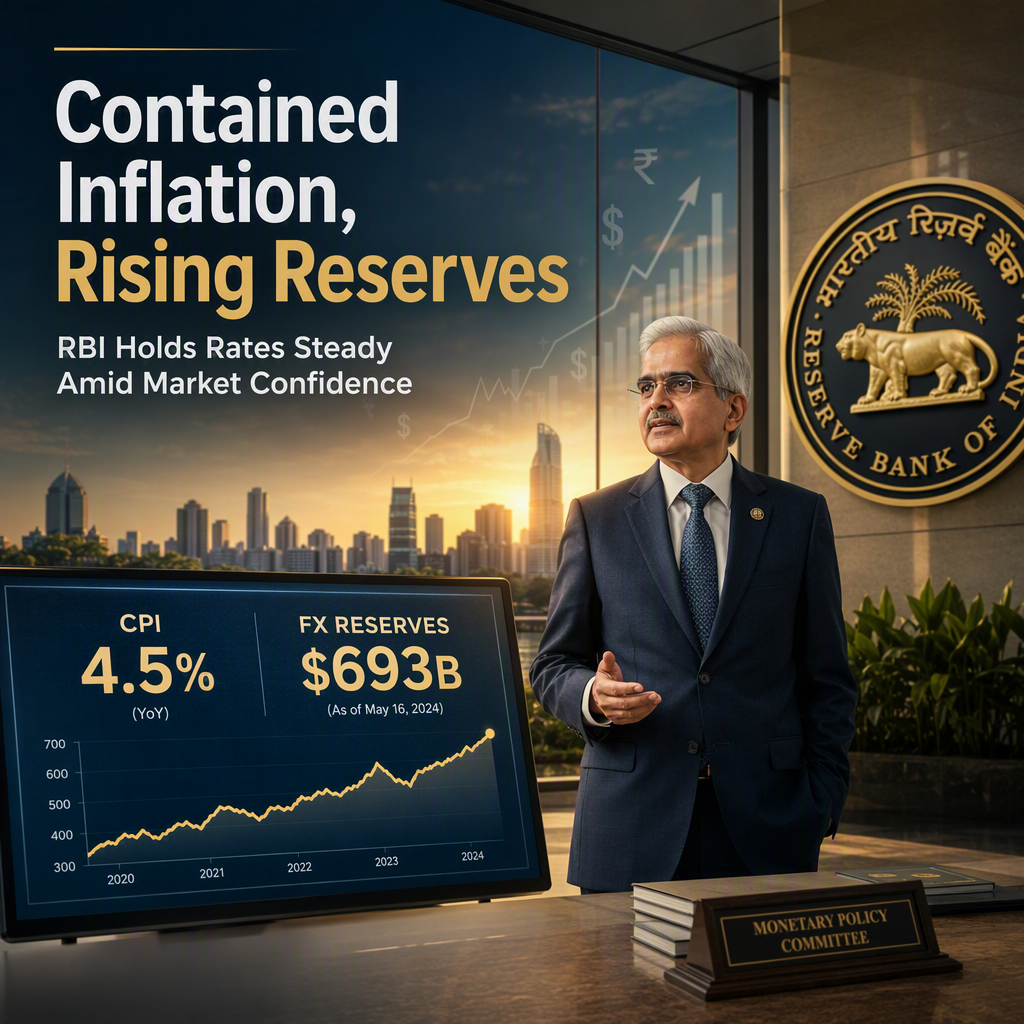
Commerzbank’s FX team reports that India’s Consumer Price Index (CPI) for July rose slightly more than expected to 4.5% year-on-year, compared to the Bloomberg consensus of 4.4% and up from 4.4% in June. This marks the highest inflation reading since December 2024, but it remains within the Reserve Bank of India’s (RBI) 2-6% target range. Year-to-date, inflation has averaged 3.6%, staying below the RBI’s 4.0% mid-point target and its FY2026-2027 forecast of 5.0% [1].
Core inflation was steady at 3.9% in July. RBI Governor Sanjay Malhotra stated earlier in the week that 'inflation is more or less under check,' reflecting the central bank’s relatively calm assessment of underlying price pressures. Commerzbank expects the RBI to keep the policy repo rate unchanged at 5.25% for the foreseeable future, as food and energy price pressures remain contained [1].
The RBI anticipates inflation may rise and peak in Q3, but improved monsoon conditions and a partial retreat in crude oil prices have reduced near-term inflation risks. This environment supports the RBI’s neutral policy stance and a continued wait-and-see approach. The bank notes that a renewed tightening bias would require clearer evidence of second-order effects from higher food and energy prices feeding into broader inflation [1].
India’s foreign exchange reserves rose by USD 10.5 billion to USD 693 billion in the week ending 31 July, the largest weekly increase in six months and reaching a near three-month high. These reserves now cover 10.4 months of imports. The increase was supported by inflows under the RBI’s FCNR(B) deposit scheme, which attracted USD 36.7 billion by end-July. In the foreign exchange market, USD/INR fell 0.1% to 95.33, remaining within the 94.00-96.80 range over the past two months. There were reports that the RBI sold USD in the onshore market to support the INR amid elevated crude oil prices [1].
CONCLUSION
India’s contained inflation and robust FX reserves support the RBI’s decision to maintain its current policy stance. With inflation risks appearing manageable and the rupee stable, the central bank is expected to keep rates unchanged in the near term. Market reaction has been muted, reflecting confidence in the RBI’s approach.