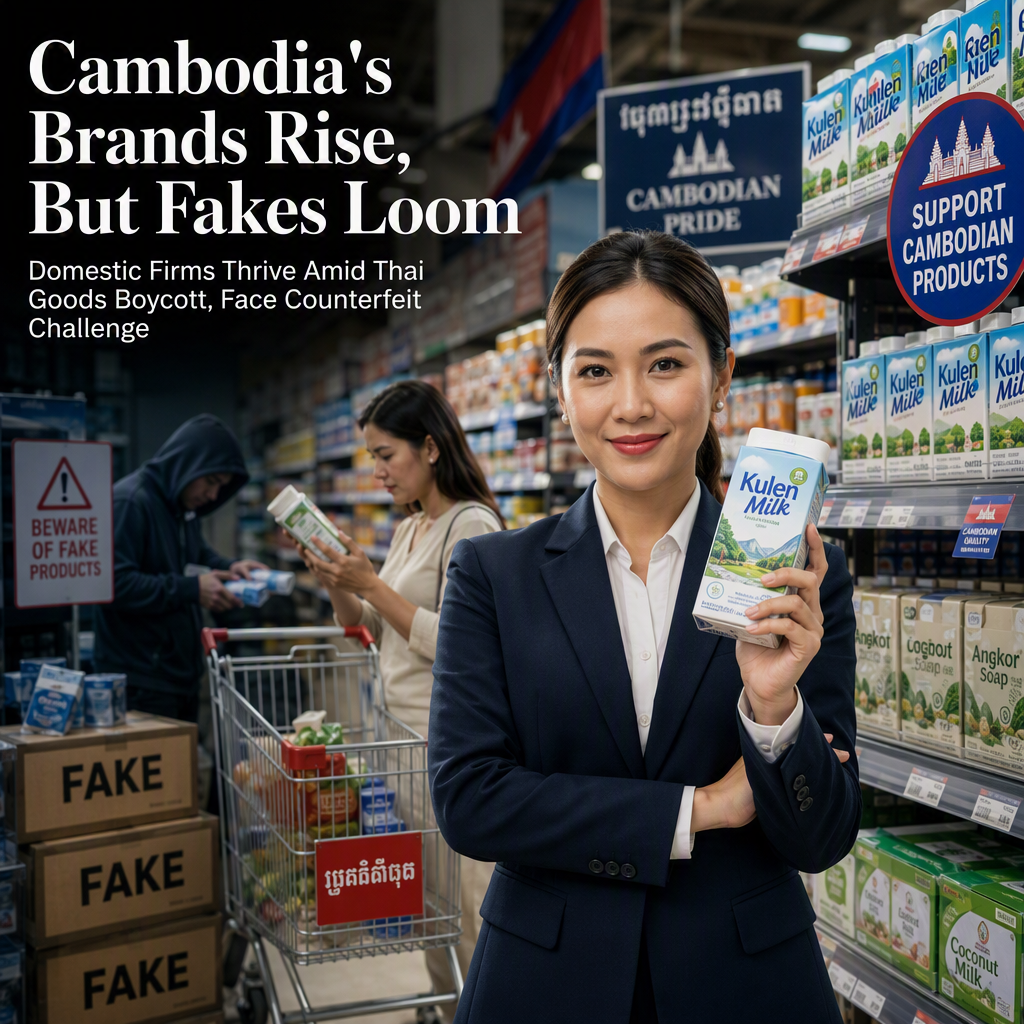
Cambodian consumer companies have experienced a significant boost in market share following a boycott of Thai goods that began after border disputes escalated last year [1]. Sectors such as milk production and soap making have seen particularly strong demand for domestic brands, as Cambodian producers quickly filled the gap left by declining popularity of Thai products [1]. Financial analysts report that this shift is reshaping consumer habits and supply chains, with Cambodian companies noting higher revenues and improved margins due to the nationalistic sentiment driving the boycott [1].
A local industry executive described the boycott as a 'turning point' for Cambodian producers, highlighting sustained demand for homegrown brands and new opportunities for investment and expansion [1]. However, the market landscape has become more complex due to a rise in counterfeit products mimicking both Thai and Cambodian brands, which manufacturers say is complicating competition and raising risks for both consumers and genuine producers [1].
Market sentiment, while generally positive for Cambodian consumer companies, remains cautious. Traders warn that the proliferation of fake goods could undermine consumer trust and disrupt future growth, prompting calls for stricter regulation and enforcement to protect authentic brands and maintain market integrity [1]. The article notes a bullish outlook for Cambodian consumer companies in the short to medium term, contingent on addressing the issue of counterfeit products [1].
CONCLUSION
The boycott of Thai goods has created substantial opportunities for Cambodian consumer companies, leading to increased revenues and market share. However, the rise of counterfeit products poses a risk to sustained growth, and market participants are urging stronger regulatory measures to safeguard the sector's future.