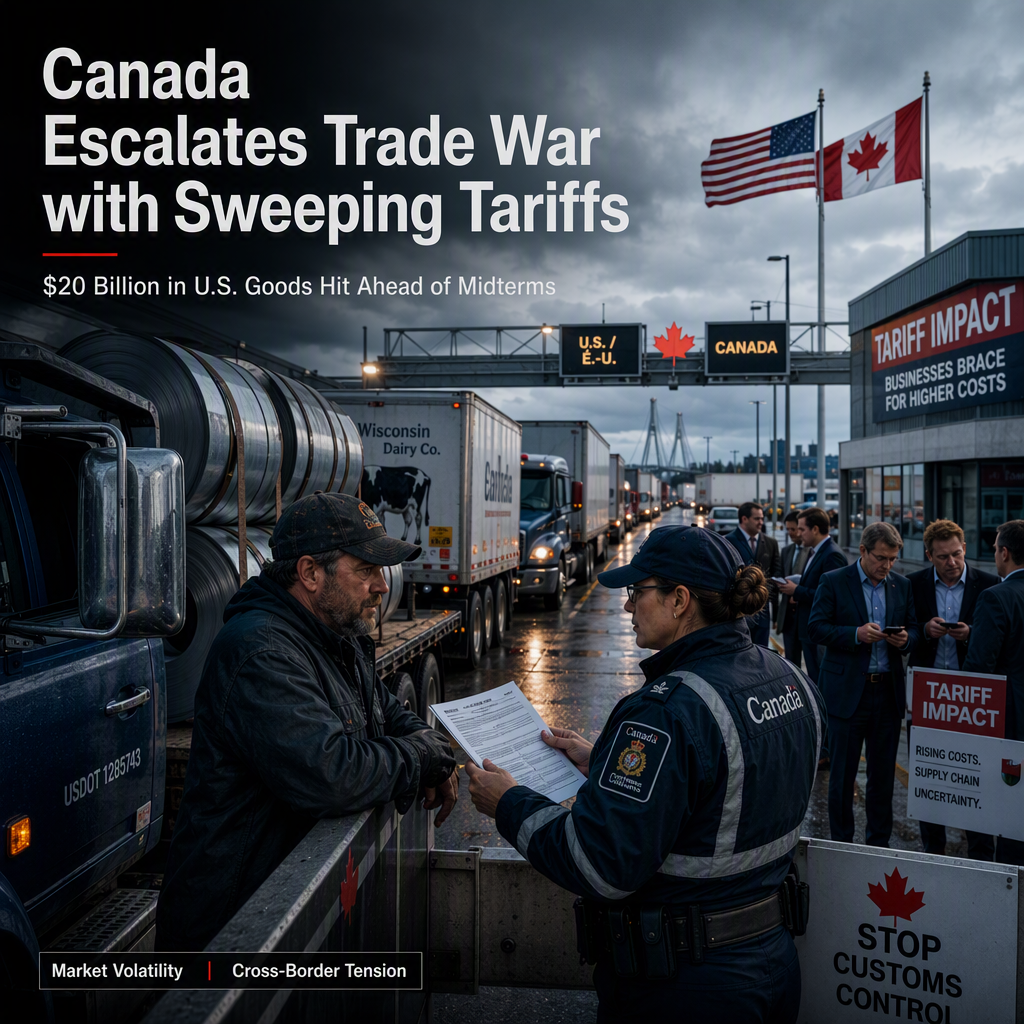
Canada has implemented retaliatory tariffs on approximately $20 billion worth of U.S. goods, affecting around 700 American products, as trade tensions between the two countries escalate following the collapse of trade talks last month [1][2]. The tariffs, which took effect just after midnight, range from 15% to 50% and target a wide array of goods including steel, aluminum, dairy products such as milk and cheese, golf clubs, appliances, clothing, and farm equipment [1][2]. These affected goods represent about 6% of the $333.6 billion in U.S. exports to Canada last year [1].
The timing of these tariffs comes less than two months before the U.S. midterm elections and amid ongoing concerns about rising fuel prices and the war with Iran, which are already weighing on American voters [2]. Market analysts warn that the new tariffs are likely to have significant financial repercussions for both Canadian and American businesses, increasing uncertainty for manufacturers, exporters, and consumers on both sides of the border [2]. Experts caution that the increased costs faced by companies may be passed on to consumers, potentially leading to higher prices for everyday goods and exacerbating inflationary pressures, particularly in sectors reliant on cross-border trade [2].
President Donald Trump responded to the tariffs by intensifying his rhetoric on social media, threatening a complete ban on aircraft sales from Canadian manufacturer Bombardier and criticizing Canada for restricting U.S. banks and companies [1]. Trump claimed that over 50% of Bombardier's revenue comes from the United States and accused Canada of treating Chinese goods more favorably than American products [1]. Vice President JD Vance also criticized Canada for imposing tariffs on agricultural goods from border states like Maine while benefiting from U.S. military security [1].
Canada's actions extend beyond tariffs, with eight of its ten provinces continuing to restrict or ban sales of U.S. alcohol, resulting in a more than 70% year-over-year decline in U.S. spirits exports to Canada, according to the Distilled Spirits Council [1]. Market strategists anticipate volatility in commodity and retail markets, advising investors to monitor price levels, trading volumes, and moving averages for sectors most exposed to cross-border tariffs [2].
The ongoing trade dispute is contributing to broader economic concerns ahead of the U.S. midterm elections, with trade policy and fuel prices becoming central issues in debates about the state of the American economy [2].
CONCLUSION
Canada's imposition of sweeping tariffs on U.S. goods marks a significant escalation in the trade conflict, with both immediate and potential long-term impacts on businesses and consumers. Market analysts expect increased volatility and inflationary pressures, particularly in sectors dependent on cross-border trade. The dispute is likely to remain a key issue as the U.S. approaches the midterm elections.