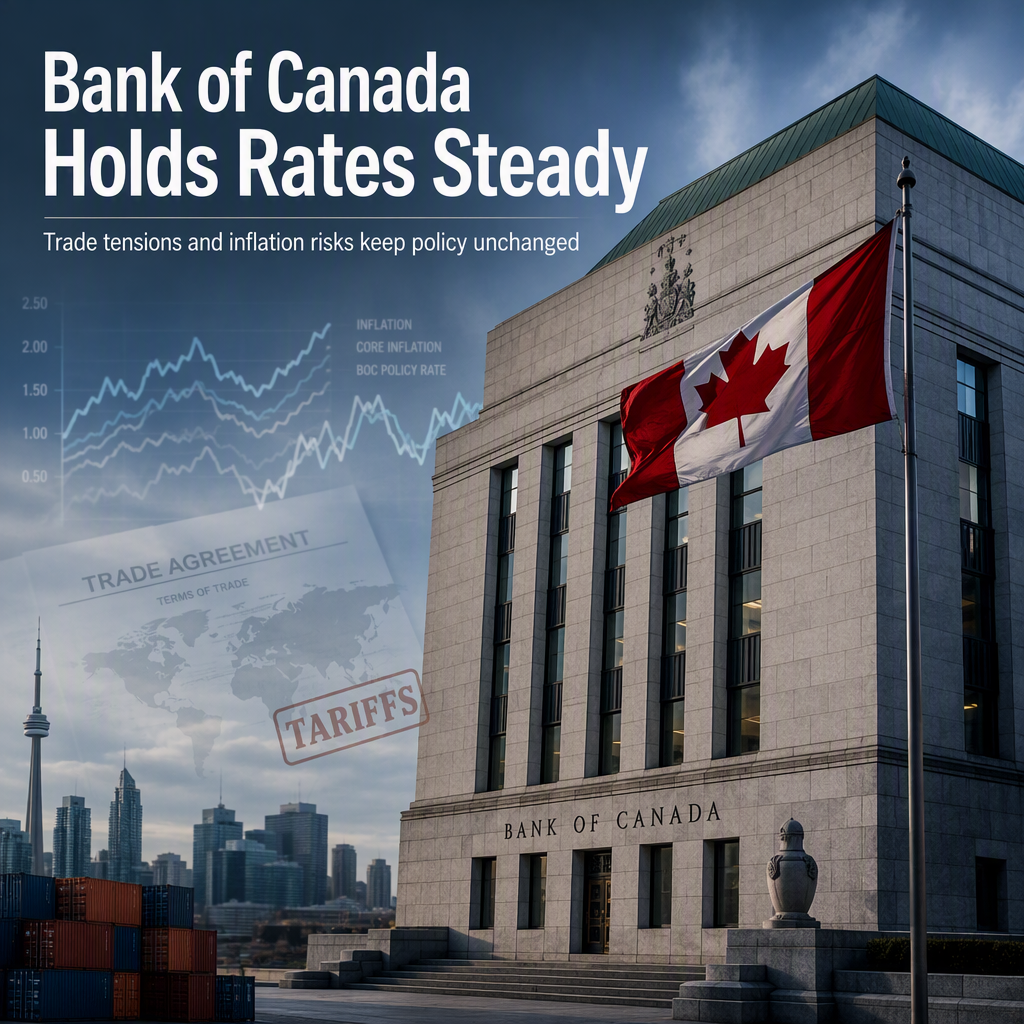
Rabobank strategists anticipate that the Bank of Canada (BoC) will maintain its overnight rate at 2.25% during the September 2 meeting and keep it unchanged through 2027, despite market expectations of approximately 17 basis points of tightening by the end of the year [1]. This outlook is based on several factors, including robust Q2 GDP growth driven by exports, intensifying US–Canada trade tensions, and persistently high headline Consumer Price Index (CPI) inflation, particularly due to energy and trade-related risks [1].
Rabobank notes that the BoC's monetary policy is already at its terminal rate, and the central bank is constrained by ongoing productivity challenges in the Canadian economy [1]. The strategists warn that if current tariff levels persist, Canadian GDP could be negatively impacted by 0.3 to 0.4 percentage points through the end of the next year [1].
Despite the BoC's commitment to preventing inflation from spreading further and causing prolonged price pressures, Rabobank believes the central bank's options are limited due to subdued underlying economic trends and ongoing geopolitical issues, including the closure of the Strait of Hormuz to traffic and the enforcement of new and higher tariffs between the US and Canada [1].
Rabobank does not forecast any rate hikes or cuts through year end, maintaining that the BoC is at its terminal rate of 2.25% [1].
CONCLUSION
Rabobank expects the Bank of Canada to keep its policy rate unchanged at 2.25% through 2027, citing trade tensions, inflation risks, and subdued economic trends as key factors. While markets are pricing in some tightening, Rabobank sees the central bank as constrained and unlikely to move rates in the near term.