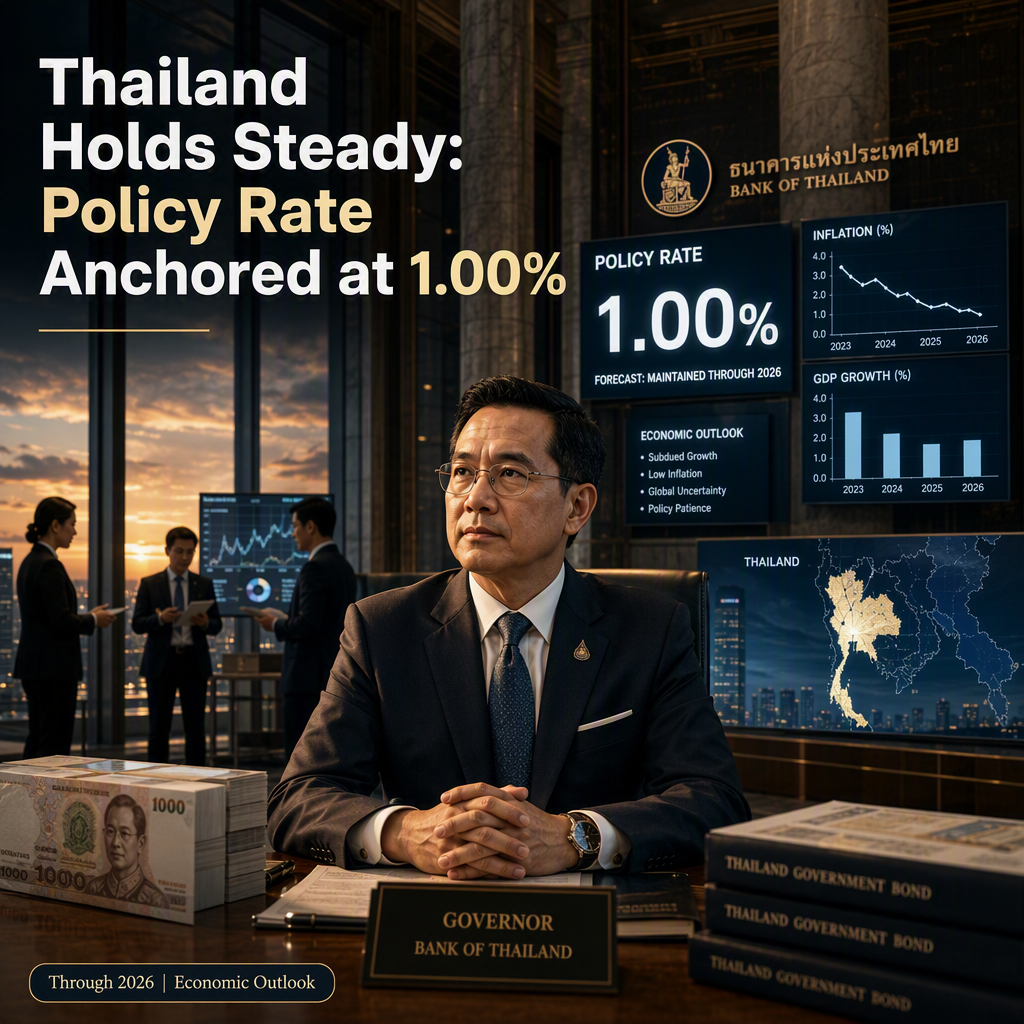
DBS Group Research economist Chua Han Teng anticipates that the Bank of Thailand (BoT) will keep its policy rate unchanged at 1.00% through 2026, following the central bank's unanimous decision on August 26 to hold rates steady [1]. Teng cites factors such as low and uneven economic growth, constrained private consumption, and subdued inflation as reasons for the BoT's limited appetite to adjust interest rates in either direction [1].
Headline inflation in Thailand has retreated from the upper end of the BoT’s 1-3% target range, reducing the impetus for policy tightening and anchoring medium-term inflation expectations [1]. Despite this, the BoT remains vigilant due to ongoing risks, including the unresolved conflict in the Middle East, gradual pass-through of energy costs, and potential upside risks to food inflation from adverse El Nino-related weather conditions [1]. The authorities are expected to look through these supply-side shocks, which are anticipated to ease after the first quarter of 2027 [1].
The BoT also noted volatile movements in the Thai baht against the US dollar, attributed to external developments [1]. As a result, short-end Thai government bond yields are expected to remain stable, even amid currency volatility and ongoing supply-side inflation risks [1].
CONCLUSION
The Bank of Thailand is projected to maintain its policy rate at 1.00% through 2026, reflecting subdued economic growth and inflation. While inflation risks persist, the central bank's stance is expected to anchor short-end bond yields and provide stability amid external volatility.