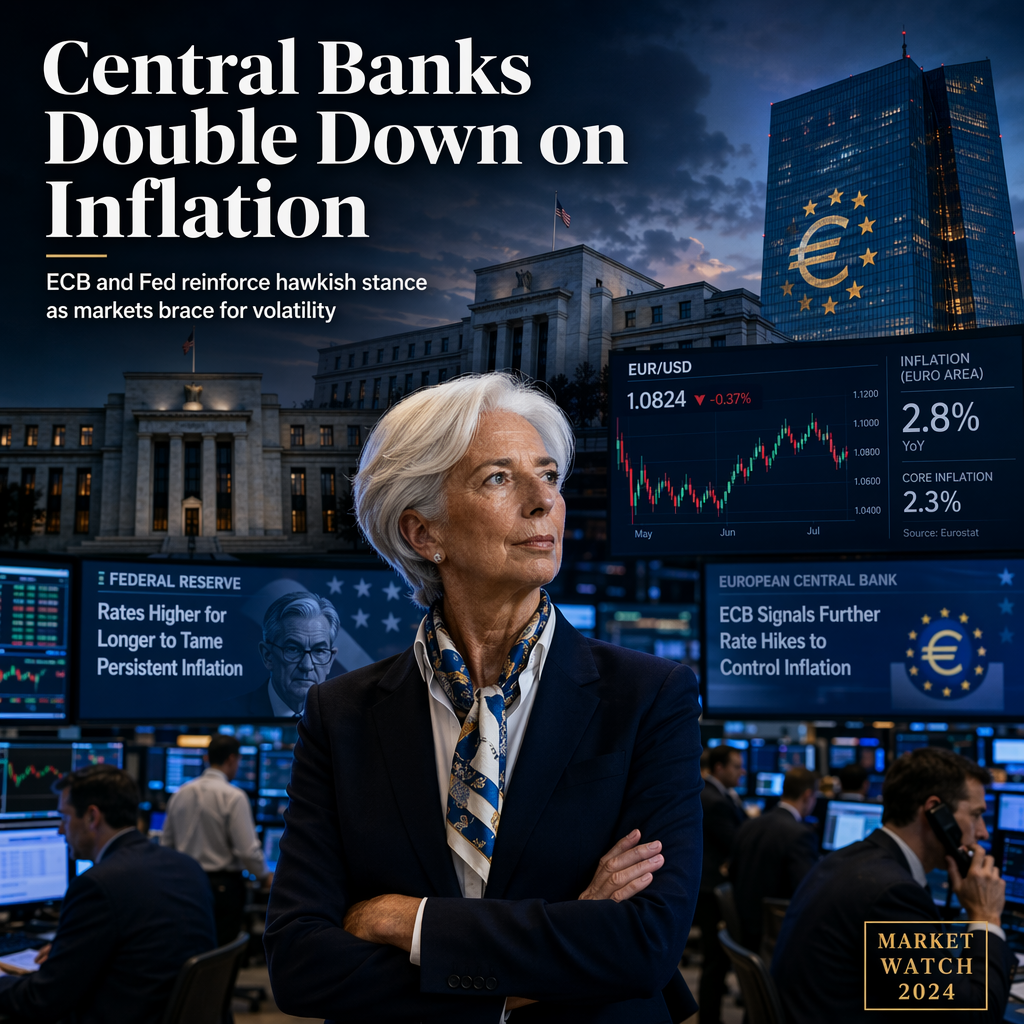
European Central Bank (ECB) policymaker Gediminas Šimkus stated that there is still sufficient upside risk to inflation, justifying at least one more rate hike to ensure inflation expectations remain anchored. Šimkus emphasized that capping inflation expectations is central to the ECB’s objective of maintaining inflation around its medium-term target [1]. In parallel, ECB chief economist Philip Lane highlighted that, despite recent declines in oil and Euro inflation swaps, the effects of earlier energy shocks are still expected to feed through to prices. Lane specifically noted that 'four months of elevated energy prices' will have indirect effects on food, goods, and services this year and into next year [2].
Deutsche Bank analysts observed that markets remain fully priced for a second ECB rate hike this year following last week’s move, a sentiment that has contributed to a modestly firmer EUR/USD. However, the EUR/USD pair has struggled to attract significant buyers as traders remain cautious ahead of the Federal Reserve’s rate decision [1][2].
On the US side, the Federal Reserve’s upcoming meeting, the first under new Chair Kevin Warsh, is expected to keep rates unchanged but to shift guidance. Deutsche Bank’s US economists anticipate the removal of the prior easing bias and a dot plot that no longer signals a 2026 rate cut, as previously indicated in March. Fed funds futures are currently pricing in 21 basis points of hikes by year-end, with this expectation rising by 1.3 basis points yesterday, reflecting diminished expectations for dovish rhetoric from Warsh [3].
Overall, both the ECB and the Federal Reserve are signaling a more hawkish stance, with the ECB expected to continue tightening to address persistent inflation risks and the Fed likely to drop its easing bias, contributing to heightened market uncertainty and volatility [1][2][3].
CONCLUSION
ECB officials are signaling at least one more rate hike to address persistent inflation risks, with markets fully pricing in further tightening. Meanwhile, the Federal Reserve, under new leadership, is expected to shift toward a more hawkish stance by removing its easing bias. These developments are contributing to increased market caution and volatility.