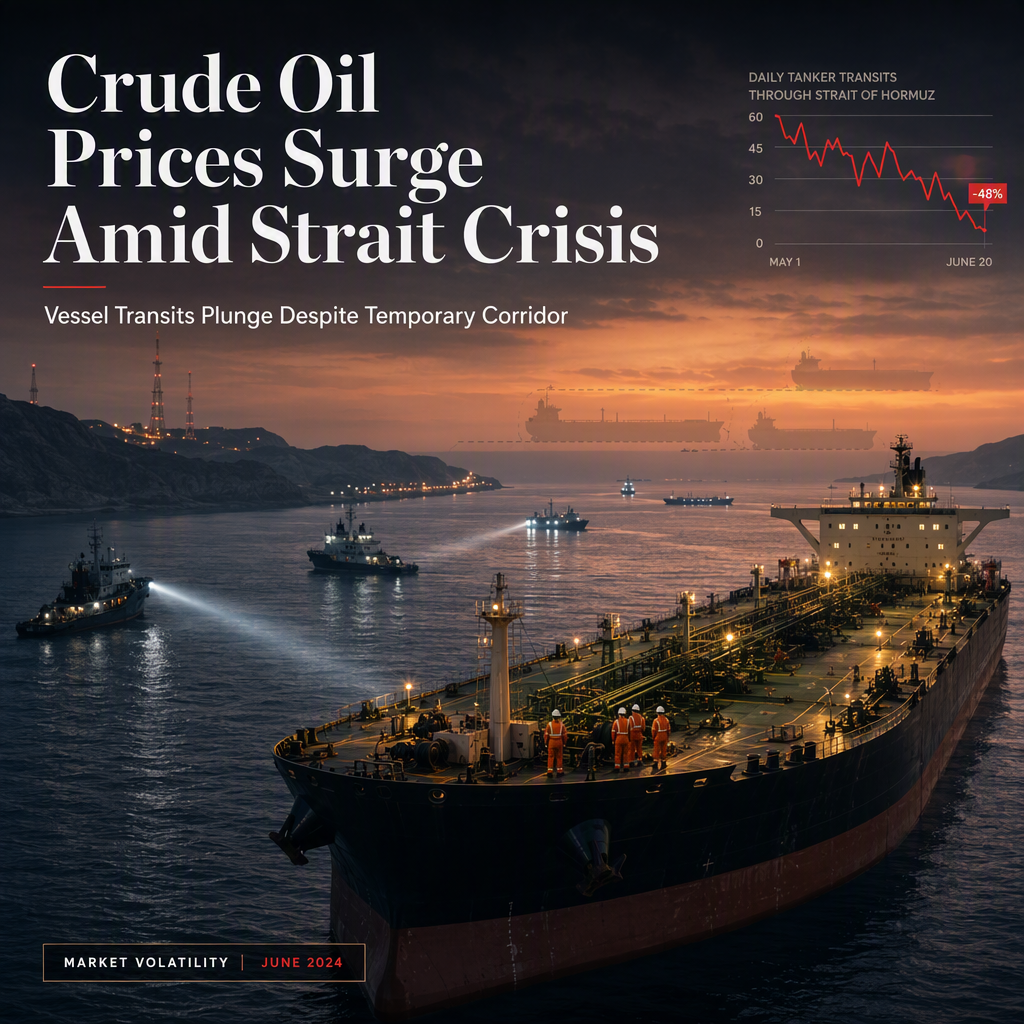
Crude Oil experienced significant volatility, trading just above $82.00 and closing 1.78% higher on the session after initially extending a three-session slide to a low just short of $79.50 in the European morning. The market initially sold off in response to headlines about the Strait of Hormuz, but reversed course after the details of the announcement were clarified later in the session, resulting in a more than $3.50 rebound to a session high just below $83.00 after 16:00 GMT [1].
The core event was the announcement by Iran and Oman of a temporary joint maritime corridor through the Strait of Hormuz, which includes mine clearance. This announcement led to a roughly 6% drop in crude oil prices over three sessions, as it was initially interpreted as the unwinding of a war premium. However, the terms of the corridor indicate it is temporary and joint, with Iran maintaining control over traffic. Iran's deputy foreign minister stated that the waterway would not fully reopen until the U.S. meets commitments under a June memorandum, which has since lapsed, suggesting the corridor is more of a negotiating position than a concrete supply schedule [1].
A key issue is the imposition of fees for passage. Tehran has implemented a permission-and-payment regime, reportedly charging $1 million to $2 million per voyage, framing these as service charges rather than tolls due to maritime law restrictions. Oman prefers these charges to be voluntary, while Iran wants them mandatory, and this disagreement remains unresolved. The Iranian body responsible for collecting these fees was designated in May, raising legal concerns for charterers who would have to transact with a sanctioned entity [1].
Despite the market's initial reaction, the actual number of vessels transiting the Strait of Hormuz has declined sharply since August 22, dropping from as many as 20 inbound and 14 outbound vessels (plus three in dark mode) to as few as four inbound, none outbound, and three in dark mode by Monday. This is a significant decrease from the prewar reference of over 100 transits per day. Notably, about 65% of crude oil leaving through the strait is destined for China, and the outbound leg, which is most critical for seaborne balances, has effectively stopped. This disconnect between market price movements and physical flows highlights ongoing uncertainty and risk in the region [1].
CONCLUSION
Crude oil prices initially fell but rebounded as the market digested the true implications of the Iran-Oman corridor announcement. Despite the temporary corridor, vessel transits through the Strait of Hormuz have sharply declined, raising concerns about actual supply disruptions. The unresolved fee regime and ongoing legal uncertainties suggest continued volatility and risk for crude oil markets.