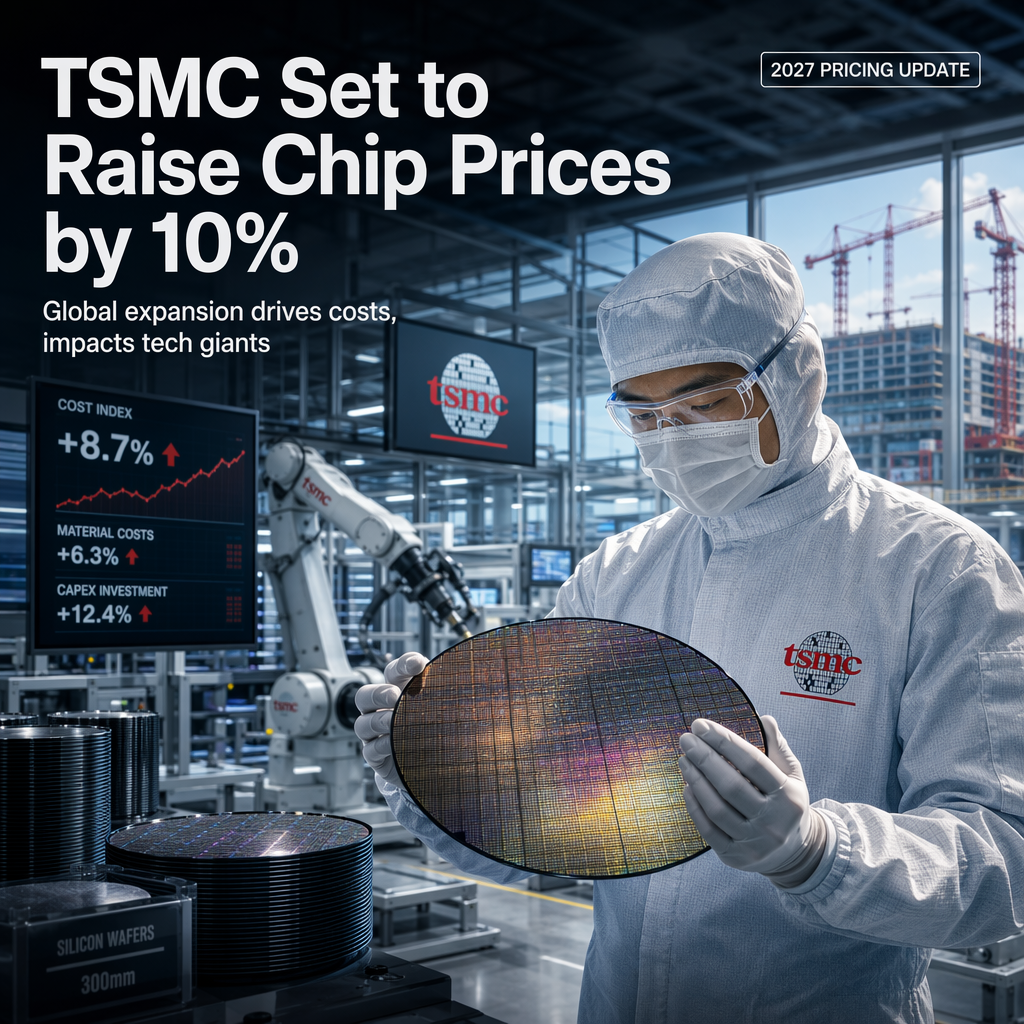
TSMC, the world's largest contract chipmaker, will increase prices for both advanced and mature chip production services by up to 10% starting in 2027, according to multiple sources cited by Nikkei Asia [1]. The price hikes are a response to rising costs for materials, manufacturing equipment, and the construction of new overseas chip plants, particularly in the U.S., Japan, and Europe [1]. The new pricing will affect a broad range of TSMC's chipmaking clients, including major technology companies such as Apple, Nvidia, and AMD [1].
The company is adopting a less aggressive approach to price increases, with some advanced chipmaking nodes potentially seeing smaller hikes than the maximum 10% [1]. This strategy aims to help TSMC maintain healthy profit margins while continuing its significant investments in global manufacturing expansion [1]. An industry executive noted that costs for building new fabs overseas are significantly higher than in Taiwan, due to factors such as labor, regulatory compliance, and supply chain setup, making it necessary for TSMC to pass some of these expenses onto clients [1].
Market analysts cited in the article believe that the measured price increases are unlikely to significantly deter demand for advanced nodes, given the ongoing need for high-performance chips in AI, 5G, and automotive applications [1]. However, customers relying on more mature nodes, which are used in a variety of consumer and industrial electronics, may experience tighter margins and could consider alternative suppliers if price competition intensifies [1].
TSMC's decision comes at a time when the global semiconductor industry is dealing with supply constraints, inflationary pressures on inputs, and the strategic need for geographic diversification of chip manufacturing [1]. The company’s capital expenditure plans remain robust, with commitments to invest billions of dollars in expanding its manufacturing footprint [1].
CONCLUSION
TSMC's planned price increases of up to 10% in 2027 reflect the company's efforts to offset rising costs and sustain its global expansion. While the move is expected to have significant ripple effects across the semiconductor supply chain, demand for advanced chips is likely to remain strong. Customers using mature nodes may face increased cost pressures and could seek alternatives if price competition intensifies.