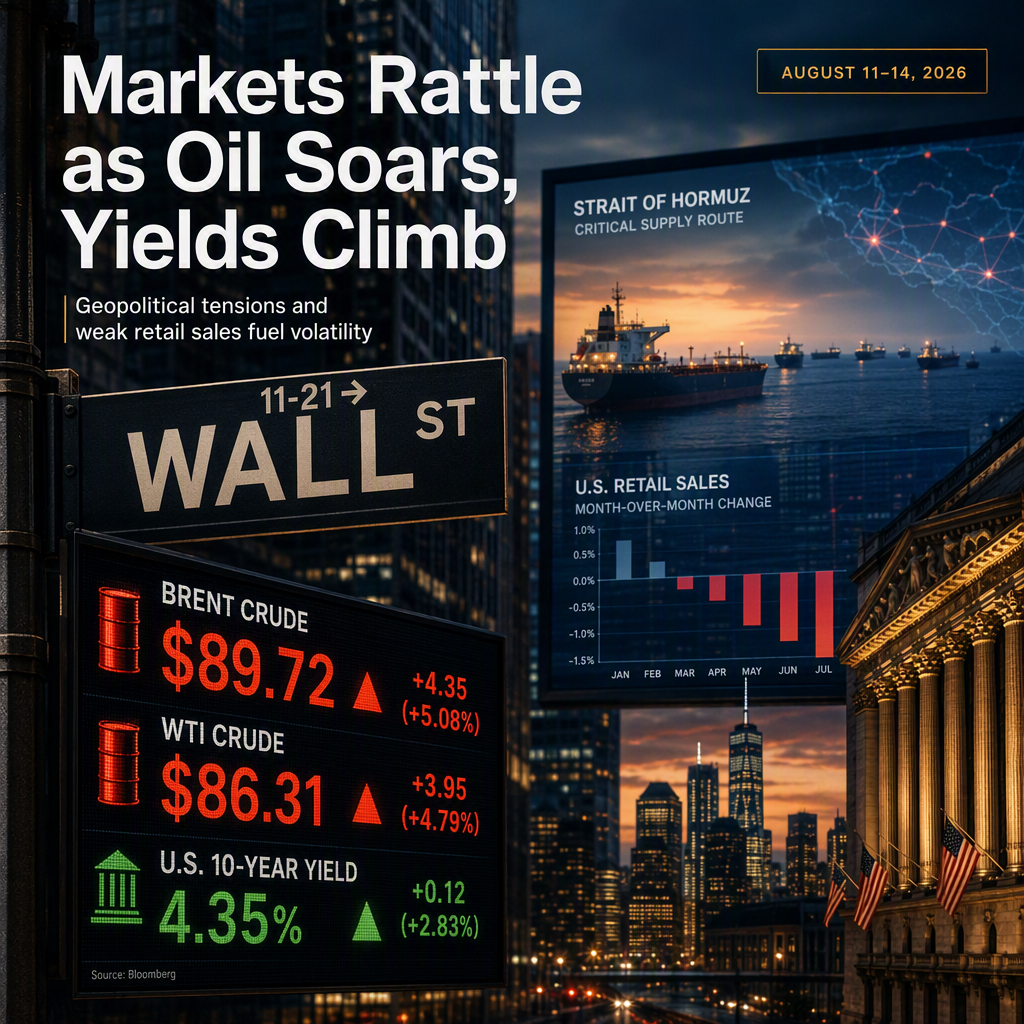
During the week of August 11-14, 2026, financial markets were marked by heightened volatility driven by a combination of geopolitical tensions and key US economic data releases. The ongoing standoff in the Strait of Hormuz kept oil prices elevated due to supply concerns, with West Texas Intermediate (WTI) crude rising 1.50% to $82.39 [1][2]. This oil strength contributed to inflation anxiety and supported the Canadian dollar, which outperformed other major currencies [1].
US economic data played a significant role in market movements. The Consumer Price Index (CPI) matched forecasts but still triggered sharp price reversals as traders reacted to persistent inflation pressures [1]. The Producer Price Index (PPI) came in softer than expected, which boosted risk sentiment, sent the S&P 500 to fresh record highs, and reduced expectations for further Federal Reserve rate hikes [1]. However, US Retail Sales contracted by -0.6% month-over-month, missing forecasts of 0.1% growth and marking the largest miss in over a year [1][2]. This decline was attributed in part to a shift in Amazon's Prime Day and falling gasoline prices [2]. The disappointing retail sales data briefly dragged the US dollar to its weekly low before a yield-driven recovery helped the greenback claw back most losses [1]. The US Dollar Index (DXY) fell over 0.31% to 99.63 but was poised to end the week nearly flat [2].
US Treasury yields responded to these developments, with the 10-year yield rising by over 4 basis points to 4.692% as oil prices remained strong [2]. The 2-year Treasury note yield, sensitive to interest rate expectations, initially fell but later recovered, rising two basis points to 4.17% [2]. Money markets priced in a 63% chance of a Federal Reserve rate hike at the December 2026 meeting [2]. Meanwhile, the University of Michigan Consumer Sentiment index dropped from 55.2 to 51.0 in August, indicating weakening consumer sentiment, though inflation expectations remained stable [2].
Gold maintained its strength as both a safe haven and an inflation hedge, holding above key support levels amid ongoing market uncertainties and geopolitical risks [1]. Traders remained cautious but opportunistic, focusing on intraday strategies around major data releases and headline-driven price action [1]. Looking ahead, the US economic calendar includes housing data, the ADP Employment Change 4-week average, jobless claims, and Flash PMIs [2]. The trajectory of Federal Reserve rate hikes is now less certain following the softer PPI data, though CPI and retail sales figures will keep policymakers vigilant [1].
CONCLUSION
The week was defined by elevated oil prices and rising US Treasury yields amid geopolitical tensions and disappointing retail sales data. While softer PPI data reduced expectations for further Fed rate hikes, persistent inflation and weak consumer sentiment kept markets volatile. Investors are expected to remain cautious as they monitor upcoming economic releases and ongoing geopolitical developments.