
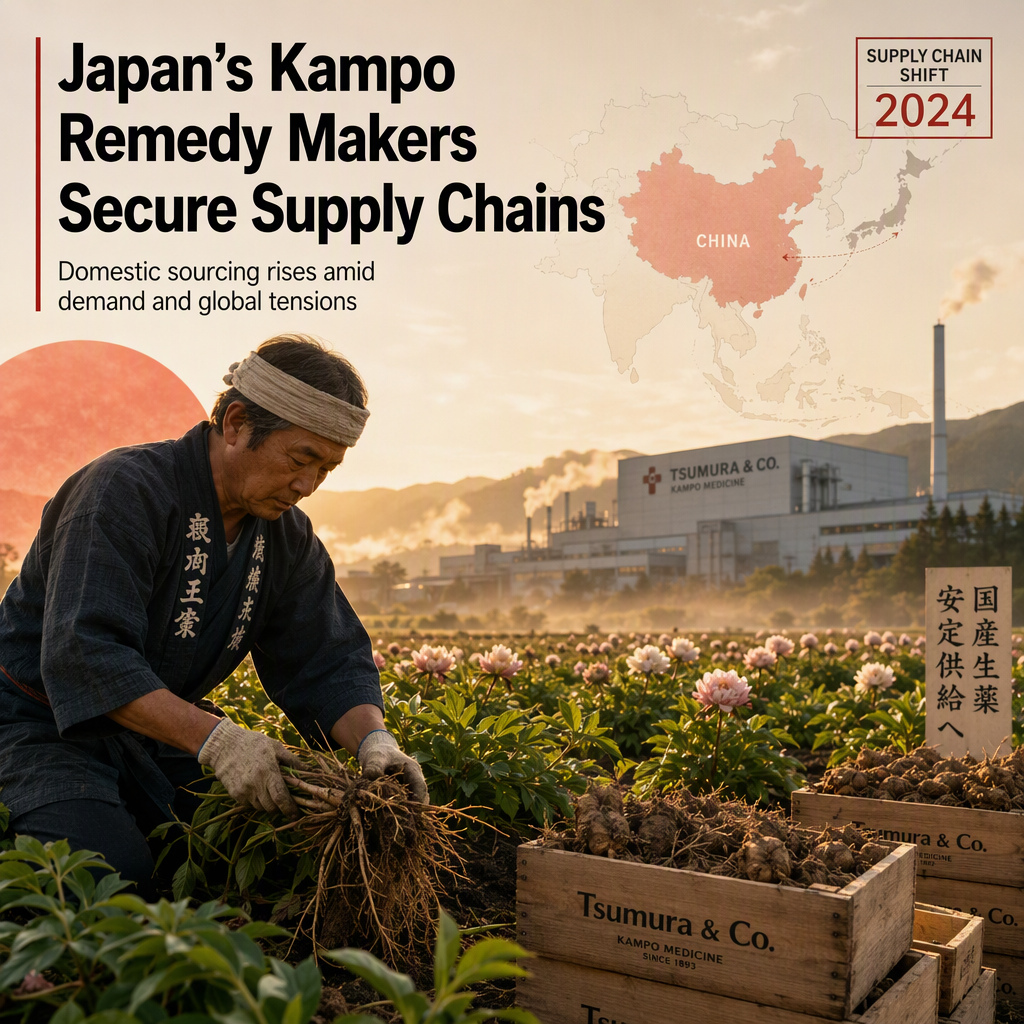
Japanese traditional drugmakers, including Tsumura & Co., are actively developing domestic supply chains to reduce their reliance on Chinese imports for raw materials used in Kampo medicines [1]. This strategic shift is driven by growing demand for Kampo remedies in Japan, as well as concerns over geopolitical tensions, supply disruptions, and rising prices for Chinese herbal ingredients [1].
Tsumura, a leading manufacturer in the sector, has begun procuring herbal ingredients such as peony root and licorice from Japanese farmers, increasing contracts to cultivate these key materials domestically [1]. The company aims to raise the proportion of domestically sourced ingredients in its supply chain, thereby mitigating risks associated with shortages and price volatility in overseas markets [1].
Industry analysts highlight that transitioning to domestic production requires substantial investment and time, as farmers must acquire specialized cultivation techniques for medicinal herbs [1]. Despite these challenges, Tsumura and other Japanese drugmakers believe that a stable domestic supply will enhance product quality and bolster the resilience of Japan's traditional medicine sector [1].
Market observers anticipate that this trend will persist, with Japanese pharmaceutical companies continuing to prioritize supply chain security in response to ongoing uncertainties in global trade [1].
CONCLUSION
Japanese herbal remedy makers are moving to secure their supply chains by sourcing more ingredients domestically, responding to market demand and global uncertainties. While this transition requires investment and specialized skills, industry participants and analysts expect it to strengthen the sector's resilience and ensure consistent product quality. The market impact is medium, reflecting both the challenges and potential benefits of this strategic shift.