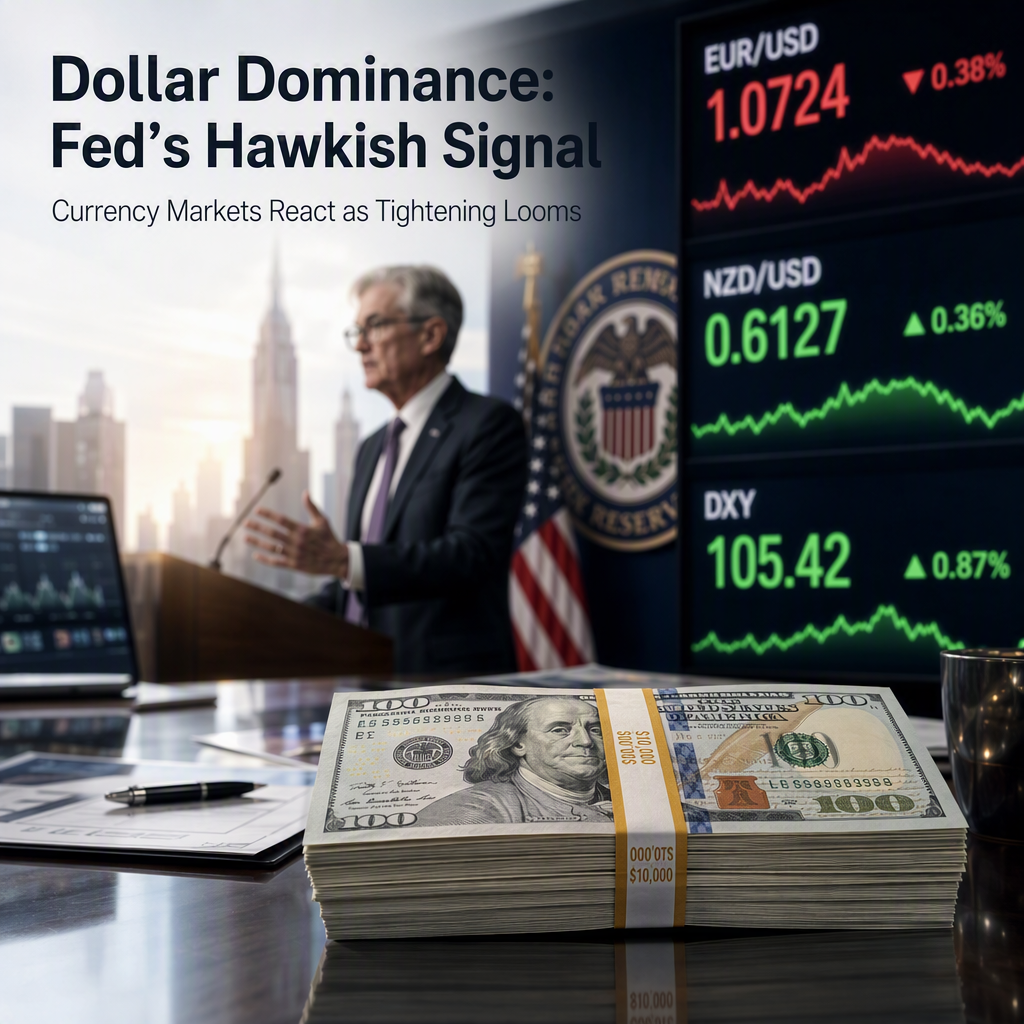
The US Dollar has strengthened following a unanimous 25 basis point hike by the Federal Reserve, with hawkish guidance indicating at least one more rate increase in 2026 and potential tightening in 2027, according to HSBC’s FX Viewpoint [2]. The median 2026 'dot' implies one additional hike before year-end, and a significant minority of participants anticipate further tightening in 2027. HSBC analysts note that while the path is more hawkish than a 'one-and-done' scenario, it remains below current market pricing, suggesting that major repricing of rate expectations or the USD is unlikely. Instead, the market is expected to focus on incoming data to validate the projected increase [2]. Warsh’s remarks further support the Dollar, emphasizing persistent inflation, resilient economic activity—especially in the labor market—and the Fed’s willingness to tighten further if necessary [2].
Commerzbank’s Thu Lan Nguyen observes that EUR/USD has stabilized just below 1.15 after the hawkish Fed meeting, indicating a possible floor for the pair [3]. Nguyen considers the Dollar’s strength sustainable in the short term, as the Fed has regained credibility and another rate hike in December is expected by both markets and analysts [3]. However, options markets suggest investors remain unconvinced about the durability of this Dollar strength, with EUR/USD risk reversals declining and hedges against euro weakness becoming slightly more expensive than those against dollar weakness [3]. Despite the Fed’s communication, market participants are not fully convinced that the Dollar’s strength will be long-lasting [3].
The New Zealand Dollar (NZD) traded marginally higher against the US Dollar at around 0.5727 during the European trading session, even as the US Dollar Index (DXY) was up 0.1% to near 100.31 [1]. The NZD showed strength against the Canadian Dollar, with a 0.31% gain, and posted gains against other major currencies as well [1]. Optimism over a potential meeting between Chinese leader Xi Jinping and US President Donald Trump, expected in the September 23-25 period, contributed to NZD gains, as improved economic outlook in China could benefit New Zealand [1]. Meanwhile, the US Dollar remained broadly firm amid expectations of further Fed rate hikes this year [1].
HSBC analysts remain modestly bullish on the USD, expecting further gains to be gradual and data-dependent, especially as other G10 central banks also turn more hawkish [2]. The modest gap between the Fed’s projections and market pricing suggests that upside for the Dollar will be measured, with attention shifting to whether incoming data validate the Fed’s projected increases [2].
CONCLUSION
The Federal Reserve’s hawkish stance and credibility have reinforced US Dollar strength, with further rate hikes expected and market participants closely watching incoming data. While the Dollar’s gains are seen as sustainable in the short term, options markets indicate lingering doubts about their durability. The NZD has also benefited from positive sentiment around US-China relations, but overall, the Fed’s tightening bias is the primary driver of current currency market dynamics.