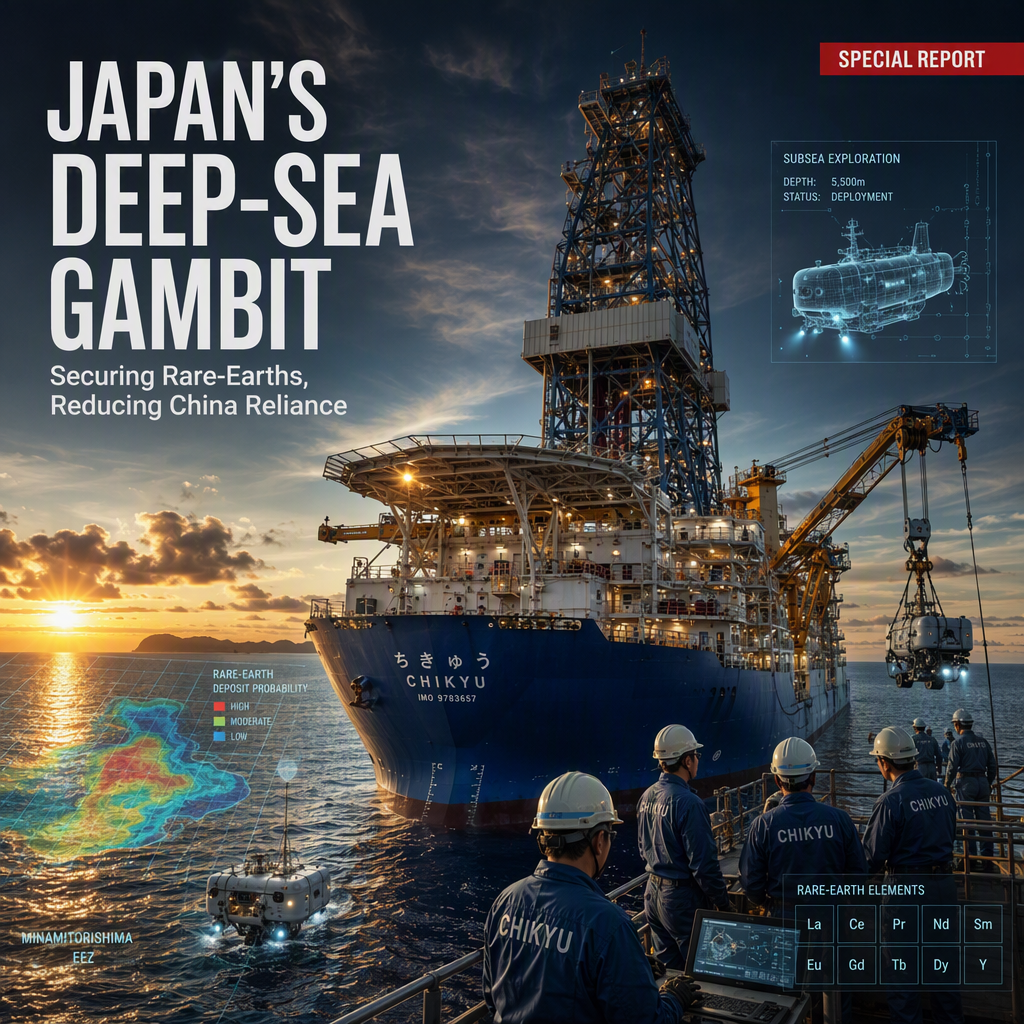
Japan is set to overhaul its technology funding program to support long-term rare-earth mining efforts on the seafloor, aiming to decrease its dependence on China for these critical minerals [1]. The initiative will provide financial assistance that could reach hundreds of billions of yen, targeting the development of advanced mining technologies, extraction infrastructure, and refining processes suitable for deep-sea environments [1]. The Chikyu, a deep-sea drilling vessel, is highlighted as a key asset in the exploration and extraction of rare-earth resources near Minamitorishima [1].
This move is driven by concerns over stable access to rare earths, which are essential for electric vehicles, semiconductor manufacturing tools, and other high-tech industries [1]. Japan's Ministry of Economy, Trade and Industry plans to expand the existing funding program to include both research and practical extraction capabilities, collaborating with private sector partners to accelerate these projects [1]. The program also aims to nurture domestic expertise and close technology gaps with global competitors [1].
Officials emphasized the strategic importance of reducing reliance on external sources for rare earths, stating that it is crucial for Japan's economic security and the long-term stability of its advanced manufacturing sectors [1]. The revamped program is part of a broader national strategy to secure critical minerals and enhance supply chain resilience amid intensifying global competition and geopolitical pressures [1].
CONCLUSION
Japan's expanded funding initiative for deep-sea rare-earth mining marks a significant step toward securing critical mineral supplies and reducing reliance on China. The substantial financial commitment and focus on technological advancement are expected to strengthen Japan's supply chain resilience and support its high-tech industries.