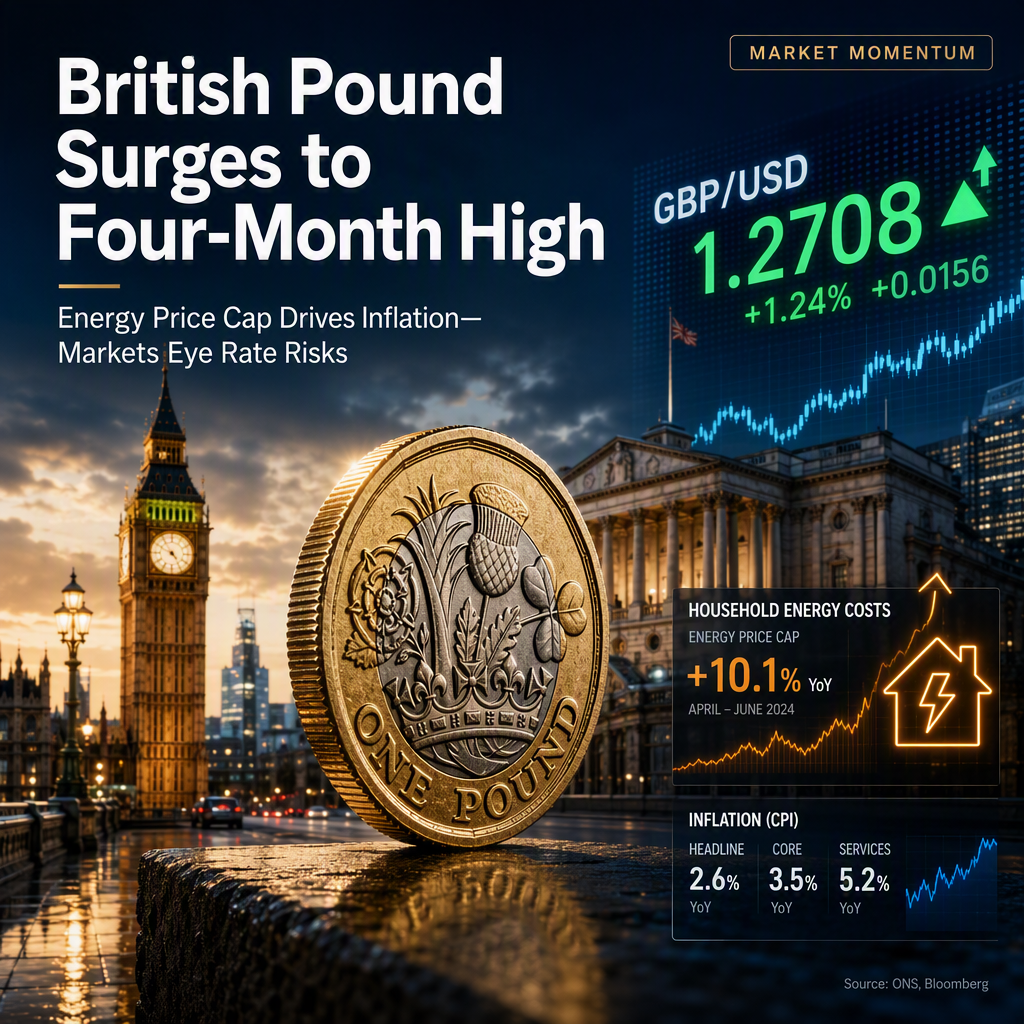
The British Pound (GBP/USD) traded just beneath 1.3650 late in the session, marking a 0.2% increase on the day and reaching its highest level in more than four months. The pair is positioned close to 200 pips above the rising 50-day Exponential Moving Average (EMA) near 1.3450, with the 200-day EMA further below at 1.3400. The session low was just under 1.3600, which did not hold down the upward momentum. This advance follows three days of British economic data releases, with Friday expected to bring further information [1].
July headline inflation in the UK printed at 2.9% year-on-year, up from 2.6% in June and matching consensus expectations. The monthly rate was 0.3%, while core inflation held at 2.6% against a 2.5% forecast. The acceleration in inflation is largely attributed to the household energy price cap, which was lifted by 13% at the start of July, with another increase scheduled for October. Services inflation, a key metric for the Monetary Policy Committee (MPC), eased to 3.4% from 3.6%. Core output producer prices firmed to 2.8% year-on-year from 2.6%, while the headline measure decelerated to 3.1% from 3.5% [1].
The Bank of England has indicated that it expects headline inflation to peak near 3.2% in the fourth quarter, suggesting that the path higher is scheduled rather than unexpected. The MPC held rates at 3.75% on July 30 by a 6-3 vote, with three members favoring a quarter-point increase. The next meeting is set for September 17. Market pricing for a rate increase before year end is around 30%, but a majority of surveyed economists anticipate no change this year. Goldman Sachs forecasts no increase in 2026 and has highlighted the gap between market pricing and its own outlook as a potential source of downside pressure on the currency in the coming months [1].
On the US side, initial jobless claims came in at 206,000 against a 210,000 consensus and a prior reading of 212,000. The Philadelphia Fed manufacturing survey printed 47.4, nearly double the expected 25 and up from 41.4. Despite these strong data points and mixed signals from Federal Reserve policymakers, the Dollar was sold off, sitting near multi-month lows against major currencies following this week's Treasury operation [1].
CONCLUSION
The British Pound's recent strength is primarily driven by scheduled increases in energy prices, rather than underlying inflationary pressures. With the Bank of England expected to keep rates unchanged and market pricing diverging from analyst forecasts, the currency may face incremental downside risk if rate hike expectations are not met. The Dollar's weakness, despite strong US data, has also contributed to GBP/USD's multi-month highs.