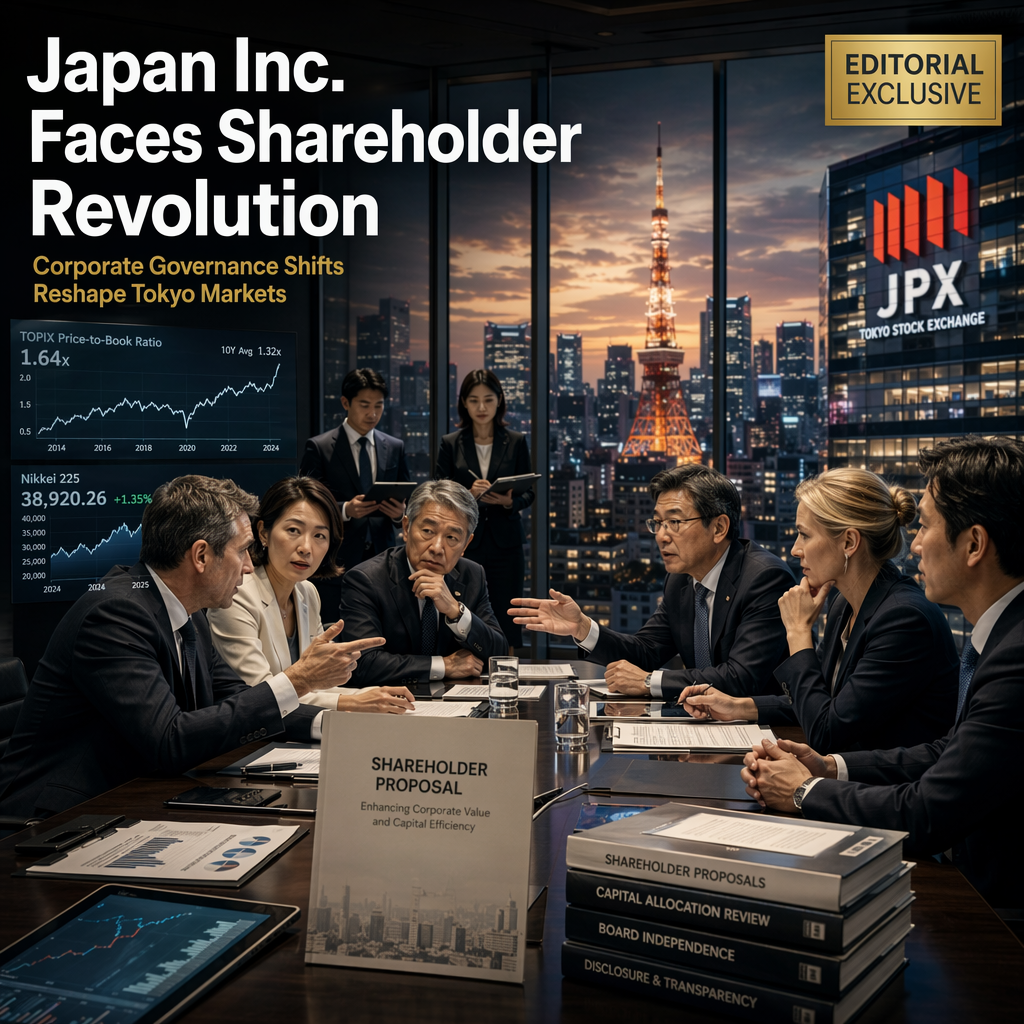
Japan's corporate sector is experiencing a historic transformation, propelled by regulatory reforms and increasing shareholder activism, according to Jamie Halse, founder of Senjin Capital, a Japan-focused shareholder activist fund manager [1]. The Tokyo Stock Exchange has implemented requirements for companies to disclose plans addressing price-to-book ratios below 1.0, which has intensified scrutiny on underperforming firms and encouraged boards and management teams to engage more proactively [1]. Over recent years, Japanese companies have responded to mounting pressure by increasing buybacks, raising dividends, and focusing more on shareholder value [1].
Despite recent adjustments to these governance and capital efficiency rules, the momentum for reform remains strong. Both foreign and domestic investors are demanding improved governance and capital allocation, with activist funds playing a more prominent role. The number of shareholder proposals and proxy fights in Japan has reached record highs, indicating a growing willingness to challenge established interests [1].
Low valuations in certain sectors and substantial cash reserves—approximately $480 billion in time deposits held by Japanese listed companies—are fueling further activism and potential M&A activity, as shareholders urge companies to deploy these funds more productively [1]. The corporate landscape is also evolving, with more women joining boards and international buyout firms opening new offices in Japan, contributing to increased competition and transparency [1].
While challenges such as cultural resistance and regulatory inertia persist, the article asserts that the forces driving corporate reform in Japan are unlikely to reverse, signaling a sustained shift in the country's corporate governance environment [1].
CONCLUSION
Japan's corporate reform is accelerating, driven by regulatory changes and unprecedented shareholder activism. Record numbers of shareholder proposals and proxy fights, combined with significant cash reserves and low valuations, suggest continued market activity and transformation. The outlook remains positive for further reform and increased competitiveness in Japan Inc.