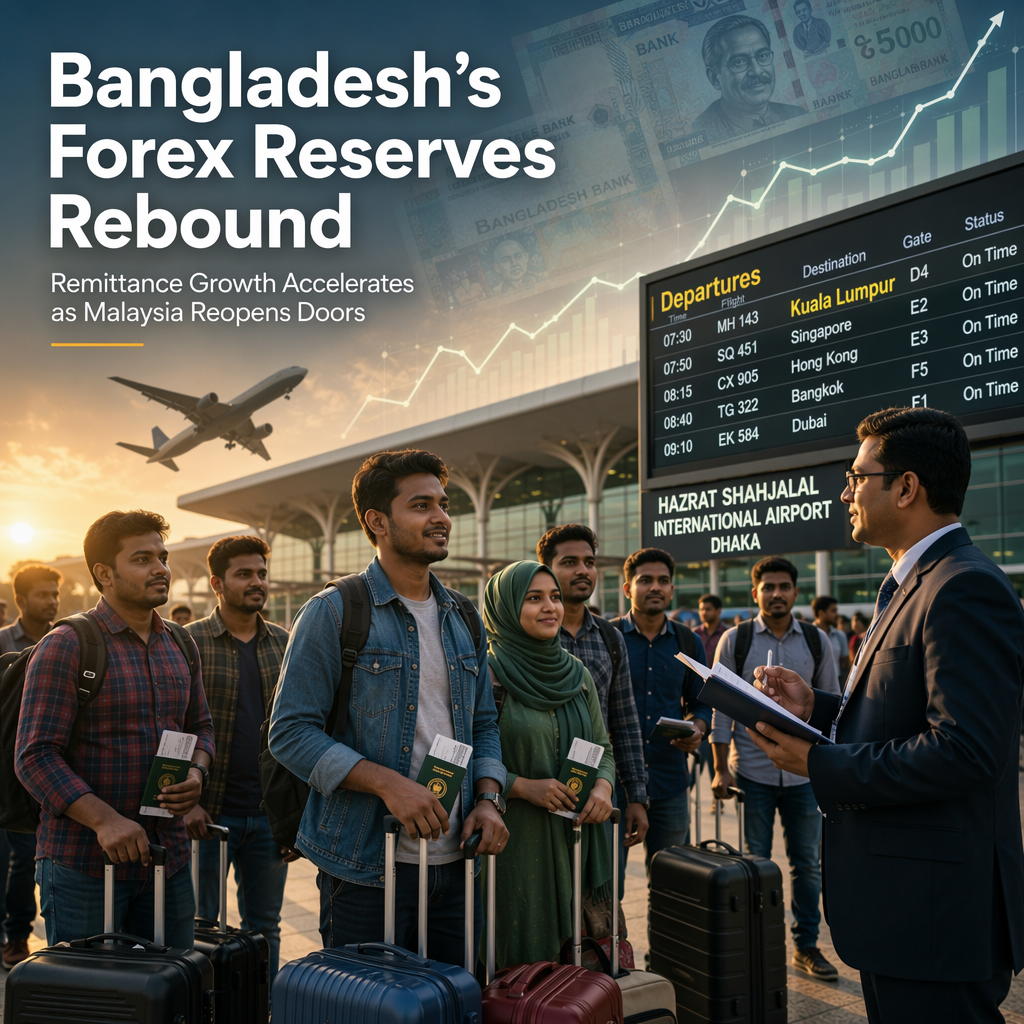
Bangladesh's foreign exchange reserves have recovered to levels last seen in 2022, marking a significant turnaround after years of pressure on the country's external finances [1]. The recovery has been driven by higher remittances from Saudi Arabia and other countries, and is expected to be further strengthened by Malaysia's decision to reopen its labor market to Bangladeshi workers [1]. Bangladeshi officials anticipate that the return of migrant labor to Malaysia will act as a catalyst for increased monthly remittance inflows, which could help stabilize the country's foreign exchange reserves at healthier levels [1].
This development follows a period of declining reserves that had exerted pressure on the Bangladeshi taka and the broader economy [1]. The anticipated rise in remittances is seen as a key factor in sustaining the recovery trajectory for Bangladesh's external financial position [1]. Analysts and officials believe that the rebound in remittances will also support the government's efforts to maintain macroeconomic stability, manage inflation, and fund ongoing development projects [1].
With Malaysia reopening its doors to migrant labor, Bangladesh expects an acceleration in remittance growth in the coming quarters, further reinforcing the positive trend in its external account recovery [1].
CONCLUSION
Bangladesh's external finances are on a recovery path, with foreign exchange reserves rebounding to 2022 levels and expected to rise further due to Malaysia's labor market reopening. Increased remittance inflows are projected to stabilize reserves and support macroeconomic stability. The market takeaway is cautiously optimistic, with medium impact anticipated as remittance growth strengthens Bangladesh's financial position.