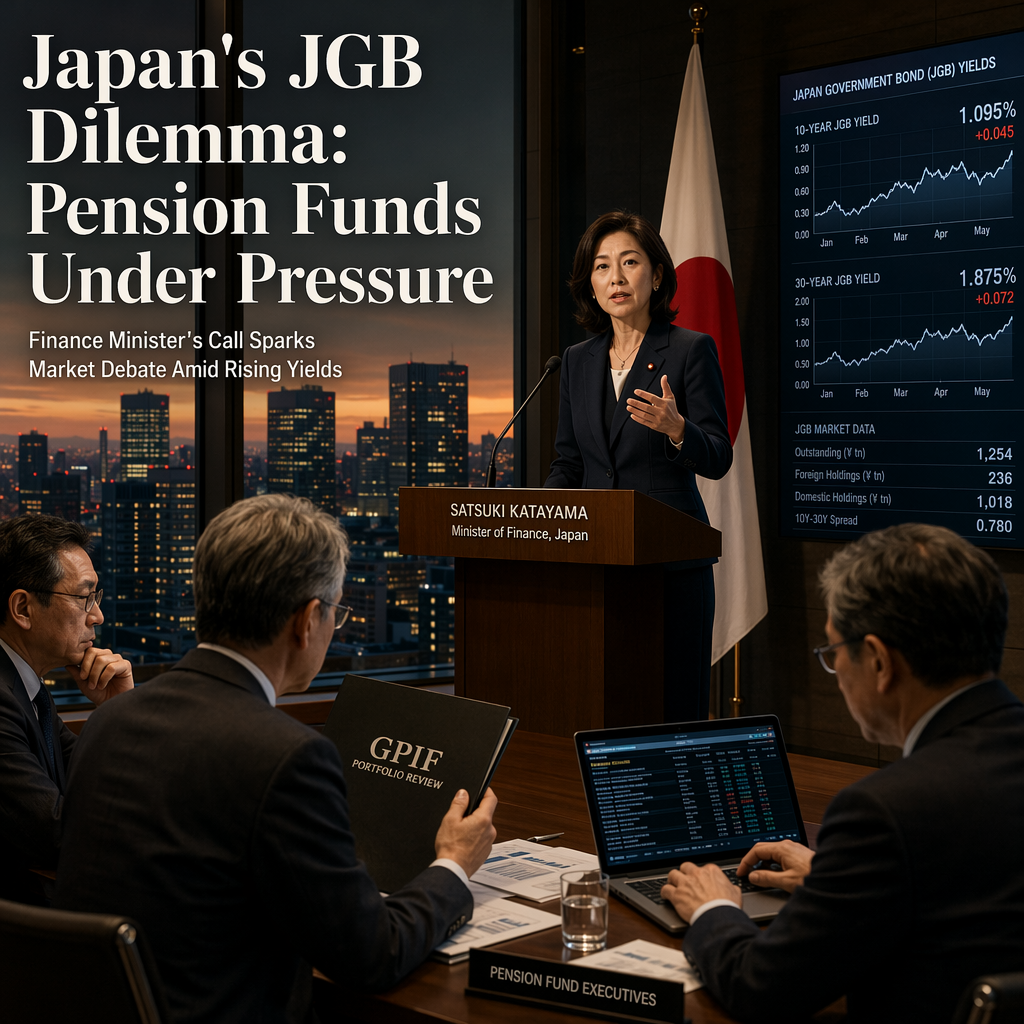
Japanese Finance Minister Satsuki Katayama recently called on the Government Pension Investment Fund (GPIF) to increase its investments in Japanese government bonds (JGBs), a move that has generated significant discussion within the country's bond market. Katayama's remarks, made on July 10, have led to speculation that the government may be seeking to support JGB prices and counteract the recent surge in interest rates by encouraging large institutional investors to buy more domestic bonds [1].
The GPIF, recognized as one of the largest pension funds globally, holds considerable sway over Japan's bond market. Market participants are now closely monitoring the GPIF for any signs of a shift toward greater JGB purchases, as increased demand from such a major player could help stabilize JGB prices, which have been under pressure due to rising yields [1].
Despite the finance minister's push, there is notable skepticism among investors and analysts regarding the likelihood of a significant pivot by the GPIF and other pension funds back toward domestic bonds. In recent years, Japanese public pensions have been reducing their domestic bond holdings, opting instead for alternative investments or foreign bonds in search of higher returns, given the persistently low yields on JGBs [1].
The market response to Katayama's comments has been cautious, with participants awaiting concrete evidence of changes in pension fund portfolio allocations. While the prospect of increased JGB purchases is viewed as a potential tool for the government to address rising yields, doubts remain about whether pension funds will reverse their diversification strategies in the current environment [1].
CONCLUSION
Finance Minister Katayama's call for pension funds to increase JGB investments has sparked speculation but also skepticism in the market. While the move could potentially support JGB prices, investors remain cautious, awaiting tangible shifts in pension fund strategies before drawing conclusions about the long-term impact.