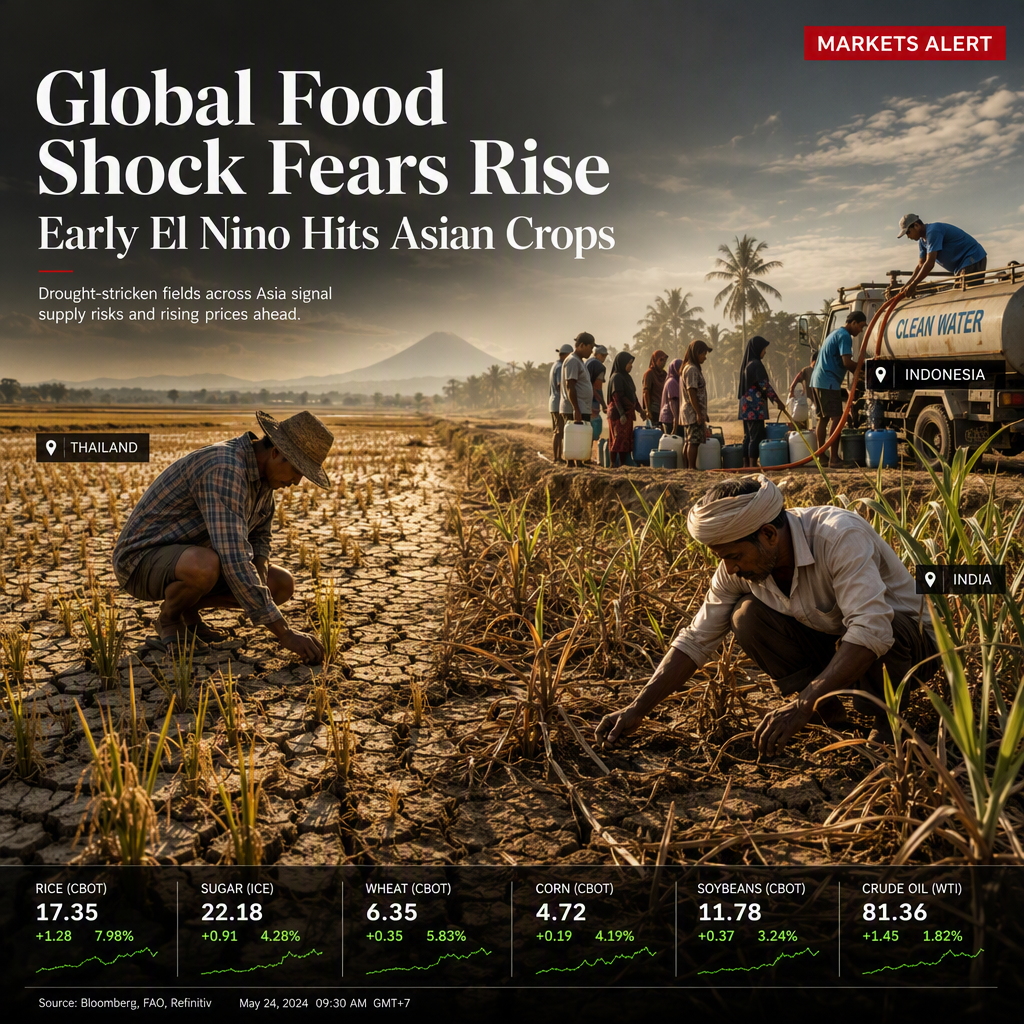
Markets are bracing for the onset of an El Nino phenomenon that some predict could be the strongest on record, with early impacts already visible in key agricultural regions near the equator [1]. In Indonesia, villagers in drought-affected areas have begun collecting free clean water distributed by regional disaster agencies, highlighting the immediate effects of El Nino [1].
Significant early signs of crop stress are being observed in major producers, with Thai rice and Indian sugarcane particularly affected due to reduced rainfall and higher temperatures [1]. Analysts have warned that if these adverse weather conditions persist, there could be serious threats to global food supply chains, increasing the risk of price volatility and food inflation [1].
The potential for a record-breaking El Nino has heightened concerns among traders and policymakers about the possibility of a worldwide food shock, especially for staple commodities such as rice and sugar [1]. Market participants are closely monitoring weather forecasts and crop progress reports for further indications of deteriorating conditions [1]. If the situation worsens, there could be significant impacts on global commodity prices, with Asian agricultural exporters and domestic consumers both facing increased costs and potential shortages [1].
CONCLUSION
Early signs of El Nino are already impacting key crops like Thai rice and Indian sugarcane, raising alarms about global food supply and price volatility. Market participants are on high alert, watching for further deterioration that could trigger a worldwide food shock. The situation remains fluid, with significant risks to both exporters and consumers if adverse weather persists.