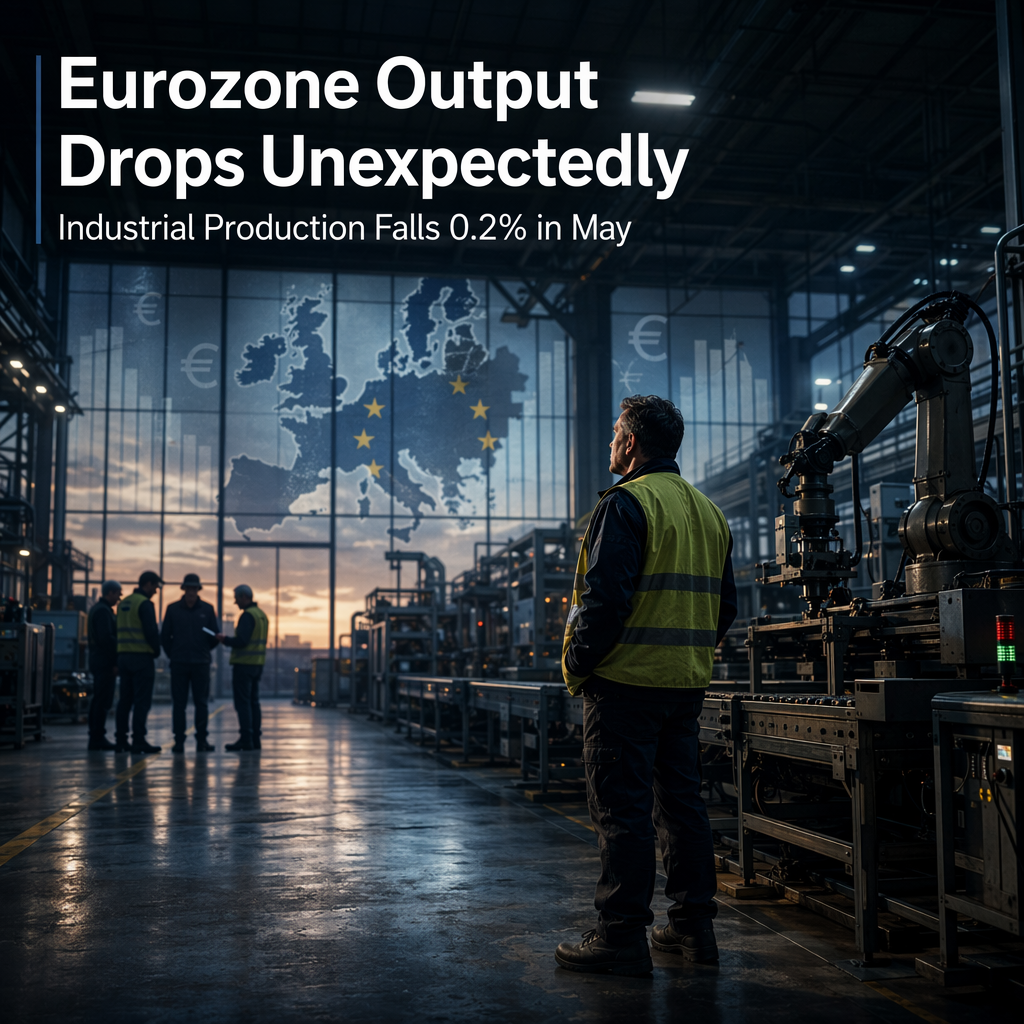
Eurozone industrial production declined by 0.2% in May, contrary to market expectations which had forecast a 0.2% increase, according to data published by Eurostat [1]. This marks a reversal from April, when industrial production rose by 0.3%, a figure revised upward from the initial 0.1% estimate [1]. On an annualized basis, industrial output contracted at a faster rate of 1.2%, compared to the estimated decline of 0.5%. In contrast, April's annualized data showed a 0.4% expansion, revised higher from 0.3% [1].
Despite the disappointing figures, the Euro (EUR) exhibited a muted response, with EUR/USD trading calmly near 1.1424 at the time of reporting [1]. The Industrial Production index, released monthly by Eurostat, is a key indicator for assessing the health of the Eurozone's manufacturing sector. Typically, a high reading is considered bullish for the Euro, while a low reading is seen as bearish [1].
The unexpected decline in industrial production suggests underlying weakness in the Eurozone's manufacturing sector, which could weigh on broader economic sentiment. However, the lack of immediate market reaction indicates that investors may be awaiting further data or developments before adjusting their positions [1].
CONCLUSION
Eurozone industrial production unexpectedly contracted in May, missing consensus forecasts and signaling potential challenges for the region's manufacturing sector. Despite the negative surprise, the Euro remained stable, suggesting limited immediate market impact. Investors may be cautious, awaiting additional economic indicators before making significant moves.