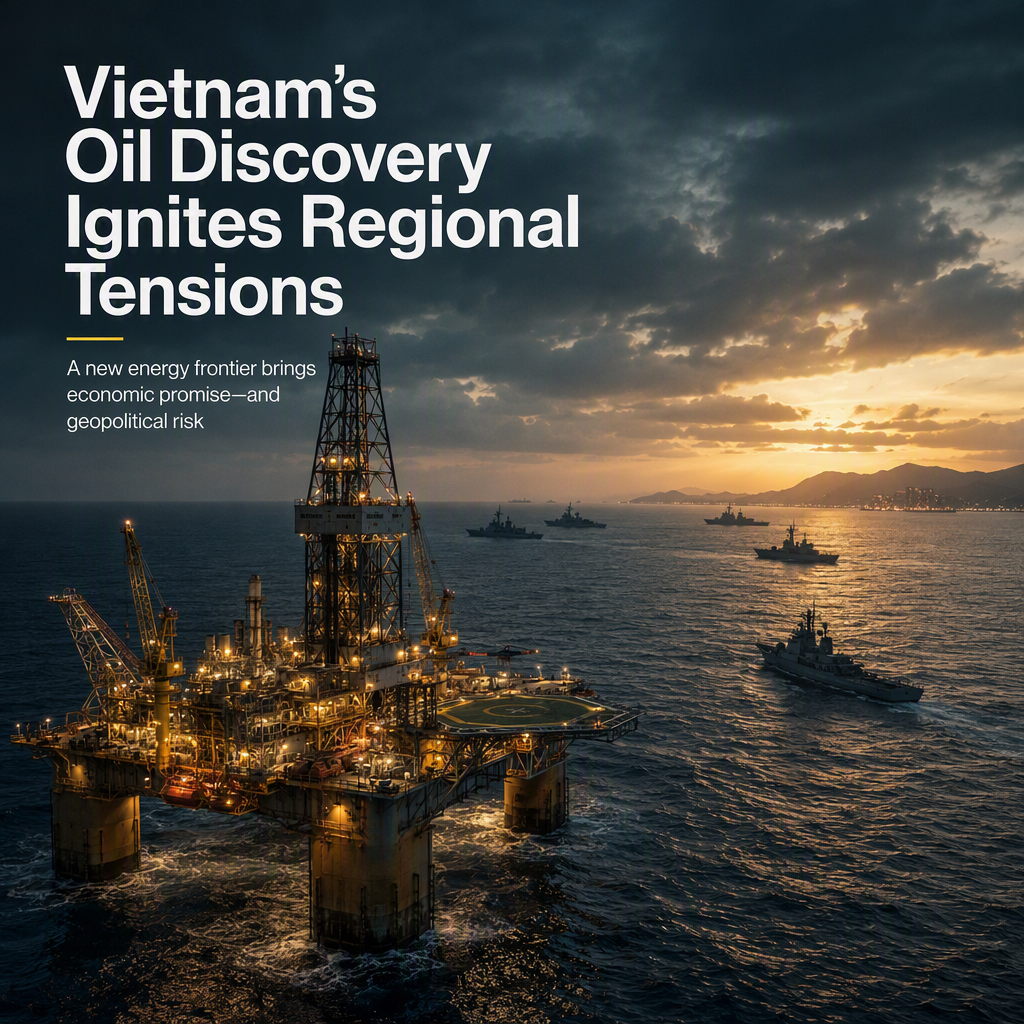
Vietnam has made a significant offshore oil discovery, with a U.S. oil exploration company estimating untapped reserves of approximately 430 million barrels located about 65 kilometers off the Vietnamese coast [1]. This find is considered a major financial and strategic asset for Vietnam, potentially reducing the region's dependency on Middle Eastern energy resources and bolstering the country's energy security [1]. Energy analysts suggest that developing these reserves could support domestic economic growth and provide an alternative source of oil in a market often affected by instability in the Middle East [1].
The discovery comes amid heightened geopolitical tensions with China, which has long asserted claims over large areas of the South China Sea, including regions within Vietnam’s exclusive economic zone [1]. Beijing’s increasing assertiveness poses a direct challenge to Vietnam’s sovereignty and its rights to explore and exploit these resources [1]. Industry experts emphasize that Hanoi must act decisively to protect its interests and ensure the benefits of these resources accrue to the Vietnamese people [1].
Should Vietnam proceed with development, it is likely to face diplomatic and possibly naval pushback from China, though the economic incentives are substantial. At current Brent crude prices, the reserves could be worth billions of dollars, providing a significant boost to Vietnam's finances and strengthening its position in global energy markets [1]. Market sentiment remains cautious, with investors closely monitoring the situation for any escalation in the dispute. Oil companies operating in the region are also weighing the risks and rewards, and technical analysis indicates that successful exploitation could shift regional energy supply dynamics and potentially stabilize prices in Southeast Asia [1].
Meanwhile, Vietnam's National Assembly is concluding an extraordinary session with a strong focus on energy, though the session's agenda primarily includes legislative topics such as money laundering, agriculture, nuclear power, and renewable energy projects [2]. There is no explicit mention of the new offshore oil discovery in the assembly's agenda, but the focus on energy policy underscores the sector's growing importance in Vietnam's legislative and economic priorities [2].
CONCLUSION
Vietnam's recent offshore oil discovery represents a substantial economic opportunity but also raises the stakes in its ongoing maritime dispute with China. While the reserves could significantly enhance Vietnam's energy security and financial position, the geopolitical risks remain high, and market participants are adopting a cautious stance as the situation develops.