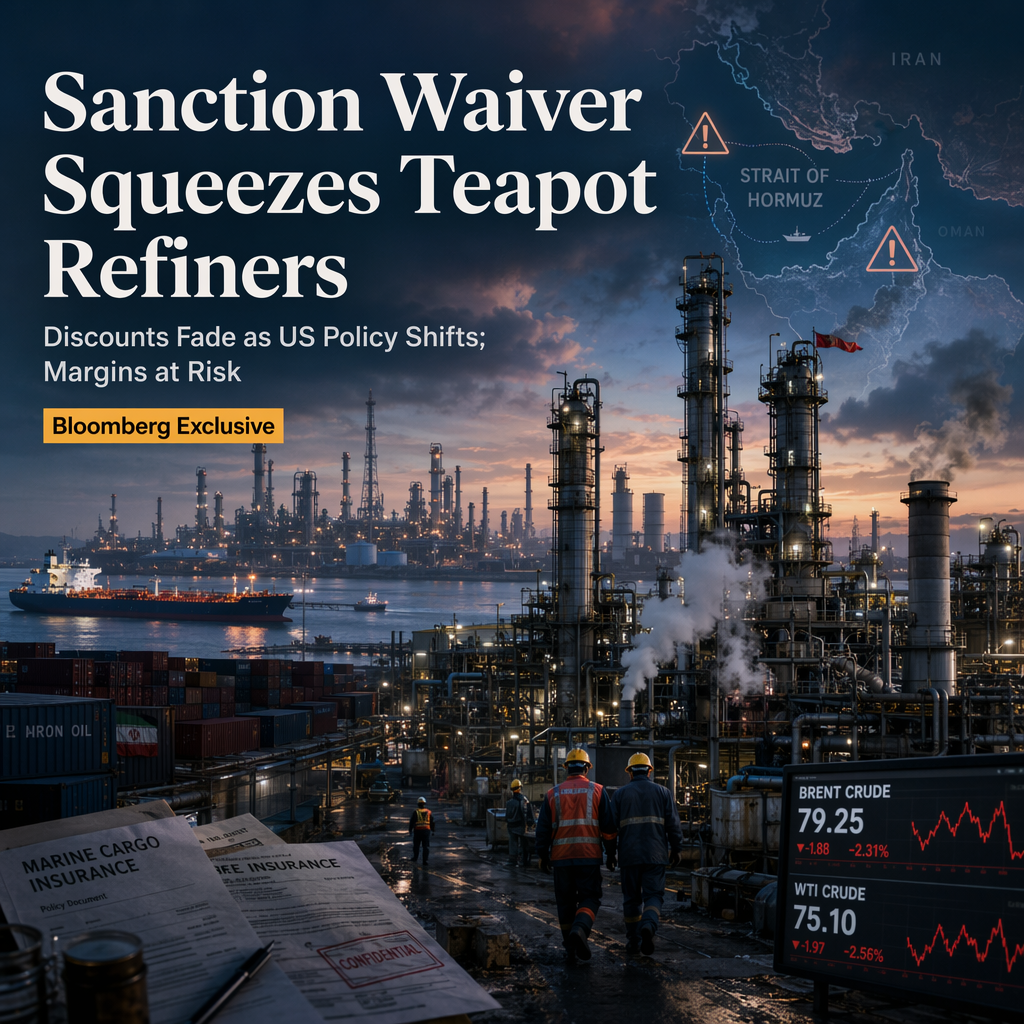
The temporary waiver of U.S. sanctions on Iranian oil is poised to significantly impact China's small, independent refiners, commonly referred to as teapots, as the discounts on Iranian crude narrow [1]. These refiners, primarily located in Shandong province, have historically relied on purchasing Iranian oil at prices below global benchmarks such as Brent and Dubai, which has been a key factor in maintaining their competitiveness and profit margins [1]. Market analysts warn that the narrowing discount, resulting from the U.S. waiver, could erode the profit margins of teapot refiners. A Shanghai-based energy analyst stated, 'Without the usual discount, teapots will find it harder to compete with larger state-backed players, and may have to cut back on production or source higher-priced crude from alternative suppliers' [1].
The uncertainty surrounding the Strait of Hormuz, a critical chokepoint for global oil shipments, has also led to elevated shipping and insurance costs. Market watchers note that any disruption in the flow of Iranian oil through Hormuz would likely push up spot prices and further squeeze refiners most dependent on discounted imports [1]. Recent estimates suggest that teapot refiners have accounted for up to 20% of their total feedstock from Iranian crude in recent years, and some are reportedly stockpiling inventories in anticipation of tighter supply and higher prices [1].
Technical analysis indicates that if supply disruptions persist and discounts disappear, the break-even margin for teapot refiners could approach zero, raising the risk of plant shutdowns or consolidation within the sector [1]. The market is closely monitoring potential policy shifts from Beijing or Washington that could further affect trade routes and cost structures [1]. Overall, market sentiment remains cautious, with traders highlighting elevated volatility and the potential for further price spikes if geopolitical risks escalate around the Strait of Hormuz [1].
CONCLUSION
The U.S. waiver on Iranian oil sanctions is narrowing discounts and threatening the profitability of China's teapot refiners, who may face higher costs and increased competition. Market participants are wary of further volatility and supply disruptions, with the risk of plant shutdowns or sector consolidation if conditions worsen. The situation remains fluid, and traders are closely watching for policy changes that could further impact the market.