
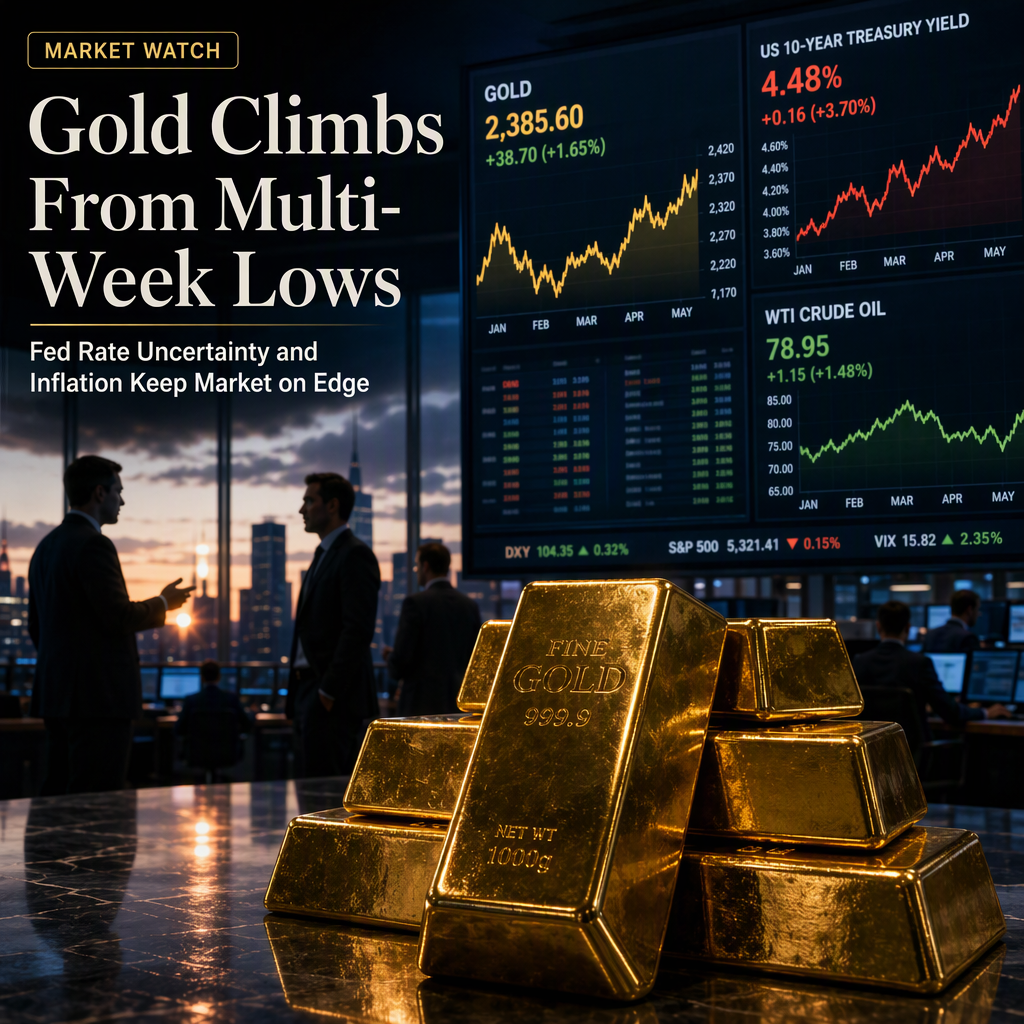
Gold (XAU/USD) rebounded from an eight-week low, trading near $4,180 during the early Asian session on Wednesday, as traders weighed the US Federal Reserve's potential rate path in response to persistent inflation concerns driven by rising energy prices [1]. The US 30-Year Treasury Yield surpassed 5.61% on Tuesday, reaching levels not seen since 2002, while the two-year yield, which is more sensitive to Fed outlook changes, declined by as much as five basis points before settling around 4.88% [1].
Strategists at OCBC noted that gold has 'extended its decline, falling to a 7-week low,' attributing the drop to the recent rise in oil prices, which has reinforced inflation concerns and expectations for further Fed tightening. Higher US Treasury yields and a firm US Dollar have added to the downside pressure, with the break below $4,200 likely exacerbating technical selling [1]. OCBC analysts highlighted that near-term gold price movements will be influenced by oil prices and the corresponding rates response, suggesting that softer US data (such as core PCE or NFP) or easing yields could help gold stabilize, while further increases in oil and yields would maintain downside pressure [1].
Technical analysis indicates that XAU/USD remains under near-term pressure, holding below the 100-day simple moving average (SMA) and the Bollinger Bands’ middle line. The Relative Strength Index (RSI) at 40.11 stays in bearish territory but is off oversold extremes, hinting at lingering downside risk while suggesting that selling momentum has cooled modestly. Initial resistance is seen at the 100-day SMA at $4,295 [1].
Market participants are awaiting the US August Personal Consumption Expenditures (PCE) Price Index data on Wednesday and the Nonfarm Payrolls (NFP) report on Friday for further direction. Any signs of weakening in the US labor market could weigh on the US Dollar and lift the USD-denominated commodity price in the near term [1].
CONCLUSION
Gold's rebound from multi-week lows is tempered by ongoing inflation concerns and expectations of further Fed tightening, with technical indicators suggesting lingering downside risk. The market remains focused on upcoming US economic data, which could influence both yields and gold prices. Near-term direction will likely hinge on oil prices, rates, and key US data releases.