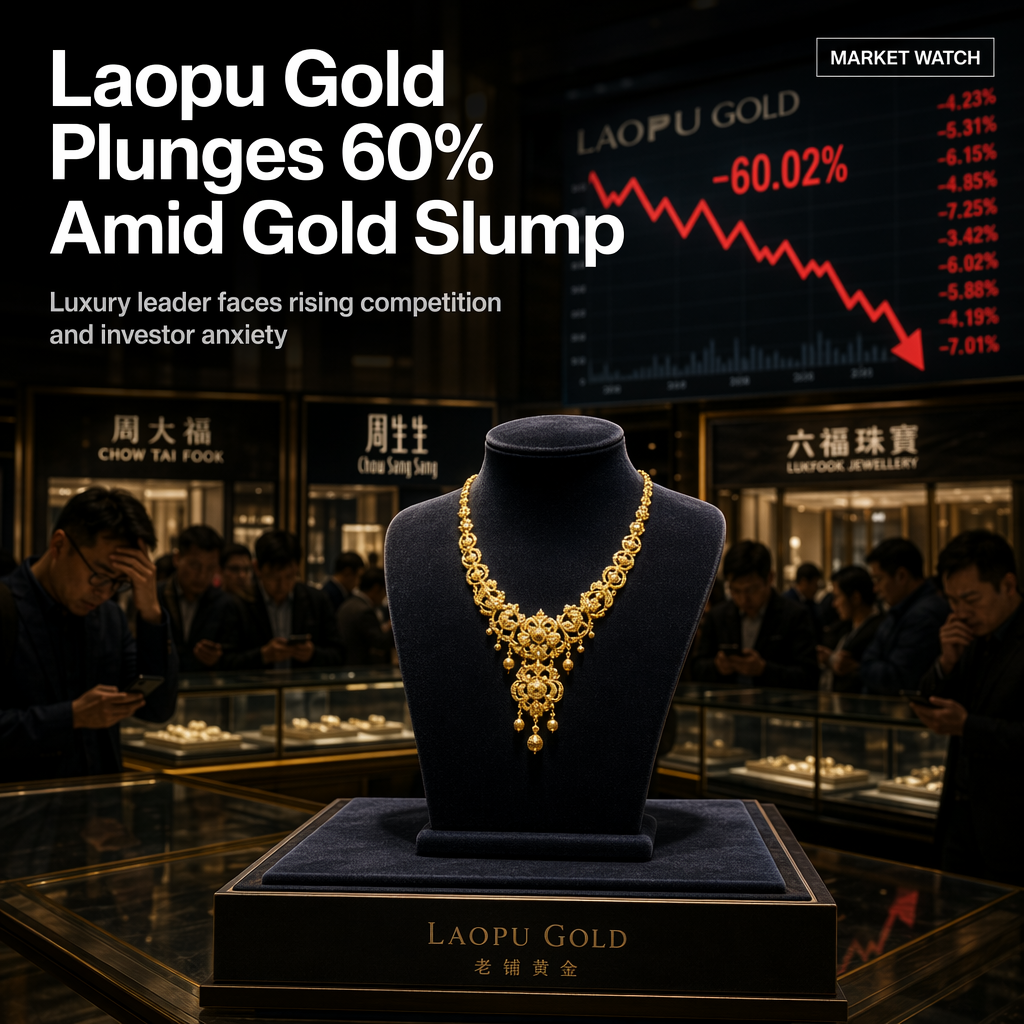
Laopu Gold, a Chinese luxury jewelry brand known for its heritage-based designs and often referred to as the 'Hermes of gold,' is under significant pressure as the global gold price experiences a sharp downturn. The company's shares have fallen about 60%, a decline that not only surpasses the drop in gold prices but also exceeds the losses seen by its industry peers [1]. This steep fall in share price has raised concerns about Laopu Gold's ability to sustain its premium brand positioning and defend its market share against aggressive new entrants in the luxury gold sector [1].
The broader gold market has faced substantial headwinds in recent months, with the price of the precious metal declining and volatility increasing. Laopu Gold's performance has been notably weaker than other players in the industry, highlighting the unique challenges it faces as a luxury upstart in a turbulent market environment [1]. The company's reliance on traditional craftsmanship and cultural authenticity, once a key differentiator, is now being tested as margins and growth outlook come under pressure [1].
Market analysts are closely monitoring Laopu Gold's response to these challenges, emphasizing that the company's ability to maintain its pricing power and exclusive image will be crucial. Investor sentiment has become more cautious, reflecting broader concerns about the resilience of luxury brands in the face of commodity price cycles and shifting consumer preferences [1].
The current situation highlights the intensifying competition within China's luxury gold market, as both established brands and new competitors vie for consumer attention. Laopu Gold's performance in the upcoming quarters is expected to serve as an indicator for the sector's overall ability to navigate ongoing market volatility and changing demand dynamics [1].
CONCLUSION
Laopu Gold's 60% share price decline amid a global gold slump and rising competition signals significant challenges for the luxury jewelry sector. The company's future performance will be closely watched as a gauge of the industry's resilience in a volatile market environment.