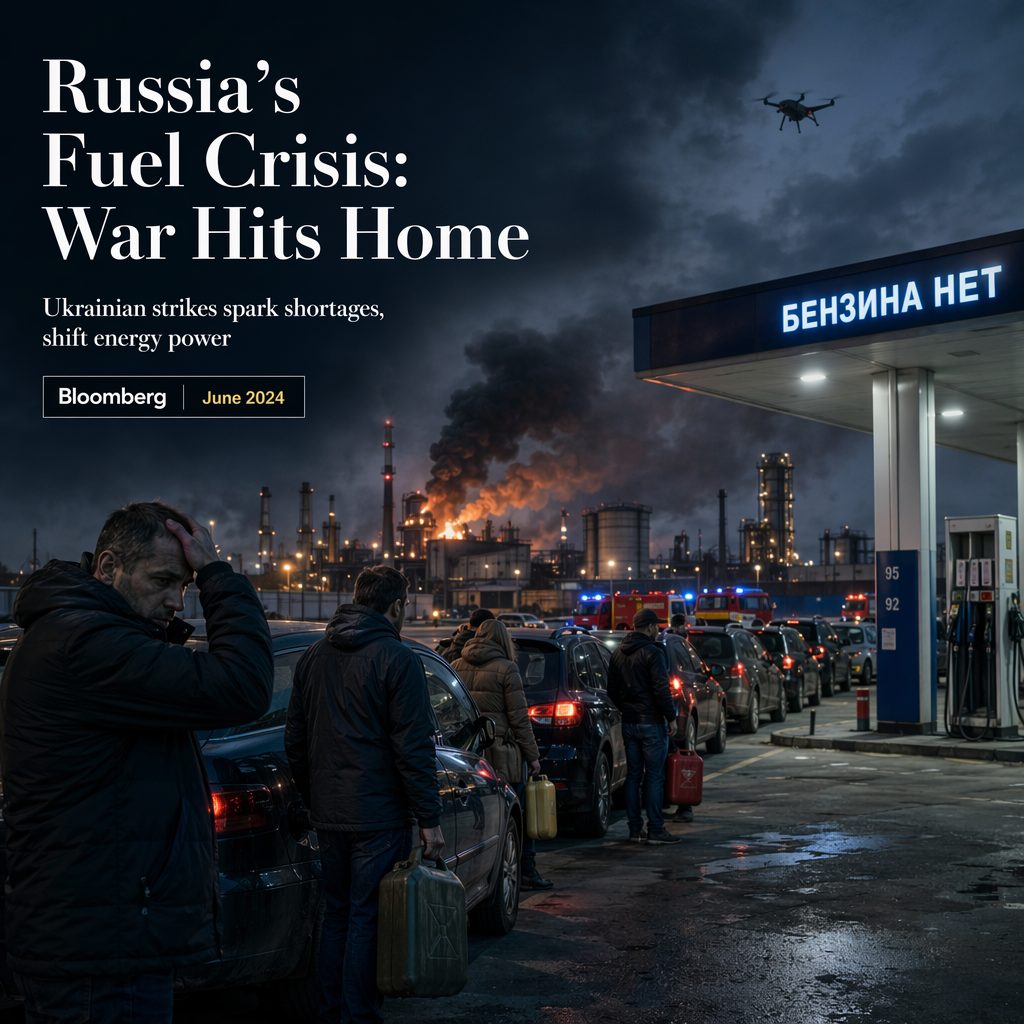
Ukraine has intensified its campaign against Russia's oil industry, resulting in significant disruptions within Russia, one of the world's largest energy producers [1]. The campaign has forced Russia to restrict diesel exports, seek fuel imports, and confront fuel shortages that stretch from occupied Crimea to cities deep inside the country [1]. According to former Russian opposition politician Maxim Katz, these shortages represent one of the first direct ways many Russians have experienced the consequences of the war, impacting both the cost and availability of fuel [1]. Katz emphasized that, 'You cannot buy it. And that’s a big deal for Russia,' highlighting the growing sensitivity of the issue ahead of the State Duma elections scheduled for September [1].
Katz noted that while Russian elections are neither free nor competitive, they serve to project public support for President Vladimir Putin to regional leaders and business elites [1]. He warned that visible public dissatisfaction, such as if Putin's support were to drop to 10-20%, could raise questions about his control over the system [1]. The fuel crisis, according to Katz, threatens Putin’s effort to keep the costs of war away from ordinary Russians and maintain the image of normalcy in Moscow [1].
A notable reversal has occurred, with Russia—historically a major exporter of oil and refined products—now seeking fuel supplies from abroad. Reuters reported that Moscow approached Kazakhstan about importing approximately 50,000 metric tons of gasoline after refinery outages reduced Russian gasoline output by roughly 25% from a year earlier [1]. The Ukrainian campaign reached a new milestone when drones struck the Omsk refinery, Russia’s largest, located about 1,700 miles from Ukrainian-held territory, temporarily halting its processing [1]. Days later, another strike shut down the Saratov refinery for the third time this year [1].
These developments raise critical questions for Ukraine and its allies regarding whether sustained attacks on Russia’s energy infrastructure can alter President Putin’s strategic calculations, or if the Kremlin will continue to shield its war effort while shifting the burden onto ordinary Russians [1].
CONCLUSION
Ukraine's targeted strikes on Russian oil infrastructure have led to visible fuel shortages and forced Russia to seek imports, marking a significant shift for the energy giant. The crisis poses a challenge to Putin's efforts to insulate the public from the war's effects, with potential political ramifications ahead of the September elections. The ongoing situation could influence both domestic stability and Russia's broader war strategy.