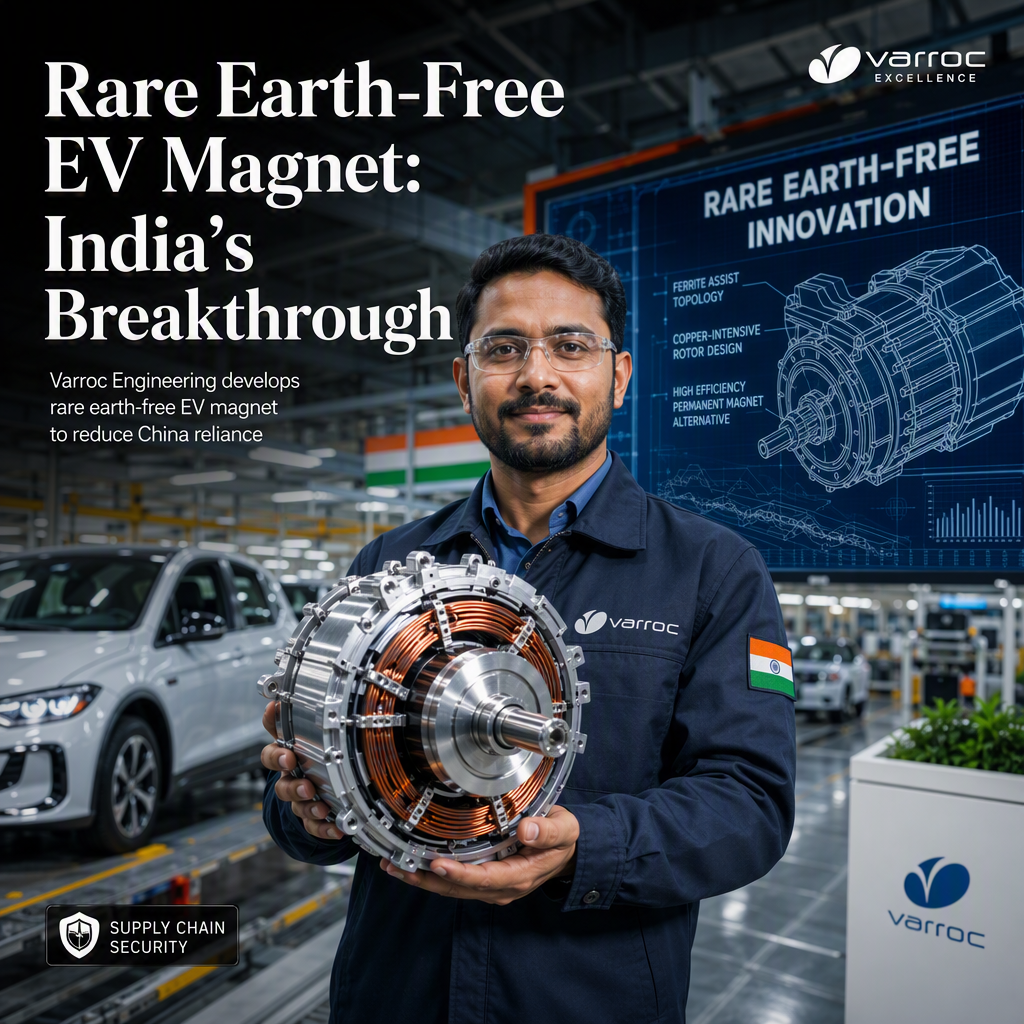
Varroc Engineering, one of India's largest auto component manufacturers, is developing traction motors for electric vehicles that do not require rare earth minerals, in response to China's export curbs on these materials last year [1]. Arjun Jain, CEO and whole-time director of Varroc Engineering's India business, stated that the company's growth prospects are largely driven by electric vehicles and that Varroc has already reduced its use of heavy rare earths following Beijing's export restrictions [1].
The company is investing in research to create rare earth-free magnet technology, aiming to mitigate risks associated with supply disruptions and price volatility. Jain emphasized that the goal is to develop magnets independent of rare earths to ensure stable supply and cost-effective production, thereby reducing dependency on China and strengthening the domestic supply chain [1].
Varroc's initiative addresses growing concerns in the global auto industry regarding the sustainability and security of rare earth supplies. The company plans to target both the Indian and international markets, with intentions to scale up production once the technology is validated [1].
Financial analysts believe that Varroc's move could position the company as a leader in rare earth-free EV motor solutions, potentially opening new revenue streams and enhancing profitability. Market sentiment is positive, with stakeholders closely monitoring technical milestones and the commercial rollout of the new technology. While there are no explicit chart descriptions or technical trading levels mentioned, the focus on technological innovation and supply chain security is seen as a bullish indicator for Varroc's long-term growth [1].
CONCLUSION
Varroc Engineering's development of rare earth-free EV magnets is viewed positively by analysts and stakeholders, as it addresses supply chain risks and positions the company for future growth. The initiative could enhance Varroc's market leadership and profitability, with market sentiment remaining optimistic pending further technical and commercial progress.