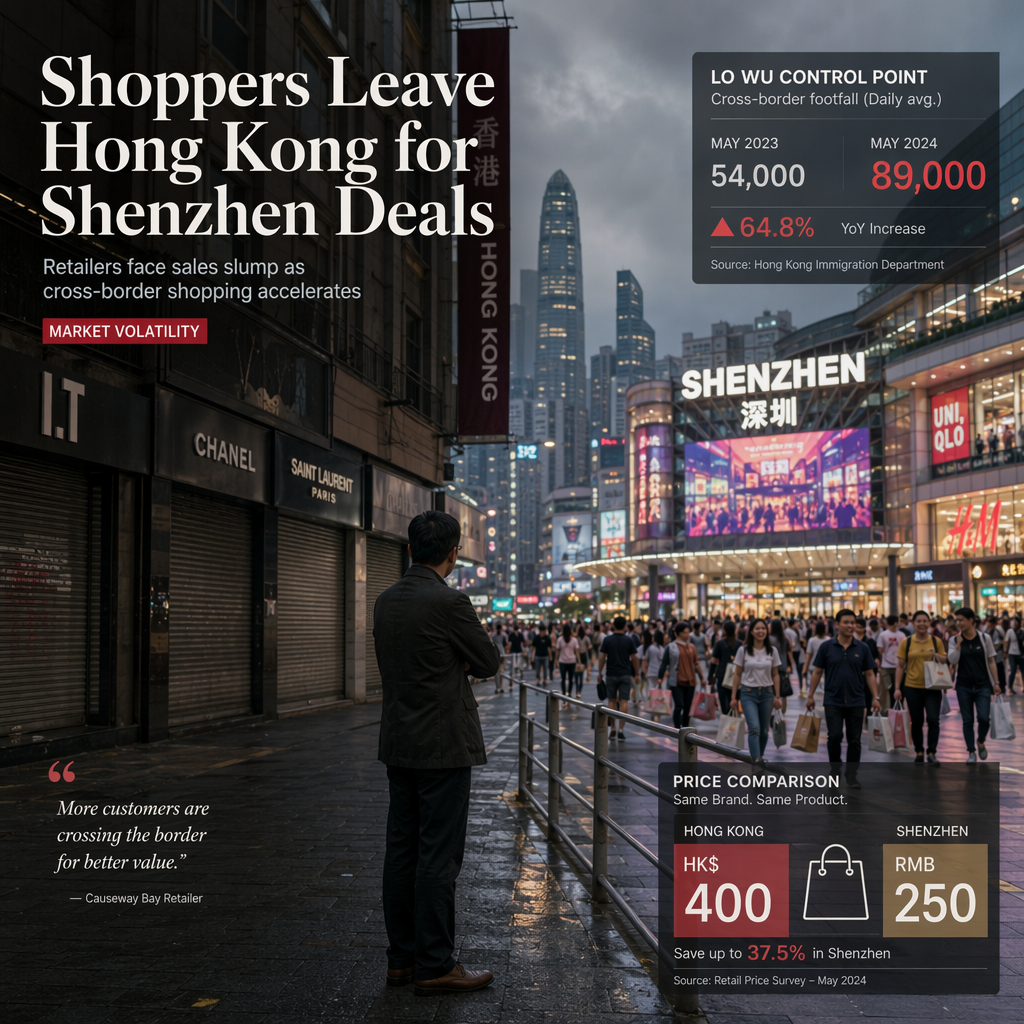
Hong Kong's retail sector is experiencing significant challenges as a growing number of residents travel to Shenzhen, China, to shop, attracted by lower prices and what many describe as superior service [1]. Recent data shows a sharp increase in traveler numbers at Lo Wu Control Point and other major land checkpoints between Hong Kong and mainland China, reflecting this trend of cross-border shopping [1]. Retailers in Hong Kong are reporting declining foot traffic and sales, attributing the downturn to the competitive pricing and improved shopping experience offered in Shenzhen [1].
The shift is especially pronounced in sectors such as fashion, cosmetics, and electronics, where price differences are substantial. For instance, a popular skincare product that sells for HK$400 in Hong Kong can be purchased for just RMB 250 (about HK$270) in Shenzhen, offering significant savings for cost-conscious shoppers [1]. Retail executives have noted a notable drop in sales volume since the border reopened, with customers reporting savings of up to 30% on everyday items by shopping in Shenzhen, where service is often described as faster and friendlier [1].
Market sentiment in Hong Kong's retail sector has turned cautious. Technical analysis indicates that shares of major Hong Kong retail chains are approaching key support levels, with resistance seen at recent highs prior to the surge in outbound shoppers [1]. Traders are advising clients to closely monitor the impact of cross-border shopping trends on local retail stocks, and to pay attention to upcoming earnings reports and foot traffic data, as further declines in sales could lead to additional downside for the sector [1].
The Hong Kong Retail Management Association has called for policy measures to help local businesses compete, warning that continued outflows of shoppers could threaten the viability of many stores [1]. Meanwhile, Shenzhen retailers are increasing promotions and expanding their offerings to attract even more Hong Kong customers [1]. With border crossings at record highs and retail spending shifting north, market observers expect continued volatility for Hong Kong's retail sector [1].
CONCLUSION
Hong Kong retailers are under pressure as more residents shop in Shenzhen, drawn by lower prices and better service. With declining sales and cautious market sentiment, the sector faces heightened volatility and potential further downside unless local businesses can adapt or receive policy support.