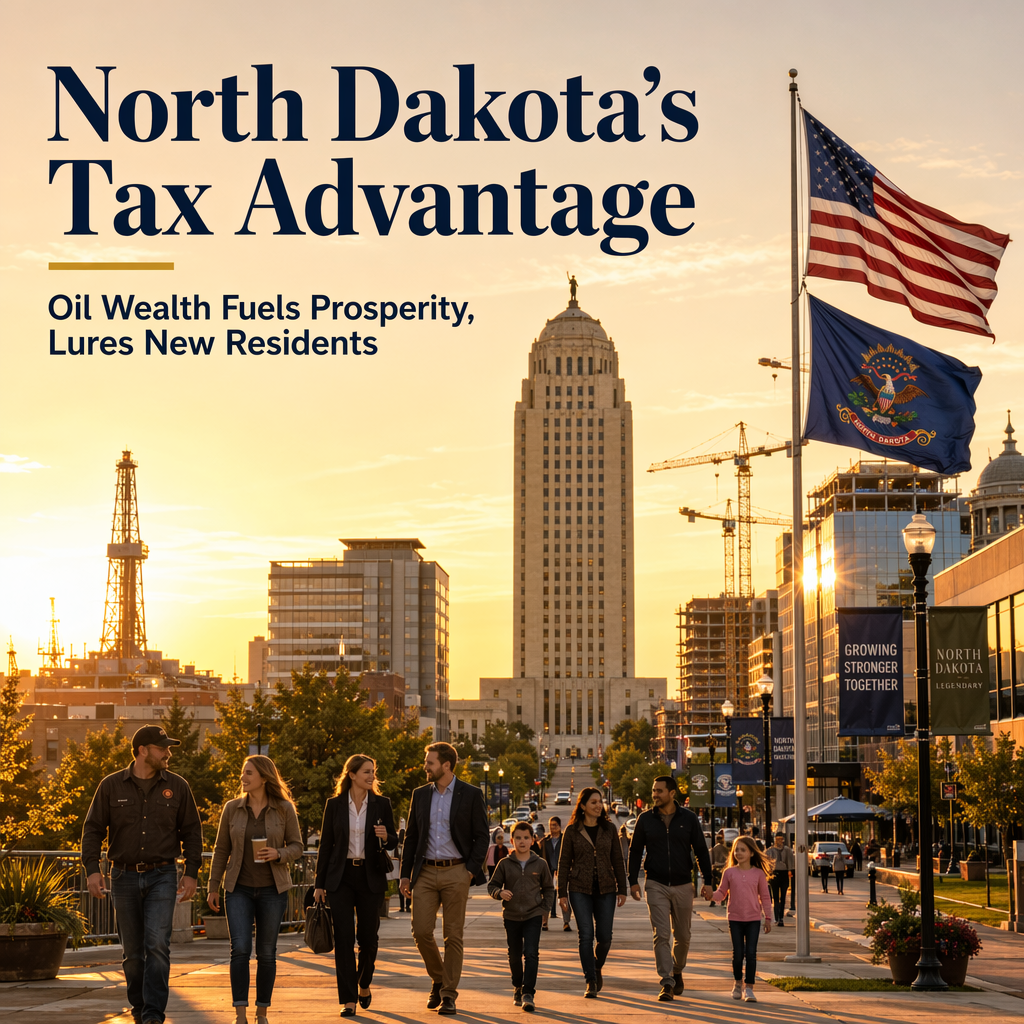
North Dakota is positioning itself as a leading contender among the most tax-friendly states in the U.S., potentially overtaking traditional low-tax leaders like Texas and Florida, according to a recent analysis. The state's combination of tax cuts, robust finances, and billions in oil revenue has created a highly competitive tax environment, distinguishing it from other states currently facing budget shortfalls and debates over tax increases [1].
North Dakota's oil boom has been transformative, generating billions of dollars in tax revenue each year. This energy wealth has enabled lawmakers to reduce tax burdens for residents and businesses while maintaining strong state finances. As a result, North Dakota ranks second in tax collections per capita but remains one of the country's most tax-friendly states—a notable contradiction that benefits both the government and its citizens [1].
Tax experts, such as Nicole Fox from the nonpartisan Tax Foundation, highlight that states experiencing net in-migration typically have more competitive tax structures and lower overall costs of living. Fox points to IRS migration data showing a clear trend: people are moving to states with lower taxes and more favorable economic conditions [1].
The contrast between North Dakota and high-tax states like New York and California is stark. While blue states rely heavily on income taxes, North Dakota leverages its oil and gas production to fund government operations, providing lawmakers with greater flexibility to cut taxes without jeopardizing state revenues. Treasury Secretary Scott Bessent underscored this dichotomy in remarks comparing California's 'hostile' tax system to Texas's energy-driven prosperity, emphasizing that energy abundance not only strengthens economies but also secures national interests [1].
CONCLUSION
North Dakota's strategic use of oil revenue has allowed it to maintain low taxes and strong finances, positioning it as a top tax-friendly state. The state's approach offers a model for leveraging natural resources to attract residents and businesses, with migration trends supporting the appeal of competitive tax environments. Market implications include potential increased investment and population growth in North Dakota as its tax advantages gain national attention.